Weather Act Reauthorization Act of 2025
Summary
What This Bill Does
This bill reauthorizes and updates the Weather Research and Forecasting Innovation Act framework. It requires NOAA to keep public safety as a priority by delivering accurate, timely weather forecasts, impact-based decision support, and critical weather information through nimble, flexible, and mobile methods. It authorizes Office of Oceanic and Atmospheric Research weather accounts from fiscal year 2026 through 2030, starting at $163.794 million in fiscal year 2026 and rising to $170.444 million in fiscal year 2030, with line items for weather laboratories and cooperative institutes, the United States Weather Research Program, tornado, severe-storm, next-generation radar research, and the Joint Technology Transfer Initiative.
The bill also updates specific NOAA and National Weather Service programs. It continues VORTEX tornado research, hurricane forecast improvement, tsunami warning and education, observing-system planning, EPIC, high-performance computing prioritization, satellite architecture planning, ocean observations, interagency meteorological services, and National Weather Service workforce planning. It directs work on next-generation radar, data voids in vulnerable areas, atmospheric rivers, coastal flooding and storm surge, aviation weather and data innovation, the Advanced Weather Interactive Processing System, commercial data programs and pilots, data assimilation and sharing, hazardous-weather risk communication, NOAA Weather Radio modernization, post-storm surveys, agricultural and water-management weather information, NIDIS drought information, National Mesonet, soil moisture monitoring, the National Water Center, satellite transfer reporting, precipitation forecast improvement, and harmful algal bloom observing.
Who Benefits and How
National Weather Service forecasters benefit from modernized communication tools, weather radio work, workforce planning, AWIPS support, and data-assimilation improvements. Emergency managers and local public-safety officials benefit from impact-based decision support, hazardous-weather risk communication, post-storm surveys, and better alert dissemination. Farmers, ranchers, water managers, and drought planners benefit from agricultural weather information, NIDIS, soil-moisture monitoring, National Mesonet data, National Water Center work, and precipitation forecast improvement. Coastal communities benefit from hurricane, storm-surge, tsunami, harmful-algal-bloom, atmospheric-river, and coastal-flooding forecast programs. Weather laboratories, cooperative institutes, universities, commercial weather-data providers, and private weather companies benefit from authorized research funding, data pilot programs, contracting authority, and shared standards.
Who Bears the Burden and How
NOAA leadership and the Under Secretary must manage authorizations, planning, reports, program consolidation, contracting, data standards, and interagency coordination. National Weather Service managers must implement workforce, communication, risk-message, alerting, and radio-modernization provisions. Commercial data providers must meet shared standards and pilot-program expectations if they participate. GAO staff must review alert dissemination. Congressional science and commerce committee staff must review authorization, satellite-transfer, program, and implementation reports. Federal appropriators bear the budget burden if they fund the authorized weather research and forecasting accounts.
Key Provisions
- Authorizes OAR weather research and forecasting funding for fiscal years 2026 through 2030.
- Requires NOAA public-safety priority for accurate, timely forecasts and impact-based decision support.
- Reauthorizes VORTEX, hurricane forecast improvement, tsunami warning, and National Landslide Preparedness Act work.
- Establishes next-generation radar, aviation-weather, data-void, atmospheric-river, and coastal-flooding improvements.
- Expands commercial weather data programs, data pilots, data assimilation, data management, and shared standards.
- Requires National Weather Service communications improvement, weather radio modernization, and hazardous-weather risk communication.
- Provides drought, mesonet, soil-moisture, water-center, precipitation, agricultural-weather, and harmful-algal-bloom programs.
Evidence Chain:
This summary is generated from the full bill text using AI analysis. Expand "Detailed Analysis" below for identified beneficiaries/burden bearers with clause-level evidence links.
At a Glance
What This Bill Does
Reauthorizes and expands NOAA weather research, forecasting, observation, commercial data, National Weather Service communication, drought, soil-moisture, water, precipitation, harmful-algal-bloom, and aviation-weather programs through fiscal year 2030, including specific Office of Oceanic and Atmospheric Research authorizations rising from $163.794 million in fiscal year 2026 to $170.444 million in fiscal year 2030.
Key Policy Areas
Weather, NOAA, Public Safety, Agriculture, Water Management, Aviation
Primary Purpose
Reauthorizes and expands NOAA weather research, forecasting, observation, commercial data, National Weather Service communication, drought, soil-moisture, water, precipitation, harmful-algal-bloom, and aviation-weather programs through fiscal year 2030, including specific Office of Oceanic and Atmospheric Research authorizations rising from $163.794 million in fiscal year 2026 to $170.444 million in fiscal year 2030.
Policy Domains
House resolution provisions
Identified Gains
- National Weather Service forecasters
- Emergency managers
- Local public-safety officials
- Farmers
- Ranchers
- Water managers
- Drought planners
- Coastal communities
- Weather laboratories
- Cooperative institutes
- Commercial weather-data providers
- Private weather companies
Identified Costs
- NOAA leadership
- Under Secretary of Commerce for Oceans and Atmosphere
- National Weather Service managers
- Commercial data providers
- GAO staff
- Congressional science committee staff
- Congressional commerce committee staff
- Federal appropriators
Sponsors

Legislative Progress
ReportedOrdered to be Reported (Amended) by Voice Vote.
Committee Consideration and Mark-up Session Held
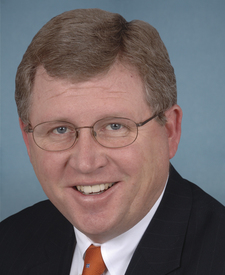
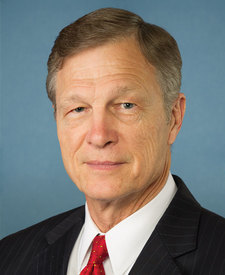
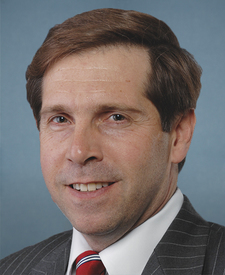
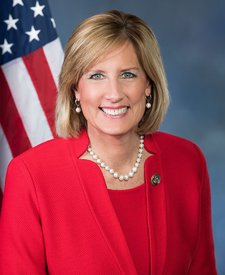
Mr. Lucas (for himself, Ms. Lofgren, Mr. Babin, Ms. Bonamici, …
Referred to the Committee on Science, Space, and Technology, and …
Introduced in House
Stakeholder Effects
cui bono?How this legislation distributes effects. Mention counts reflect frequency, not effect magnitude.
AI and data integration technology providers, AI and machine learning companies, Aviation weather sensor manufacturers
Positive-direction: AI and data integration technology providers, AI and machine learning companies, Aviation weather sensor manufacturers, Cloud computing and data hosting providers, Cloud computing providers, Cloud computing service providers, Commercial satellite and sensor providers, Commercial weather sensor and radar providers, Commercial weather sensor providers, HAB control technology developers, High-performance computing providers, Messaging platform providers, Ocean observing system operators, Ocean sensor and instrument manufacturers, Phased array radar developers, Phased array radar manufacturers, Soil moisture sensor manufacturers, Surface observation technology providers, Weather camera system providers, Weather observation system providers, Weather technology startups
Negative-direction: Legacy radar system vendors
Federal weather and research agencies, GAO, NOAA
NOAA, NOAA Office of Oceanic and Atmospheric Research, National Weather Service face effects in multiple directions
Positive-direction: National Centers for Environmental Information, National Laboratories, National Water Center, State and local landslide mitigation programs, State and local water management agencies, Tsunami warning centers
Negative-direction: GAO, National Oceanic and Atmospheric Administration
Atmospheric river research institutions, Coastal flood research institutions, Drought research institutions
Commercial mesonet operators, Commercial radar data providers, Commercial weather data providers
Coastal communities, Coastal communities in tsunami-prone areas, General public
Positive-direction: Coastal communities, Coastal communities in tsunami-prone areas, General public, General public and emergency responders, General public in hazard-prone areas, Rural and underserved communities, Underserved and highly vulnerable communities, Underserved and tribal communities
Negative-direction: Taxpayers
Local research universities, Research institutions in Alaska, Research universities
Commercial satellite data providers, Commercial satellite operators, Commercial satellite providers for backup
Traditional government satellite contractors, Uncrewed aerial and marine system operators, Uncrewed aircraft and marine system operators
Bill Structure & Actor Mappings
Who is "The Secretary" in each section?
- "nws"
- → National Weather Service
- "oar"
- → Office of Oceanic and Atmospheric Research
- "noaa"
- → National Oceanic and Atmospheric Administration
We use a combination of our own taxonomy and classification in addition to large language models to assess meaning and potential beneficiaries. High confidence means strong textual evidence. Always verify with the original bill text.
Learn more about our methodology