To amend the Housing and Community Development Act of 1992 to expand certain service coordinator programs, and for other purposes.
Analysis under review: This bill has generated analysis that may be too generic or incomplete. Clause-level evidence remains available below.
Summary
What This Bill Does
This bill dramatically expands service coordinator programs in federally-assisted housing for elderly, disabled, and low-income residents. It creates new competitive grant programs for Section 202 (elderly housing), Section 515 (rural housing), and LIHTC properties, authorizes a combined $317 million annually in new funding, removes bureaucratic barriers for housing projects seeking coordinator funding, and makes service coordinators eligible for Public Service Loan Forgiveness.
Who Benefits and How
Elderly and disabled residents of federally-assisted housing benefit from expanded access to support services that help them age in place. Service coordinators benefit from new job opportunities, mandatory training funding ($2,500/year per project), and student loan forgiveness eligibility. Owners and operators of federally-assisted housing benefit from streamlined grant applications and prohibition on additional HUD requirements. Rural communities benefit from a dedicated $10 million/year program.
Who Bears the Burden and How
The federal government bears the cost of $225 million/year for covered service coordinator programs, $45 million/year for public/Indian housing, $37 million for HRSA grants, and $10 million/year for rural housing coordinators. Housing project owners face new mandatory training funding reservations ($2,500/year) and annual reporting requirements for service coordinator training.
Key Provisions
- Authorizes $225M/year (FY2026-2030) for covered service coordinator programs
- Creates Section 202c Service Coordinator Grant Program with 3-year competitive grants
- Creates Rural Housing Service Coordinator Grant Program ($10M/year)
- Awards 150 HRSA grants ($37M) for LIHTC property service coordinators
- Authorizes $45M/year (FY2026-2030) for public and Indian housing services
- Adds service coordinators to Public Service Loan Forgiveness eligible occupations
- Prohibits HUD from imposing additional requirements beyond reasonable reporting
Evidence Chain:
This summary is generated from the full bill text using AI analysis. Expand "Detailed Analysis" below for identified beneficiaries/burden bearers.
At a Glance
What This Bill Does
Expands service coordinator programs across multiple federally-assisted housing programs by creating new grant programs, authorizing over $317 million annually in new funding, removing bureaucratic barriers, adding Public Service Loan Forgiveness eligibility for service coordinators, and establishing training requirements.
Key Policy Areas
Housing, Healthcare, Social Services, Education
Primary Purpose
Expands service coordinator programs across multiple federally-assisted housing programs by creating new grant programs, authorizing over $317 million annually in new funding, removing bureaucratic barriers, adding Public Service Loan Forgiveness eligibility for service coordinators, and establishing training requirements.
Policy Domains
Section 2 - Expansion of Covered Service Coordinator Programs
Identified Gains
Contextual inference, no direct clause citation- Elderly and disabled residents of federally-assisted housing
- Service coordinators
- Federally-assisted housing owners/operators
Contextual inference, no direct clause citation
Identified Costs
Contextual inference, no direct clause citation- Federal government (HUD)
- Housing project owners (training funding and reporting)
Contextual inference, no direct clause citation
Section 3 - Public Service Loan Forgiveness
Identified Gains
Contextual inference, no direct clause citation- Service coordinators with student loan debt
Contextual inference, no direct clause citation
Identified Costs
Contextual inference, no direct clause citation- Federal student loan program
Contextual inference, no direct clause citation
Section 4 - Public and Indian Housing Funding
Identified Gains
Contextual inference, no direct clause citation- Public and Indian housing residents
Contextual inference, no direct clause citation
Identified Costs
Contextual inference, no direct clause citation- Federal government (HUD appropriations)
Contextual inference, no direct clause citation
Section 5 - HRSA Grants for Service Coordinators
Identified Gains
Contextual inference, no direct clause citation- LIHTC property residents
- LIHTC property owners
Contextual inference, no direct clause citation
Identified Costs
Contextual inference, no direct clause citation- Federal government (HHS/HRSA appropriations)
Contextual inference, no direct clause citation
Section 6 - Rural Housing Service Coordinator Grant Program
Identified Gains
Contextual inference, no direct clause citation- Rural housing residents (especially elderly/disabled)
- Rural housing property operators
Contextual inference, no direct clause citation
Identified Costs
Contextual inference, no direct clause citation- Federal government (USDA appropriations)
Contextual inference, no direct clause citation
Sponsors
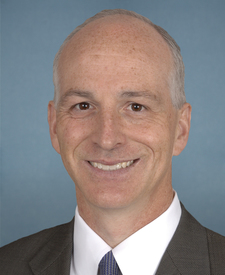
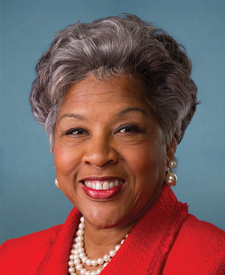

Legislative Progress
IntroducedMr. Smith of Washington (for himself, Mrs. Beatty, and Ms. …
Stakeholder Effects
cui bono?How this legislation distributes effects. Mention counts reflect frequency, not effect magnitude.
Elderly and disabled residents of Section 202 housing, Elderly and disabled residents of federally-assisted housing, Public and Indian housing residents
Federally-assisted housing project owners/operators, Grant applicants for service coordinator programs, Housing project owners (training reserve and reporting)
Positive-direction: Federally-assisted housing project owners/operators, Grant applicants for service coordinator programs, LIHTC property owners/operators, Owners/operators of Section 202 elderly housing, Owners/operators of Section 515 rural housing, Rural Section 515 property operators
Negative-direction: Housing project owners (training reserve and reporting)
Federal government, Federal student loan program, Public and tribal housing authorities
Positive-direction: Public and tribal housing authorities
Negative-direction: Federal government, Federal student loan program
Bill Structure & Actor Mappings
Who is "The Secretary" in each section?
- "the_secretary"
- → Secretary of Housing and Urban Development
- "the_secretary"
- → Secretary of Housing and Urban Development
- "the_secretary"
- → Secretary of Health and Human Services
- "the_administrator"
- → Administrator of HRSA
- "the_secretary"
- → Secretary of Agriculture
Note: 'The Secretary' refers to Secretary of HUD in Sections 2 and 4, Secretary of HHS in Section 5, and Secretary of Agriculture in Section 6.
Key Definitions
Terms defined in this bill
A housing project with respect to which a person has claimed a Low-Income Housing Tax Credit under IRC Section 42(a).
An owner or operator of a property assisted under Section 515 that is in good standing with the Department of Agriculture.
Service coordinator programs established under Subtitle E of Title VI of the Housing and Community Development Act of 1992, Section 802 of the Cranston-Gonzalez National Affordable Housing Act, Section 202 of the Housing Act of 1959, and Section 8 of the United States Housing Act of 1937.
An owner or operator of a property assisted under Section 202 that is in good standing with HUD.
We use a combination of our own taxonomy and classification in addition to large language models to assess meaning and potential beneficiaries. High confidence means strong textual evidence. Always verify with the original bill text.
Learn more about our methodology