Protecting Communities from Helicopter Noise Act
Summary
What This Bill Does
The Protecting Communities from Helicopter Noise Act requires the FAA Administrator to study helicopter operations within a 20-mile radius of the Statue of Liberty National Monument. The study must examine helicopter traffic volume, flight times, frequency, noise levels, safety, health, environmental and economic issues, compliance with voluntary agreements such as the Statue of Liberty and Governors Island agreement, origins of helicopter traffic, necessity of flights, airspace congestion, future impacts of electric vertical takeoff aircraft and other advanced air mobility technologies, and quality of life in high-noise communities. It also must analyze solutions including diverting helicopters from residential and recreational areas, new flight paths, bans on nonessential helicopters, altitude limits, and other noise-abatement options. FAA must report to Congress within 180 days.
Who Benefits and How
Residents near Statue of Liberty helicopter routes benefit from federal analysis of persistent noise, health, safety, and quality-of-life effects. Recreational area users benefit if the study supports flight paths or altitude limits that reduce helicopter noise. Local officials benefit from FAA data on flight origins, congestion, voluntary-agreement compliance, and abatement options. Airspace safety planners benefit from analysis of helicopter congestion and future electric vertical takeoff aircraft impacts.
Who Bears the Burden and How
FAA aviation analysts must conduct the study and submit a congressional report within 180 days. Helicopter tour operators face scrutiny of nonessential flights, routes, altitude practices, and voluntary-agreement compliance. Advanced air mobility operators may face future restrictions if the study finds added congestion or noise risk. Federal taxpayers bear the cost of the FAA study and any follow-on policy work.
Key Provisions
- Requires an FAA study of helicopter operations within 20 miles of the Statue of Liberty National Monument.
- Requires analysis of noise, traffic volume, safety, health, environmental, economic, and quality-of-life effects.
- Requires review of voluntary agreements, flight origins, nonessential traffic, congestion, and advanced air mobility impacts.
- Requires options for diversion, new flight paths, nonessential helicopter bans, altitude limits, and other abatement measures.
- Directs FAA to report to Congress within 180 days.
Evidence Chain:
This summary is generated from the full bill text using AI analysis. Expand "Detailed Analysis" below for identified beneficiaries/burden bearers with clause-level evidence links.
At a Glance
What This Bill Does
Requires the FAA to study helicopter operations within 20 miles of the Statue of Liberty National Monument and report to Congress within 180 days on noise, safety, congestion, and abatement options.
Key Policy Areas
Aviation, Noise, Public Health
Primary Purpose
Requires the FAA to study helicopter operations within 20 miles of the Statue of Liberty National Monument and report to Congress within 180 days on noise, safety, congestion, and abatement options.
Policy Domains
Resolution provisions
Identified Gains
- Residents near Statue of Liberty helicopter routes
- Recreational area users
- Local officials
- Airspace safety planners
Identified Costs
- FAA aviation analysts
- Helicopter tour operators
- Advanced air mobility operators
- Federal taxpayers
Sponsors
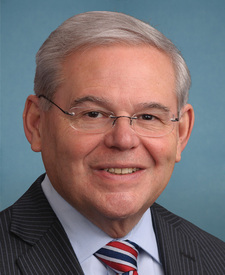

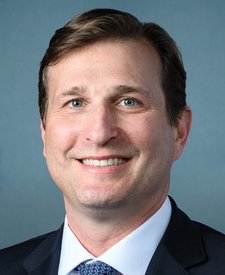
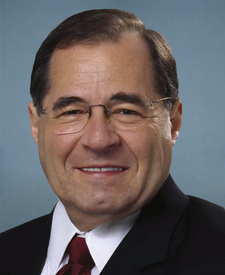

Legislative Progress
In CommitteeReferred to the Subcommittee on Aviation.
Mr. Menendez (for himself, Mr. Nadler, Ms. Malliotakis, Mr. Goldman …
Referred to the House Committee on Transportation and Infrastructure.
Introduced in House
Stakeholder Effects
cui bono?How this legislation distributes effects. Mention counts reflect frequency, not effect magnitude.
Advanced air mobility operators, Helicopter tour operators
Residents near Statue of Liberty helicopter routes
Bill Structure & Actor Mappings
Who is "The Secretary" in each section?
We use a combination of our own taxonomy and classification in addition to large language models to assess meaning and potential beneficiaries. High confidence means strong textual evidence. Always verify with the original bill text.
Learn more about our methodology