Don’t STEAL Act
Summary
What This Bill Does
The Don't STEAL Act creates a new Fair Labor Standards Act right to full compensation. Covered employees engaged in commerce, producing goods for commerce, or employed by covered enterprises must be paid at least the greater of the wage promised in a contract, collective bargaining agreement, or other employment agreement and the wage required by federal or state law. The bill also expands FLSA enforcement sections to include the new right and creates criminal penalties for willful wage theft. Unpaid wages or overtime above $1,000 can lead to fines, imprisonment up to five years, or both; amounts of $1,000 or less can lead to fines, imprisonment up to one year, or both. Fine amounts must account for gravity, number of employees affected, value of kept wages, prior convictions, and business size. Collected fines support Wage and Hour Division enforcement costs.
Who Benefits and How
Employees with wage agreements benefit because employers must pay the greater of promised contractual wages or legally required wages. Unionized workers benefit because collective bargaining wage rates become enforceable through the new FLSA compensation rule. Low-wage workers benefit from criminal penalties that target willful unpaid wages and unpaid overtime. Labor enforcement staff benefit because collected fines can be applied to enforcing wage and overtime provisions.
Who Bears the Burden and How
Employers owing unpaid wages face expanded FLSA liability and possible criminal penalties for willful violations. Small businesses must ensure payroll systems honor contracts, employment agreements, collective bargaining agreements, and wage laws. Labor wage enforcement staff must administer the new section 8 rule and expanded penalty framework. Federal courts may see criminal wage-theft prosecutions involving unpaid wages or unpaid overtime.
Key Provisions
- Requires covered employers to pay the greater of promised agreement wages or federal and state wage-law requirements.
- Repeals the existing FLSA section 10 and inserts a new section 8 right to full compensation.
- Provides up to five years imprisonment for willful wage theft above $1,000.
- Provides up to one year imprisonment for willful wage theft of $1,000 or less.
- Directs collected fines to Wage and Hour Division enforcement costs.
Evidence Chain:
This summary is generated from the full bill text using AI analysis. Expand "Detailed Analysis" below for identified beneficiaries/burden bearers with clause-level evidence links.
At a Glance
What This Bill Does
Amends the Fair Labor Standards Act to require full contractual or legal wage compensation and creates criminal penalties for willful wage theft above or below $1,000.
Key Policy Areas
Labor, Wage Enforcement, Criminal Justice
Primary Purpose
Amends the Fair Labor Standards Act to require full contractual or legal wage compensation and creates criminal penalties for willful wage theft above or below $1,000.
Policy Domains
Resolution provisions
Identified Gains
- Employees with wage agreements
- Unionized workers
- Low-wage workers
- Labor enforcement staff
Identified Costs
- Employers owing unpaid wages
- Small businesses
- Labor wage enforcement staff
- Federal courts
Sponsors


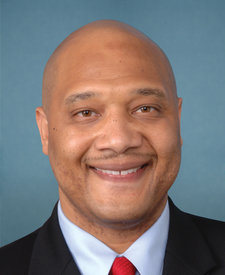


Legislative Progress
In CommitteeMr. Magaziner (for himself, Mr. Evans of Pennsylvania, Mr. Pocan, …
Referred to the House Committee on Education and Workforce.
Introduced in House
Stakeholder Effects
cui bono?How this legislation distributes effects. Mention counts reflect frequency, not effect magnitude.
Employees with wage agreements, Low-wage workers, Unionized workers
Bill Structure & Actor Mappings
Who is "The Secretary" in each section?
We use a combination of our own taxonomy and classification in addition to large language models to assess meaning and potential beneficiaries. High confidence means strong textual evidence. Always verify with the original bill text.
Learn more about our methodology