To direct the Secretary of Health and Human Services to establish a grant program to facilitate research regarding the use of generative artificial intelligence in health care, and for other purposes.
Analysis under review: This bill has generated analysis that may be too generic or incomplete. Clause-level evidence remains available below.
Summary
What This Bill Does
This bill creates a federal grant program through HHS to fund research on using generative AI in health care. The grants support research into AI applications like improving clinical note-taking, reducing administrative burdens, speeding up insurance claims, and improving customer service in health care.
Who Benefits and How
AI technology companies and health IT firms benefit from increased demand for their products and federal funding for integration research. Universities and nonprofit research organizations receive direct grant funding. Clinicians benefit from tools that reduce administrative burden and documentation workload. Underserved populations are prioritized for improved care delivery.
Who Bears the Burden and How
Federal taxpayers fund the grant program. Traditional health IT vendors without AI capabilities may face competitive pressure from AI-native firms. Privacy advocates may have concerns about AI processing patient data, though the bill does not address privacy frameworks.
Key Provisions
- Establishes HHS grant program for generative AI health care research
- Prioritizes workforce development, burnout reduction, and health equity
- Eligible entities include universities, 501(c)(3) nonprofits, and government agencies
- Defines 'generative artificial intelligence' by reference to the National AI Initiative Act
Evidence Chain:
This summary is generated from the full bill text using AI analysis. Expand "Detailed Analysis" below for identified beneficiaries/burden bearers.
At a Glance
What This Bill Does
Directs the Secretary of Health and Human Services to establish a grant program funding research on the use of generative artificial intelligence in health care, with priority given to entities that promote AI adoption, workforce development, burnout reduction, health equity, and care for underserved populations.
Key Policy Areas
Healthcare, Technology, Education, Civil Rights
Primary Purpose
Directs the Secretary of Health and Human Services to establish a grant program funding research on the use of generative artificial intelligence in health care, with priority given to entities that promote AI adoption, workforce development, burnout reduction, health equity, and care for underserved populations.
Policy Domains
HEALTH AI Act
Identified Gains
Contextual inference, no direct clause citation- AI technology companies
- Universities and research institutions
- Clinicians burdened by administrative work
- Medically underserved populations
Contextual inference, no direct clause citation
Identified Costs
Contextual inference, no direct clause citation- Federal taxpayers
- Traditional health IT vendors without AI capabilities
Contextual inference, no direct clause citation
Sponsors
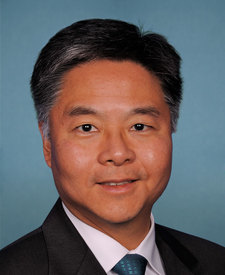
Ted Lieu
D-CA | Primary Sponsor
Legislative Progress
IntroducedMr. Lieu (for himself and Mr. Bera) introduced the following …
Stakeholder Effects
cui bono?How this legislation distributes effects. Mention counts reflect frequency, not effect magnitude.
Bill Structure & Actor Mappings
Who is "The Secretary" in each section?
- "the_secretary"
- → Secretary of Health and Human Services
Key Definitions
Terms defined in this bill
An institution of higher education, a 501(c)(3) nonprofit organization, or an agency of the federal government, state, local government, or Indian Tribe.
Artificial intelligence technology that can generate derived content such as text, images, or other media based on training data, as defined by reference to the National AI Initiative Act of 2020.
We use a combination of our own taxonomy and classification in addition to large language models to assess meaning and potential beneficiaries. High confidence means strong textual evidence. Always verify with the original bill text.
Learn more about our methodology