Farm Credit Adjustment Act
Summary
What This Bill Does
The Farm Credit Adjustment Act gives the Farm Credit Administration discretion to lengthen mandatory examination intervals for low-risk Farm Credit System institutions. Current law requires FCA examinations within a fixed time period; the bill allows FCA, in its sole discretion, to extend the time between mandatory examinations of institutions it deems low-risk to not more than 24 months. The change takes effect on October 1, 2026. The practical effect is reduced examination burden for low-risk Farm Credit System lenders and more flexibility for FCA to allocate examiner resources, while relying on FCA's risk judgment to avoid weakening supervision.
Who Benefits and How
Low-risk Farm Credit System institutions benefit from possible movement to a 24-month examination cycle. Farm Credit Administration examiners benefit from flexibility to focus staff time on higher-risk institutions. Agricultural borrowers may benefit if lower examination burden lets low-risk lenders devote more resources to lending operations. Farm Credit System managers benefit from predictable risk-based supervision beginning October 1, 2026.
Who Bears the Burden and How
Farm Credit Administration supervisors must decide which institutions qualify as low-risk and monitor the longer cycle. Higher-risk Farm Credit institutions may receive proportionally more examination attention as FCA reallocates resources. Farm credit watchdog organizations must rely on FCA discretion to avoid overlooking problems during longer intervals. Congressional agriculture finance staff may need to monitor whether 24-month cycles affect safety and soundness.
Key Provisions
- Authorizes FCA to extend examination intervals for low-risk Farm Credit System institutions.
- Limits the extended mandatory examination cycle to not more than 24 months.
- Leaves the low-risk determination to FCA's sole discretion.
- Provides an October 1, 2026 effective date.
Evidence Chain:
This summary is generated from the full bill text using AI analysis. Expand "Detailed Analysis" below for identified beneficiaries/burden bearers with clause-level evidence links.
At a Glance
What This Bill Does
Allows the Farm Credit Administration, starting October 1, 2026, to examine low-risk Farm Credit System institutions on up to a 24-month cycle.
Key Policy Areas
Agriculture, Farm Credit, Financial Regulation
Primary Purpose
Allows the Farm Credit Administration, starting October 1, 2026, to examine low-risk Farm Credit System institutions on up to a 24-month cycle.
Policy Domains
Resolution provisions
Identified Gains
- Low-risk Farm Credit System institutions
- Farm Credit Administration examiners
- Agricultural borrowers
- Farm Credit System managers
Identified Costs
- Farm Credit Administration supervisors
- Higher-risk Farm Credit institutions
- Farm credit watchdog organizations
- Congressional agriculture finance staff
Sponsors


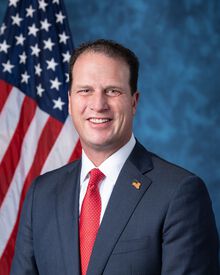

Legislative Progress
In CommitteeReferred to the Subcommittee on General Farm Commodities, Risk Management, …
Mr. Vindman (for himself and Mr. Fallon) introduced the following …
Referred to the House Committee on Agriculture.
Introduced in House
Stakeholder Effects
cui bono?How this legislation distributes effects. Mention counts reflect frequency, not effect magnitude.
Agricultural borrowers, Low-risk Farm Credit System institutions
Farm Credit Administration examiners, Farm Credit Administration supervisors
Positive-direction: Farm Credit Administration examiners
Negative-direction: Farm Credit Administration supervisors
Bill Structure & Actor Mappings
Who is "The Secretary" in each section?
We use a combination of our own taxonomy and classification in addition to large language models to assess meaning and potential beneficiaries. High confidence means strong textual evidence. Always verify with the original bill text.
Learn more about our methodology