To amend the General Education Provisions Act to ensure that a student is not required to submit to a survey, analysis, or evaluation that reveals personal information about such student or their family without prior written consent.
Analysis under review: This bill has generated analysis that may be too generic or incomplete. Clause-level evidence remains available below.
Summary
What This Bill Does
The Parents Opt-in Protection Act amends the General Education Provisions Act (Section 445, also known as the Protection of Pupil Rights Amendment) to strengthen the consent requirements for student surveys that collect personal or sensitive information. Currently, schools need 'prior consent' before surveying students about personal matters. This bill changes the requirement to 'prior written consent' and specifies that consent must be given for each specific survey, preventing schools from obtaining blanket consent for multiple surveys at once. It also extends written consent requirements to surveys about topics like political affiliations, mental health, sexual behavior, religious practices, and family income.
Who Benefits and How
Parents of minor students benefit from greater control over what personal information their children are asked to reveal in school surveys. They must now give written consent for each specific survey rather than a general opt-in. Adult and emancipated minor students benefit from the same written consent protections for surveys about sensitive personal topics. Privacy advocates benefit from stronger, more explicit consent standards in educational settings.
Who Bears the Burden and How
Schools and educational institutions bear the administrative burden of obtaining individual written consent for each specific survey rather than using blanket consent forms. Researchers and education policy organizations that rely on student surveys may find it harder to obtain participation, potentially reducing survey response rates. School administrators must implement new consent processes and track compliance on a per-survey basis.
Key Provisions
- Changes 'prior consent' to 'prior written consent' for surveys revealing personal student information
- Requires consent to be specific to each individual survey, analysis, or evaluation
- Extends written consent requirements to surveys covering sensitive topics like mental health, sexual behavior, and family income
- For unemancipated minors, written parental consent is required; for adults or emancipated minors, their own written consent suffices
Evidence Chain:
This summary is generated from the full bill text using AI analysis. Expand "Detailed Analysis" below for identified beneficiaries/burden bearers with clause-level evidence links.
At a Glance
What This Bill Does
Strengthens student privacy protections by amending the General Education Provisions Act to require prior written consent (rather than just prior consent) before students can be surveyed about personal or family information, and requires consent to be specific to each individual survey rather than given as blanket authorization.
Key Policy Areas
Education, Privacy, Parental Rights
Primary Purpose
Strengthens student privacy protections by amending the General Education Provisions Act to require prior written consent (rather than just prior consent) before students can be surveyed about personal or family information, and requires consent to be specific to each individual survey rather than given as blanket authorization.
Policy Domains
Whole Bill - Student Survey Consent Requirements
Identified Gains
- Parents of students
- Students (privacy protection)
- Privacy advocates
Identified Costs
- Schools and educational institutions
- Education researchers
- School administrators
Sponsors



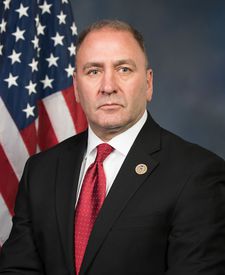

Legislative Progress
IntroducedMrs. Miller of Illinois (for herself, Mr. Cloud, Mr. Harris …
Impact analysis is available but no clear stakeholder effects identified. View clause-level analysis →
Bill Structure & Actor Mappings
Who is "The Secretary" in each section?
We use a combination of our own taxonomy and classification in addition to large language models to assess meaning and potential beneficiaries. High confidence means strong textual evidence. Always verify with the original bill text.
Learn more about our methodology