To prohibit a court from awarding damages based on race, ethnicity, gender, religion, or actual or perceived sexual orientation, and for other purposes.
Analysis under review: This bill has generated analysis that may be too generic or incomplete. Clause-level evidence remains available below.
Summary
What This Bill Does
This bill, To prohibit a court from awarding damages based on race, ethnicity, gender, religion, or actual or perceived sexual orientation, and for other purposes., changes federal law or congressional policy affecting civil-rights stakeholders and affected communities. The main policy domain is Civil Rights, Labor, Government Operations.
Who Benefits and How
civil-rights stakeholders and affected communities may benefit from new authority, funding, eligibility, regulatory clarity, or reduced risk created by the bill.
Who Bears the Burden and How
federal implementing agencies, civil-rights stakeholders and affected communities may take on implementation duties, reporting obligations, compliance costs, or oversight responsibilities.
Key Provisions
- Section HD2D5147A147E4E97B84428477E80A7F4: 1. Short title This Act may be cited as the Fair Calculations in Civil Damages Act of 2023.
- Section H03B3639B8E0642CE89F5E30C314F7A98: 2. Definitions In this Act— the term future earnings table includes any table or compilation of economic data used to determine— how many years an individual...
- Section H915FF584A8A84C8E8A906946B0316EC5: 3. Calculations of damages Notwithstanding any other provision of law, no court of the United States may award damages to a plaintiff in a civil action using a...
- Section H9609CE797EF844E8ACBFC373D9B6221F: 4. Inclusive future earnings tables Not later than 180 days after the date of enactment of this Act— the Secretary of Labor shall develop guidance for forensic...
- Section HF338014AD2D247AA86EA78E12E5B1E79: 5. Study and report Not later than 1 year after the date of enactment of this Act, the Judicial Conference of the United States shall conduct a study on—...
Evidence Chain:
This summary is generated from the full bill text using AI analysis. Expand "Detailed Analysis" below for identified beneficiaries/burden bearers.
At a Glance
What This Bill Does
This bill, To prohibit a court from awarding damages based on race, ethnicity, gender, religion, or actual or perceived sexual orientation, and for other purposes., changes federal law or congressional policy affecting civil-rights stakeholders and affected communities.
Key Policy Areas
Civil Rights, Labor, Government Operations
Primary Purpose
This bill, To prohibit a court from awarding damages based on race, ethnicity, gender, religion, or actual or perceived sexual orientation, and for other purposes., changes federal law or congressional policy affecting civil-rights stakeholders and affected communities.
Policy Domains
Whole bill
Identified Gains
Contextual inference, no direct clause citation- civil-rights stakeholders and affected communities
Contextual inference, no direct clause citation
Identified Costs
Contextual inference, no direct clause citation- federal implementing agencies
- civil-rights stakeholders and affected communities
Contextual inference, no direct clause citation
Sponsors

Legislative Progress
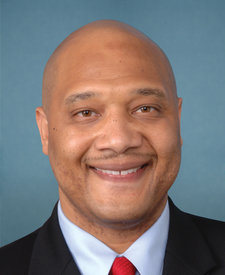
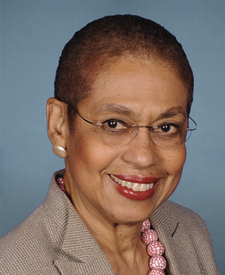
IntroducedMr. Casten (for himself, Ms. Norton, and Mr. Carson) introduced …
Impact analysis is available but no clear stakeholder effects identified. View clause-level analysis →
Bill Structure & Actor Mappings
Who is "The Secretary" in each section?
- "secretary_of_labor"
- → Secretary of Labor
We use a combination of our own taxonomy and classification in addition to large language models to assess meaning and potential beneficiaries. High confidence means strong textual evidence. Always verify with the original bill text.
Learn more about our methodology