To amend the Federal Reserve Act to establish procedures for removal of the Chairman of the Board of Governors of the Federal Reserve System, and for other purposes.
Analysis under review: This bill has generated analysis that may be too generic or incomplete. Clause-level evidence remains available below.
Summary
What This Bill Does
The TOO LATE Act (Timely Oversight of Operations, Liquidity, Accountability, Targeting, and Effectiveness Act) amends the Federal Reserve Act to establish specific conditions under which the President may remove the Chair of the Federal Reserve Board of Governors. Currently, the law does not clearly define grounds for removing a Fed Chair. This bill creates a quantitative trigger: the President may remove the Chair if the federal funds target rate deviates by more than 200 basis points (2 percentage points) from the average of at least two economic benchmarks for two consecutive quarters.
Who Benefits and How
The executive branch gains a defined mechanism to hold the Fed Chair accountable for monetary policy decisions that diverge significantly from economic fundamentals. Proponents of greater Fed accountability benefit from the transparency requirements, including mandatory presidential justification statements and congressional hearings. The general public could benefit from monetary policy that is more closely aligned with inflation and employment indicators.
Who Bears the Burden and How
The Federal Reserve Chair faces the possibility of removal based on quantitative benchmarks, which could constrain independent monetary policy judgment. The Fed as an institution bears the burden of reduced independence, as this bill creates political accountability for interest rate decisions. Financial markets could face increased uncertainty if the removal mechanism is triggered, as it would signal a potential change in monetary policy direction.
Key Provisions
- Allows presidential removal of the Fed Chair if the federal funds rate deviates by more than 200 basis points from benchmark averages for 2 consecutive quarters
- Uses three benchmarks: the PCE Price Deflator, the 5-year Treasury/TIPS yield spread, and the gap between Fed and CBO unemployment estimates
- Requires the President to publicly justify any removal with reference to benchmark data
- Mandates congressional hearings within 30 days of a presidential removal statement
- Defines the federal funds target rate as the upper bound of the FOMC target range
Evidence Chain:
This summary is generated from the full bill text using AI analysis. Expand "Detailed Analysis" below for identified beneficiaries/burden bearers with clause-level evidence links.
At a Glance
What This Bill Does
Amends the Federal Reserve Act to create a formal, benchmark-based mechanism for the President to remove the Federal Reserve Chair if the federal funds rate deviates significantly from economic indicators, with congressional oversight requirements.
Key Policy Areas
Monetary Policy, Financial Regulation, Government Oversight
Primary Purpose
Amends the Federal Reserve Act to create a formal, benchmark-based mechanism for the President to remove the Federal Reserve Chair if the federal funds rate deviates significantly from economic indicators, with congressional oversight requirements.
Policy Domains
Whole Bill - Fed Chair Removal Procedures
Identified Gains
- Executive branch (gains formal removal authority)
- Proponents of Fed accountability
- Congressional oversight committees
Identified Costs
- Federal Reserve (reduced institutional independence)
- Federal Reserve Chair (subject to benchmark-based removal)
- Financial markets (increased uncertainty during removal proceedings)
Legislative Progress
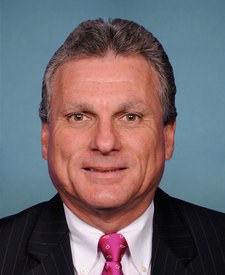
IntroducedMr. Carter of Georgia introduced the following bill; which was …
Impact analysis is available but no clear stakeholder effects identified. View clause-level analysis →
Bill Structure & Actor Mappings
Who is "The Secretary" in each section?
- "the_chairman"
- → Chairman of the Board of Governors of the Federal Reserve System
- "the_president"
- → President of the United States
Key Definitions
Terms defined in this bill
The upper bound of the target range for the Federal funds rate established by the Federal Open Market Committee.
We use a combination of our own taxonomy and classification in addition to large language models to assess meaning and potential beneficiaries. High confidence means strong textual evidence. Always verify with the original bill text.
Learn more about our methodology