DETECT Act of 2025
Summary
What This Bill Does
The DETECT Act directs the Comptroller General to submit a report within 180 days to the House Ways and Means Committee and the Senate Finance Committee on the potential for artificial intelligence to assist the Internal Revenue Service in detecting tax fraud. The bill is an oversight and technology-assessment measure, not a direct authorization for IRS deployment. Its value is to force GAO to evaluate where AI could improve fraud detection, what risks or limits might exist, and what Congress should understand before expanding IRS use of AI in tax enforcement.
Who Benefits and How
Congressional tax committees benefit from a GAO assessment of AI options for IRS tax-fraud detection. IRS fraud detection staff benefit from an independent review of where AI could support enforcement work. Taxpayers who comply with the law benefit if better fraud detection reduces improper refunds or evasion pressure. AI oversight researchers benefit because the report creates a public reference point for tax-enforcement AI risks and uses.
Who Bears the Burden and How
GAO auditors must complete the study and report within 180 days. IRS data staff may need to provide information on tax fraud detection systems and constraints. Tax fraud schemes face increased oversight if the report identifies effective AI detection tools. Privacy advocates must scrutinize any later IRS AI deployment informed by the report.
Key Provisions
- Requires GAO to study AI's potential to assist IRS tax-fraud detection.
- Directs the report to the House Ways and Means Committee and Senate Finance Committee.
- Requires submission within 180 days after enactment.
- Provides oversight information without directly mandating IRS AI deployment.
Evidence Chain:
This summary is generated from the full bill text using AI analysis. Expand "Detailed Analysis" below for identified beneficiaries/burden bearers with clause-level evidence links.
At a Glance
What This Bill Does
Requires GAO to report within 180 days on artificial intelligence's potential to help the IRS detect tax fraud.
Key Policy Areas
Tax Administration, Artificial Intelligence, Oversight
Primary Purpose
Requires GAO to report within 180 days on artificial intelligence's potential to help the IRS detect tax fraud.
Policy Domains
Resolution provisions
Identified Gains
- Congressional tax committees
- IRS fraud detection staff
- Compliant taxpayers
- AI oversight researchers
Identified Costs
- GAO auditors
- IRS data staff
- Tax fraud schemes
- Privacy advocates
Sponsors


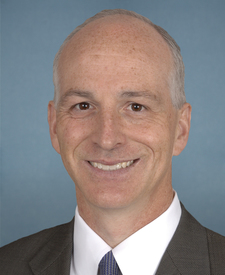

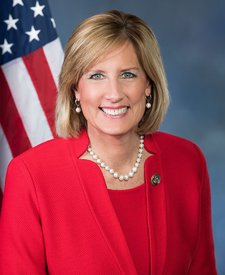
Legislative Progress
In CommitteeMr. Buchanan (for himself, Mr. Schweikert, Ms. Tenney, Mr. Bean …
Referred to the House Committee on Ways and Means.
Introduced in House
Stakeholder Effects
cui bono?How this legislation distributes effects. Mention counts reflect frequency, not effect magnitude.
Congressional tax committees, GAO auditors, IRS data staff
Positive-direction: Congressional tax committees, IRS fraud detection staff
Negative-direction: GAO auditors, IRS data staff
Bill Structure & Actor Mappings
Who is "The Secretary" in each section?
We use a combination of our own taxonomy and classification in addition to large language models to assess meaning and potential beneficiaries. High confidence means strong textual evidence. Always verify with the original bill text.
Learn more about our methodology