Stop Price Gouging in Grocery Stores Act of 2025
Summary
What This Bill Does
The Stop Price Gouging in Grocery Stores Act creates federal rules for retail food store pricing and surveillance technology. Retail food stores may not sell items at grossly excessive prices unless the increase is directly attributable to additional uncontrollable procurement, acquisition, distribution, or provision costs. FTC must issue regulations within 180 days defining markets, grossly excessive prices, and excessive prices, and must consider a 120 percent of average market price benchmark. Retail food stores also may not use surveillance-based price setting, including personal-information-based price adjustments or electronic shelf labels tied to personal information. The bill permits disclosed group discounts and voluntary biometric identity verification under strict notice, retention, sharing, and deletion conditions. Stores using facial recognition must post clear signage at the main entrance. FTC enforces violations as unfair or deceptive acts or practices and unfair methods of competition, states may bring parens patriae suits for injunctions, damages of at least $3,000 per violation, restitution, penalties, and equitable relief, and Congress authorizes $5,000,000 for fiscal year 2025 through September 30, 2032.
Who Benefits and How
Grocery consumers benefit from a federal ban on grossly excessive food prices and personalized surveillance-based price setting. State attorneys general benefit from parens patriae authority to sue retail food stores for violations affecting state residents. Privacy advocates benefit from limits on facial recognition, biometric data, electronic shelf labels, and personal-information-driven prices. FTC enforcement staff benefit from explicit authority and $5,000,000 in authorized implementation funding.
Who Bears the Burden and How
Retail food stores must justify price increases, avoid surveillance-based pricing, post facial-recognition signage, and follow FTC regulations. Grocery chains using electronic shelf labels must avoid personal-information-based price changes except for allowed uniform discounts. Biometric technology vendors face tighter conditions on grocery identity verification, disclosure, data sharing, and deletion. FTC rulemaking staff must define grossly excessive price, market, and excessive price metrics within 180 days.
Key Provisions
- Prohibits retail food stores from selling items at grossly excessive prices unless cost increases justify the price.
- Bars surveillance-based price setting using personal information, facial recognition, or electronic shelf labels.
- Requires clear entrance signage when a retail food store uses facial recognition technology.
- Provides FTC enforcement and state attorney general civil actions with damages, restitution, penalties, and equitable relief.
- Authorizes $5,000,000 for fiscal year 2025, available through September 30, 2032.
Evidence Chain:
This summary is generated from the full bill text using AI analysis. Expand "Detailed Analysis" below for identified beneficiaries/burden bearers with clause-level evidence links.
At a Glance
What This Bill Does
Prohibits grocery-store grossly excessive pricing and surveillance-based price setting, requires facial-recognition signage, creates FTC and state enforcement, and authorizes $5,000,000 for implementation.
Key Policy Areas
Consumer Protection, Food Retail, Privacy, Antitrust
Primary Purpose
Prohibits grocery-store grossly excessive pricing and surveillance-based price setting, requires facial-recognition signage, creates FTC and state enforcement, and authorizes $5,000,000 for implementation.
Policy Domains
Resolution provisions
Identified Gains
- Grocery consumers
- State attorneys general
- Privacy advocates
- FTC enforcement staff
Identified Costs
- Retail food stores
- Grocery chains using electronic shelf labels
- Biometric technology vendors
- FTC rulemaking staff
Sponsors



Legislative Progress
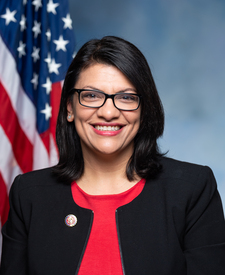
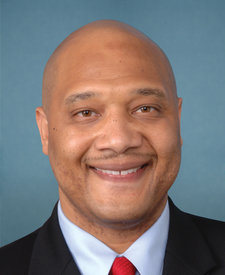
In CommitteeMs. Tlaib (for herself, Mr. Casar, Mr. Nadler, Ms. Clarke …
Referred to the Committee on Energy and Commerce, and in …
Introduced in House
Stakeholder Effects
cui bono?How this legislation distributes effects. Mention counts reflect frequency, not effect magnitude.
FTC rulemaking staff, State attorneys general
Positive-direction: State attorneys general
Negative-direction: FTC rulemaking staff
Bill Structure & Actor Mappings
Who is "The Secretary" in each section?
We use a combination of our own taxonomy and classification in addition to large language models to assess meaning and potential beneficiaries. High confidence means strong textual evidence. Always verify with the original bill text.
Learn more about our methodology