TRAPS Act
Summary
What This Bill Does
The TRAPS Act establishes a Treasury-chaired Task Force for Recognizing and Averting Payment Scams within 90 days of enactment. The task force includes federal regulators and enforcement agencies such as the CFPB, FCC, FTC, DOJ, OCC, Federal Reserve, NCUA, FDIC, and FinCEN, plus representatives from financial institutions, credit unions, digital payment networks, community banks, consumer groups, technology or online platform associations, scam victims, scam support networks, and other stakeholders. The task force must examine scam trends, spoofed calls, scam texts, malicious ads and websites, payment-platform scams, business email compromise, consumer education, law-enforcement coordination, international approaches, and whether additional legislation would help. It must meet at least three times in the first year and publish a report to Congress within one year with recommendations for detection, prevention, investigation, prosecution, data collection, and intergovernmental cooperation.
Who Benefits and How
Payment scam victims benefit because the task force must include victim-support perspectives and recommend ways to identify, prevent, and prosecute scams. Consumer groups benefit from a formal seat in federal payment-scam policy discussions. Financial institution representatives benefit by shaping recommendations around payment-platform fraud, business email compromise, and industry prevention practices. Digital payment network representatives benefit by helping align technology-platform responsibilities with law-enforcement and consumer-protection strategies.
Who Bears the Burden and How
Treasury task force staff must organize the task force, fill vacancies, hold meetings, and produce the public report. Federal financial regulators must devote representatives and expertise to cross-sector scam-prevention recommendations. Technology platform associations must participate in scrutiny of malicious ads, pop-ups, websites, and scam tactics. Law enforcement agencies must coordinate on recommendations for identifying and pursuing payment-scam perpetrators.
Key Provisions
- Establishes a Treasury-chaired Task Force for Recognizing and Averting Payment Scams within 90 days.
- Requires representation from federal regulators, financial institutions, credit unions, payment networks, community banks, consumer groups, technology platforms, and scam victims.
- Directs the task force to evaluate spoofed calls, scam texts, malicious ads, websites, payment-platform scams, and business email compromise.
- Requires at least three meetings in the first year and a public report to Congress within one year.
Evidence Chain:
This summary is generated from the full bill text using AI analysis. Expand "Detailed Analysis" below for identified beneficiaries/burden bearers with clause-level evidence links.
At a Glance
What This Bill Does
Creates a Treasury-led Task Force for Recognizing and Averting Payment Scams with federal, financial, technology, consumer, and victim-support representation and a public report within one year.
Key Policy Areas
Consumer Finance, Fraud Prevention, Financial Technology
Primary Purpose
Creates a Treasury-led Task Force for Recognizing and Averting Payment Scams with federal, financial, technology, consumer, and victim-support representation and a public report within one year.
Policy Domains
Resolution provisions
Identified Gains
- Payment scam victims
- Consumer groups
- Financial institution representatives
- Digital payment network representatives
Identified Costs
- Treasury task force staff
- Federal financial regulators
- Technology platform associations
- Law enforcement agencies
Sponsors
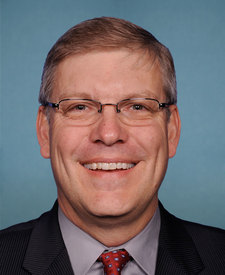
Legislative Progress
In CommitteeMr. Nunn of Iowa (for himself and Mr. Himes) introduced …
Referred to the House Committee on Financial Services.
Introduced in House
Stakeholder Effects
cui bono?How this legislation distributes effects. Mention counts reflect frequency, not effect magnitude.
Federal financial regulators, Treasury task force staff
Bill Structure & Actor Mappings
Who is "The Secretary" in each section?
We use a combination of our own taxonomy and classification in addition to large language models to assess meaning and potential beneficiaries. High confidence means strong textual evidence. Always verify with the original bill text.
Learn more about our methodology