To amend the Securities Act of 1933 to require covered issuers to carry out a racial equity audit every 2 years, to require atonement for the descendants of enslaved persons, and for other purposes.
Summary
What This Bill Does
The bill amends the Securities Act of 1933 to add Section 4B requiring large publicly-traded companies (100+ employees or $300M+ market cap) to conduct biennial independent audits assessing civil rights, diversity policies, requires the new Section 4B of the Securities Act establishes detailed requirements for biennial racial equity audits by covered issuers, and establishes the Office of Minority Low to Moderate Income Programs within the Department of Treasury. It relies on reporting requirements, compliance mandates, liability protections, and appropriations. The main policy areas are Securities Regulation, Finance, Economic Development, and Education.
Who Benefits and How
Low-to-moderate income minority individuals could gain revenue opportunities, Whistleblowers reporting corporate violations could gain revenue opportunities, and Minority-owned small businesses and entrepreneurs could gain revenue opportunities.
Who Bears the Burden and How
Large publicly-traded companies (100+ employees or $300M+ market cap) would take on compliance duties, Corporate officers and executives at covered issuers could face increased risk, and SEC enforcement and compliance divisions would take on compliance duties.
Key Provisions
- Amends the Securities Act of 1933 to add Section 4B requiring large publicly-traded companies (100+ employees or $300M+ market cap) to conduct biennial independent audits assessing civil rights, diversity policies...
- Requires the new Section 4B of the Securities Act establishes detailed requirements for biennial racial equity audits by covered issuers.
- Establishes the Office of Minority Low to Moderate Income Programs within the Department of Treasury.
Evidence Chain:
This summary is generated from the full bill text using AI analysis. Expand "Detailed Analysis" below for identified beneficiaries/burden bearers with clause-level evidence links.
At a Glance
What This Bill Does
The bill amends the Securities Act of 1933 to add Section 4B requiring large publicly-traded companies (100+ employees or $300M+ market cap) to conduct biennial independent audits assessing civil rights, diversity policies, requires the new Section 4B of the Securities Act establishes detailed requirements for biennial racial equity audits by covered issuers, and establishes the Office of Minority Low to Moderate Income Programs within the Department of Treasury.
Key Policy Areas
Securities Regulation, Finance, Economic Development, Education
Primary Purpose
The bill amends the Securities Act of 1933 to add Section 4B requiring large publicly-traded companies (100+ employees or $300M+ market cap) to conduct biennial independent audits assessing civil rights, diversity policies, requires the new Section 4B of the Securities Act establishes detailed requirements for biennial racial equity audits by covered issuers, and establishes the Office of Minority Low to Moderate Income Programs within the Department of Treasury.
Policy Domains
Section 2 - Racial Equity Audit (Section 4B of Securities Act)
Identified Gains
- Low-to-moderate income minority individuals
- Whistleblowers reporting corporate violations
- Minority-owned small businesses and entrepreneurs
- Minority low-to-moderate income individuals and communities
- Independent audit firms and consultants
Identified Costs
- Large publicly-traded companies (100+ employees or $300M+ market cap)
- Corporate officers and executives at covered issuers
- SEC enforcement and compliance divisions
- Federal taxpayers
- Department of Treasury
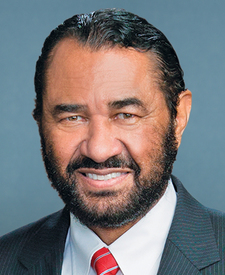
Sponsors
Legislative Progress
IntroducedMr. Green of Texas introduced the following bill; which was …
Stakeholder Effects
cui bono?How this legislation distributes effects. Mention counts reflect frequency, not effect magnitude.
Large publicly-traded companies (100+ employees or $300M+ market cap)
Department of Treasury, SEC enforcement and compliance divisions
Low-to-moderate income minority individuals, Minority low-to-moderate income individuals and communities
Corporate officers and executives at covered issuers
Bill Structure & Actor Mappings
Who is "The Secretary" in each section?
- "the_commission"
- → Securities and Exchange Commission (SEC)
- "the_secretary_of_the_treasury"
- → Secretary of the Treasury
- "the_secretary_of_housing_and_urban_development"
- → Secretary of Housing and Urban Development
- "the_secretary"
- → Secretary of the Treasury
- "the_secretary_of_housing_and_urban_development"
- → Secretary of Housing and Urban Development
Note: 'The Secretary' in Section 317 refers to Secretary of the Treasury, while Section 4B uses explicit titles (Secretary of the Treasury, Secretary of Housing and Urban Development)
Key Definitions
Terms defined in this bill
The median income for the area in which the individual lives, as determined by the Secretary of Housing and Urban Development for purposes of the United States Housing Act of 1937
An issuer that makes use of the mails or any means or instrumentality of interstate commerce and has more than 100 employees or a capitalization of greater than or equal to $300,000,000
An individual who has earnings of less than 80 percent of the area median income
Racial and ethnic populations that are underrepresented in the general population relative to the number of persons in the total population
To account for and balance in an equitable manner
A census tract in which 51 percent or more of the households located in the census tract earn less than 80 percent of the area median income
Information derived from the independent knowledge or analysis of an individual who voluntarily provides the information to the Commission, not known to the Commission from any other source
We use a combination of our own taxonomy and classification in addition to large language models to assess meaning and potential beneficiaries. High confidence means strong textual evidence. Always verify with the original bill text.
Learn more about our methodology