Saving the Civil Service Act
Summary
What This Bill Does
The Saving the Civil Service Act prevents agencies from broadly reclassifying career federal jobs into excepted-service categories. A competitive-service position may be excepted only if placed in schedules A through E under the terms that existed on September 30, 2020. An excepted-service position may not be transferred outside those schedules. Agencies may not move occupied positions into Schedule C without prior consent from the Director of the Office of Personnel Management. During a four-year presidential term, an agency may not transfer from the competitive service into the excepted service more than one percent of its employees, or five employees if that is greater. The bill is aimed at preserving merit-system protections and limiting mass conversion of career jobs into easier-to-politicize categories.
Who Benefits and How
Federal civil service employees benefit because agencies cannot broadly move occupied career positions into less protected excepted-service categories. Career agency staff benefit from a one-percent transfer cap that makes large-scale reclassification harder during a presidential term. Federal workforce unions benefit from statutory limits on Schedule C transfers and excepted-service conversions. Office of Personnel Management oversight staff benefit from an explicit consent role for occupied Schedule C transfers.
Who Bears the Burden and How
Agency managers must justify position exceptions within the September 30, 2020 schedule framework and observe transfer caps. Political appointees lose flexibility to convert career positions into categories with weaker competitive-service protections. OPM Director staff must review occupied Schedule C transfer requests before agencies can proceed. Human resources administrators must track cumulative competitive-to-excepted transfers during each presidential term.
Key Provisions
- Limits competitive-service exceptions to schedules A through E under September 30, 2020 terms.
- Bars excepted-service positions from being transferred to other schedules outside that framework.
- Requires OPM Director consent before an occupied position can be transferred into Schedule C.
- Caps agency competitive-to-excepted transfers during a presidential term at one percent or five employees.
Evidence Chain:
This summary is generated from the full bill text using AI analysis. Expand "Detailed Analysis" below for identified beneficiaries/burden bearers with clause-level evidence links.
At a Glance
What This Bill Does
Restricts agencies from moving competitive-service positions into excepted schedules or Schedule C without OPM oversight and caps competitive-to-excepted transfers during presidential terms.
Key Policy Areas
Federal Workforce, Civil Service, Government Operations
Primary Purpose
Restricts agencies from moving competitive-service positions into excepted schedules or Schedule C without OPM oversight and caps competitive-to-excepted transfers during presidential terms.
Policy Domains
Resolution provisions
Identified Gains
- Federal civil service employees
- Career agency staff
- Federal workforce unions
- Office of Personnel Management oversight staff
Identified Costs
- Agency managers
- Political appointees
- OPM Director staff
- Human resources administrators
Sponsors


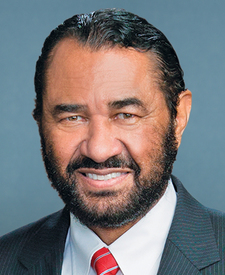
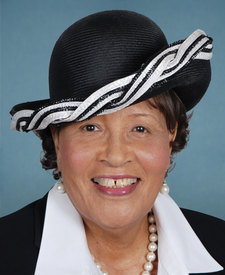

Legislative Progress
In CommitteeASSUMING FIRST SPONSORSHIP - Mr. Walkinshaw asked unanimous consent that …
Mr. Connolly (for himself, Mr. Fitzpatrick, Mr. Mfume, and Mr. …
Referred to the House Committee on Oversight and Government Reform.
Introduced in House
Stakeholder Effects
cui bono?How this legislation distributes effects. Mention counts reflect frequency, not effect magnitude.
Agency managers, OPM Director staff, Political appointees
Bill Structure & Actor Mappings
Who is "The Secretary" in each section?
We use a combination of our own taxonomy and classification in addition to large language models to assess meaning and potential beneficiaries. High confidence means strong textual evidence. Always verify with the original bill text.
Learn more about our methodology