To direct the Administrator of the National Oceanic and Atmospheric Administration to establish a program to improve fire weather and fire environment forecasting, detection, and local collaboration, and for other purposes.
Analysis under review: This bill has generated analysis that may be too generic or incomplete. Clause-level evidence remains available below.
Summary
What This Bill Does
This bill creates a comprehensive federal program to improve wildfire forecasting, detection, and emergency coordination. It establishes an Interagency Coordinating Committee on Wildfires led by NOAA, a National Advisory Committee for stakeholder input, and a fire weather testbed for testing new technologies.
Who Benefits and How
NOAA and the National Weather Service receive expanded authority and funding ($4M/year for 2025-2028) for fire weather research. Incident Meteorologists get premium pay protections for emergency wildfire work. State and local emergency managers benefit from improved wildfire forecasting and streamlined federal communications.
Who Bears the Burden and How
No significant new costs or burdens are imposed on private entities. Federal agencies must coordinate through a new interagency committee and develop a strategic plan within one year.
Key Provisions
- Creates NOAA-led program to improve fire weather forecasting and wildfire detection
- Establishes Interagency Coordinating Committee on Wildfires with 90-day deadline
- Authorizes $4 million annually for fire weather testbed (FY2025-2028)
- Provides premium pay protections for Incident Meteorologists during wildfire emergencies
Evidence Chain:
This summary is generated from the full bill text using AI analysis. Expand "Detailed Analysis" below for identified beneficiaries/burden bearers.
At a Glance
What This Bill Does
Establishes a federal program to improve fire weather forecasting, wildfire detection, and interagency coordination to reduce wildfire-related deaths, injuries, and property damage
Key Policy Areas
Emergency Management, Weather/Climate, Public Safety, Federal Workforce
Primary Purpose
Establishes a federal program to improve fire weather forecasting, wildfire detection, and interagency coordination to reduce wildfire-related deaths, injuries, and property damage
Policy Domains
Fire Weather Development Act of 2024
Identified Gains
Contextual inference, no direct clause citation- NOAA and National Weather Service
- State and local emergency managers
- Incident Meteorologists
- Wildland firefighters
- Communities in wildfire-prone areas
Contextual inference, no direct clause citation
Identified Costs
Contextual inference, no direct clause citation- Federal agencies required to coordinate
Contextual inference, no direct clause citation
Sponsors

Legislative Progress
Passed HouseReported with an amendment, committed to the Committee of the …
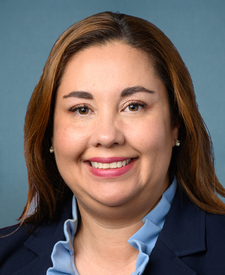
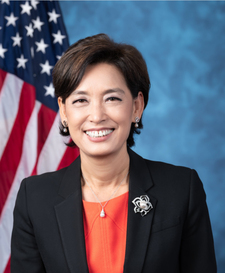
Mr. Mike Garcia of California (for himself, Ms. Caraveo, and …
Passed House (inferred from eh version)
Stakeholder Effects
cui bono?How this legislation distributes effects. Mention counts reflect frequency, not effect magnitude.
Federal emergency management agencies, NOAA Administrator, National Oceanic and Atmospheric Administration
Positive-direction: NOAA Administrator, National Oceanic and Atmospheric Administration, National Weather Service Incident Meteorologists
Negative-direction: Federal emergency management agencies
Academic research institutions, Research institutions and universities
State and local emergency management agencies, Wildland firefighters
Bill Structure & Actor Mappings
Who is "The Secretary" in each section?
- "the_director"
- → Director of the Office of Science and Technology Policy
- "the_committee"
- → Interagency Coordinating Committee on Wildfires
- "the_administrator"
- → Administrator of the National Oceanic and Atmospheric Administration
- "the_advisory_committee"
- → National Advisory Committee on Wildfires
Key Definitions
Terms defined in this bill
Environmental conditions (soil moisture, vegetation, topography, snowpack, atmospheric conditions) that influence fuel and fire behavior, smoke dispersion, and associated environmental impacts
Weather conditions that influence the start, spread, character, or behavior of wildfires including relative humidity, air temperature, wind, and atmospheric composition
We use a combination of our own taxonomy and classification in addition to large language models to assess meaning and potential beneficiaries. High confidence means strong textual evidence. Always verify with the original bill text.
Learn more about our methodology