To update the 21st Century Communications and Video Accessibility Act of 2010.
Analysis under review: This bill has generated analysis that may be too generic or incomplete. Clause-level evidence remains available below.
Summary
What This Bill Does
This bill, To update the 21st Century Communications and Video Accessibility Act of 2010., changes federal law or congressional policy affecting technology companies and users of digital services. The main policy domain is Technology, Civil Rights, Transportation.
Who Benefits and How
technology companies and users of digital services may benefit from new authority, funding, eligibility, regulatory clarity, or reduced risk created by the bill.
Who Bears the Burden and How
federal implementing agencies, technology companies and users of digital services may take on implementation duties, reporting obligations, compliance costs, or oversight responsibilities.
Key Provisions
- Section H2FFECADB143F4BA896F7E92A11C481AE: 1. Short title; table of contents This Act may be cited as the Communications, Video, and Technology Accessibility Act of 2023. The table of contents for this...
- Section HDE88A9AE3CC34E4BA057AD18FF2C8F9C: 101. Definitions Section 713(h) of the Communications Act of 1934 (47 U.S.C. 613(h)) is amended— in paragraph (1)— in the heading, by striking Video...
- Section HA6BC44AC143A499F8EF87913D37D943B: 102. Closed captioning Section 713 of the Communications Act of 1934 (47 U.S.C. 613) is amended— by redesignating subsections (d) through (h) as subsections...
- Section H4C865CE744884872B272132CF541770D: 103. Audio description Subsection (g) of section 713 of the Communications Act of 1934 (47 U.S.C. 613), as redesignated by section 102, is amended— in the...
- Section H75B2CB2565794A6A94749A4F5D74B22A: 104. Technical and conforming amendments relating to economic burden Subsection (f) of section 713 of the Communications Act of 1934 (47 U.S.C. 613), as...
Evidence Chain:
This summary is generated from the full bill text using AI analysis. Expand "Detailed Analysis" below for identified beneficiaries/burden bearers with clause-level evidence links.
At a Glance
What This Bill Does
This bill, To update the 21st Century Communications and Video Accessibility Act of 2010., changes federal law or congressional policy affecting technology companies and users of digital services.
Key Policy Areas
Technology, Civil Rights, Transportation
Primary Purpose
This bill, To update the 21st Century Communications and Video Accessibility Act of 2010., changes federal law or congressional policy affecting technology companies and users of digital services.
Policy Domains
Whole bill
Identified Gains
- technology companies and users of digital services
Identified Costs
- federal implementing agencies
- technology companies and users of digital services
Sponsors


Legislative Progress
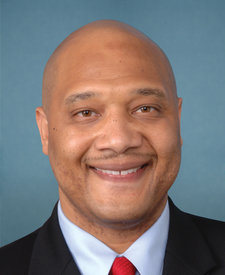
IntroducedMs. Eshoo (for herself, Ms. Norton, and Mr. Carson) introduced …
Impact analysis is available but no clear stakeholder effects identified. View clause-level analysis →
Bill Structure & Actor Mappings
Who is "The Secretary" in each section?
- "the_commission"
- → The commission identified in the operative section
Key Definitions
Terms defined in this bill
a third party service that provides visual image descriptive functionality. in section 716(e) (47 U.S.C. 617(e)), by adding at the end the following: (3)Revision of regulations
and inserting For purposes of this section, the term economically burdensome means
telephone customer support using one-to-one video communication that— is facilitated by a contact center representative
video programming that is not live programming or near-live programming. The term user-generated video means video programming that is— made available via a service using Internet protocol or any successor protocol
We use a combination of our own taxonomy and classification in addition to large language models to assess meaning and potential beneficiaries. High confidence means strong textual evidence. Always verify with the original bill text.
Learn more about our methodology