Cruise Passenger Protection Act of 2025
Summary
What This Bill Does
The Cruise Passenger Protection Act is a broad passenger-rights, victim-assistance, safety, and enforcement bill for large passenger vessels with U.S. embarkation or disembarkation. Title I creates an Office of Maritime Consumer Protection in DOT's General Counsel office, led by an Assistant General Counsel, to process complaints, inspect vessels for consumer protection awareness, investigate violations, and enforce maritime consumer protection duties. DOT must develop standards for summaries of passage-contract key terms, including fees, waivers, limits on liability, notice periods, arbitration, forum, and jurisdiction, and require prominent website and advertising disclosure. DOT must run complaint hotlines, publish monthly complaint data by vessel, investigate complaints involving cancellations, delays, baggage, refunds, fares, advertising, and onboard conditions, and create an advisory committee to recommend consumer protections and key contract terms. The bill requires DOT to determine which 2013 cruise line passenger bill of rights items are enforceable. It creates a director of victim support services, a 24-hour hotline, written rights summaries, federal points of contact, confidential support services, liaison with vessels, agencies, embassies, and consulates, and monthly public crime statistics by cruise line. Title II reorganizes chapter 35, expands crime reporting to more FBI-reportable offenses, requires contact with FBI offices or legal attaches within four hours and consulates after U.S.-national incidents, strengthens video surveillance, record retention, overboard detection, medical staffing, AED and emergency instructions, return of remains, interagency information sharing, and lets Homeland Security withhold or revoke clearance or deny entry for violations or unpaid penalties.
Who Benefits and How
Cruise passengers benefit from clearer passage-contract terms, complaint channels, public complaint data, and stronger disclosure of legal rights. Crime victims on cruise vessels benefit from a federal victim-support director, 24-hour hotline, written rights summary, confidential support services, and crime-statistics transparency. Families of U.S. passengers who die onboard benefit from return-of-remains rules when next of kin request return to the United States. Federal Bureau of Investigation field offices benefit from faster notices, expanded crime reports, longer video retention, and interagency information sharing. Department of Justice victim assistance officials benefit from a defined role in consulting on written rights summaries and support services.
Who Bears the Burden and How
Cruise vessel owners must provide key-term summaries, website links, complaint notices, victim-support information, crime reporting, surveillance retention, safety equipment, medical staffing, and remains-handling compliance. Office of Maritime Consumer Protection staff must create standards, hotlines, complaint databases, advisory committee support, and enforcement programs. Secretary of Transportation must issue consumer, victim-support, and safety standards with support from DOT and Coast Guard officials. Department of Homeland Security clearance officials may need to withhold clearance, revoke clearance, or deny entry for noncompliant vessels. Coast Guard Office of Maritime Safety staff must help implement exterior-deck, stateroom, surveillance, medical, and waiver standards.
Key Provisions
- Creates a DOT Office of Maritime Consumer Protection for cruise passenger complaints and enforcement.
- Requires passage-contract key-term summaries, complaint hotlines, monthly public complaint data, and an advisory committee.
- Creates victim support services, written rights summaries, 24-hour support access, and monthly cruise crime statistics.
- Expands cruise crime reporting, FBI and consular notification, log access, video surveillance, and evidence retention.
- Strengthens vessel safety, medical staffing, AED guidance, return-of-remains rules, information sharing, and clearance or entry denial enforcement.
Evidence Chain:
This summary is generated from the full bill text using AI analysis. Expand "Detailed Analysis" below for identified beneficiaries/burden bearers with clause-level evidence links.
At a Glance
What This Bill Does
Creates an Office of Maritime Consumer Protection at DOT, requires cruise passage-contract key-term summaries, complaint hotlines and monthly complaint data, an advisory committee and passenger bill-of-rights review, victim-support services and crime statistics, expanded cruise crime reporting and log access, stronger surveillance and evidence-retention rules, exterior-deck and stateroom safety updates, medical staffing and emergency guidance, return-of-remains rules, information sharing, and clearance or entry denial for noncompliant cruise vessels.
Key Policy Areas
Maritime, Consumer Protection, Public Safety
Primary Purpose
Creates an Office of Maritime Consumer Protection at DOT, requires cruise passage-contract key-term summaries, complaint hotlines and monthly complaint data, an advisory committee and passenger bill-of-rights review, victim-support services and crime statistics, expanded cruise crime reporting and log access, stronger surveillance and evidence-retention rules, exterior-deck and stateroom safety updates, medical staffing and emergency guidance, return-of-remains rules, information sharing, and clearance or entry denial for noncompliant cruise vessels.
Policy Domains
Resolution provisions
Identified Gains
- Cruise passengers
- Cruise crime victims
- Families of deceased passengers
- Federal Bureau of Investigation field offices
- Department of Justice victim assistance officials
Identified Costs
- Cruise vessel owners
- Office of Maritime Consumer Protection staff
- Secretary of Transportation
- Department of Homeland Security clearance officials
- Coast Guard Office of Maritime Safety staff
Sponsors

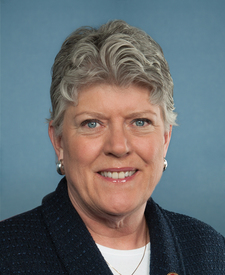
Legislative Progress
In CommitteeReferred to the Subcommittee on Coast Guard and Maritime Transportation.
Ms. Matsui introduced the following bill; which was referred to …
Referred to the House Committee on Transportation and Infrastructure.
Introduced in House
Stakeholder Effects
cui bono?How this legislation distributes effects. Mention counts reflect frequency, not effect magnitude.
Coast Guard Office of Maritime Safety staff, Department of Homeland Security clearance officials, Department of Justice victim assistance officials
Positive-direction: Department of Justice victim assistance officials
Negative-direction: Coast Guard Office of Maritime Safety staff, Department of Homeland Security clearance officials, Office of Maritime Consumer Protection staff, Secretary of Transportation
Cruise crime victims, Families of deceased passengers
Federal Bureau of Investigation field offices
Bill Structure & Actor Mappings
Who is "The Secretary" in each section?
We use a combination of our own taxonomy and classification in addition to large language models to assess meaning and potential beneficiaries. High confidence means strong textual evidence. Always verify with the original bill text.
Learn more about our methodology