Wildfire Emergency Preparedness Act of 2025
Summary
What This Bill Does
The Wildfire Emergency Preparedness Act addresses structural firefighters increasingly responding to wildfires and wildland-urban interface fires. USDA, through the Forest Service Chief, must publish within one year a training plan that uses National Fire Academy material and National Wildfire Coordinating Group S-130 and S-190 course material. USDA may award competitive grants to nonprofit firefighter training organizations, with $5 million authorized for each fiscal year 2026 through 2031 and up to 2.5 percent for technical assistance. The bill creates a Senate-confirmed Under Secretary of Agriculture for Fire Coordination to coordinate federal, state, and local wildfire response and adds a state/local firefighter labor representative to the Wildland Fire Leadership Council and National Wildfire Coordinating Group. DOD firefighters may assist qualified agency heads on wildfire and WUI incidents on a reimbursable basis, with DOD reporting barriers. NIOSH must run a firefighter health and safety research program on respiratory health, PFAS, and carcinogens, consult firefighter unions, USDA, Interior, EPA, and equipment stakeholders, report within 180 days and annually, and receives $20 million annually for fiscal 2026 through 2031. FEMA must add task-force mental health practitioner and peer-support criteria and may use up to $10 million annually for fiscal 2026 through 2031. USDA may also award $100 million in fiscal 2026 grants directly to fire departments and nonaffiliated EMS organizations for PPE and WUI training, with caps by jurisdiction size.
Who Benefits and How
Structural firefighters benefit from wildfire and WUI training built around National Fire Academy and NWCG course material. Fire departments benefit from direct supplemental grants for PPE and wildfire or WUI response training. Nonaffiliated EMS organizations benefit from eligibility for supplemental emergency medical services grants. Firefighter health researchers benefit from $20 million annually for NIOSH respiratory, PFAS, and carcinogen research. Emergency responders on federal task forces benefit from mental health practitioner access and peer-support training criteria.
Who Bears the Burden and How
Forest Service administrators must publish the training plan, run grants, provide technical assistance, and coordinate with fire-service stakeholders. The new Under Secretary of Agriculture for Fire Coordination must advise USDA and coordinate federal, state, and local wildfire response. Defense Department firefighter units may be assigned reimbursable wildfire and WUI response work when requested. FEMA task force managers must add mental health practitioners, peer-support training, warning-sign identification, de-escalation, and referral criteria. Federal taxpayers bear the cost of multi-year training, research, mental health, and supplemental assistance authorizations.
Key Provisions
- Authorizes $5 million annually for Forest Service structural-firefighter wildfire training grants from fiscal 2026 through 2031.
- Creates an Under Secretary of Agriculture for Fire Coordination and adds firefighter labor representation to wildfire coordination bodies.
- Authorizes reimbursable Defense Department firefighter assistance for wildfire and WUI incidents.
- Authorizes $20 million annually for NIOSH firefighter respiratory, PFAS, and carcinogen research.
- Authorizes up to $10 million annually for FEMA task force mental health assistance and $100 million in fiscal 2026 supplemental firefighter grants.
Evidence Chain:
This summary is generated from the full bill text using AI analysis. Expand "Detailed Analysis" below for identified beneficiaries/burden bearers with clause-level evidence links.
At a Glance
What This Bill Does
Creates a wildfire and wildland-urban interface preparedness package with Forest Service structural-firefighter training plans and grants, a Senate-confirmed Under Secretary of Agriculture for Fire Coordination, reimbursable Defense Department firefighter assistance, NIOSH firefighter respiratory and PFAS research, FEMA mental health criteria and peer-support training for response task forces, $100 million in supplemental firefighter assistance grants, and a report on local wildfire training and coordination barriers.
Key Policy Areas
Wildfire, Emergency Services, Firefighter Safety
Primary Purpose
Creates a wildfire and wildland-urban interface preparedness package with Forest Service structural-firefighter training plans and grants, a Senate-confirmed Under Secretary of Agriculture for Fire Coordination, reimbursable Defense Department firefighter assistance, NIOSH firefighter respiratory and PFAS research, FEMA mental health criteria and peer-support training for response task forces, $100 million in supplemental firefighter assistance grants, and a report on local wildfire training and coordination barriers.
Policy Domains
Resolution provisions
Identified Gains
- Structural firefighters
- Fire departments
- Nonaffiliated EMS organizations
- Firefighter health researchers
- Emergency responders on task forces
Identified Costs
- Forest Service administrators
- Under Secretary for Fire Coordination
- Defense firefighter units
- FEMA task force managers
- Federal taxpayers
Sponsors


Legislative Progress
In CommitteeReferred to the Subcommittee on Economic Development, Public Buildings, and …
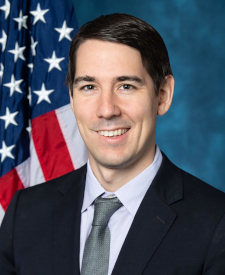
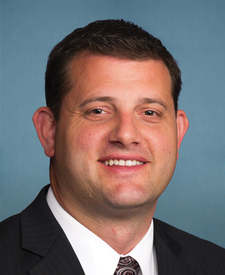
Mr. Harder of California (for himself and Mr. Valadao) introduced …
Referred to the Committee on Agriculture, and in addition to …
Introduced in House
Stakeholder Effects
cui bono?How this legislation distributes effects. Mention counts reflect frequency, not effect magnitude.
FEMA task force managers, Forest Service administrators
Bill Structure & Actor Mappings
Who is "The Secretary" in each section?
We use a combination of our own taxonomy and classification in addition to large language models to assess meaning and potential beneficiaries. High confidence means strong textual evidence. Always verify with the original bill text.
Learn more about our methodology