No Tax Treaties for Foreign Aggressors Act of 2025
Summary
What This Bill Does
The No Tax Treaties for Foreign Aggressors Act creates a conditional tax-treaty termination trigger tied to an armed attack on Taiwan. If the President notifies the Treasury Secretary that the People's Liberation Army has initiated an armed attack against the Republic of China, commonly known as Taiwan, Treasury must provide written diplomatic notice to the PRC of U.S. intent to terminate the United States-People's Republic of China Income Tax Convention done at Beijing on April 30, 1984, and effective January 1, 1987. The notice must be provided under Article 28 of the treaty within 30 days of the President's notification. The President must also give written notice of the termination to Senate Foreign Relations, Senate Finance, House Foreign Affairs, and House Ways and Means.
Who Benefits and How
Taiwan security advocates benefit because a PLA attack would automatically trigger a major bilateral tax-treaty consequence. Congressional foreign affairs committees benefit from mandatory written notice of treaty termination tied to Taiwan aggression. Congressional tax committees benefit from notice that lets them evaluate cross-border tax consequences. U.S. diplomats benefit from a predefined economic response tool rather than ad hoc treaty decision-making after an attack.
Who Bears the Burden and How
Treasury treaty offices must send diplomatic termination notice to the PRC within 30 days of the presidential trigger. U.S. investors using the China tax treaty may lose treaty protections after termination. Chinese investors using the U.S. treaty may lose reduced withholding or other treaty benefits. Multinational tax planners must adjust structures if the 1984 income tax convention is terminated.
Key Provisions
- Requires Treasury notice to terminate the U.S.-PRC income tax convention after a PLA armed attack on Taiwan.
- Requires the President to trigger Treasury action by notifying the Secretary of the armed attack.
- Requires diplomatic notice under Article 28 within 30 days.
- Requires written notification to Senate and House foreign affairs and tax committees.
Evidence Chain:
This summary is generated from the full bill text using AI analysis. Expand "Detailed Analysis" below for identified beneficiaries/burden bearers with clause-level evidence links.
At a Glance
What This Bill Does
Requires the Treasury Secretary, within 30 days after the President notifies Treasury that the People's Liberation Army initiated an armed attack against Taiwan, to give diplomatic notice of U.S. intent to terminate the 1984 United States-People's Republic of China Income Tax Convention under Article 28, and requires the President to notify Senate and House foreign affairs and tax committees of the termination.
Key Policy Areas
Tax, China, Taiwan
Primary Purpose
Requires the Treasury Secretary, within 30 days after the President notifies Treasury that the People's Liberation Army initiated an armed attack against Taiwan, to give diplomatic notice of U.S. intent to terminate the 1984 United States-People's Republic of China Income Tax Convention under Article 28, and requires the President to notify Senate and House foreign affairs and tax committees of the termination.
Policy Domains
Resolution provisions
Identified Gains
- Taiwan security advocates
- Congressional foreign affairs committees
- Congressional tax committees
- U.S. diplomats
Identified Costs
- Treasury treaty offices
- U.S. investors using the China treaty
- Chinese investors using the U.S. treaty
- Multinational tax planners
Sponsors
Legislative Progress
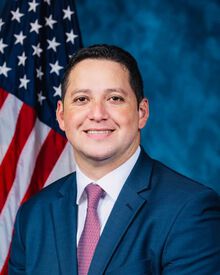
In CommitteeMr. Tony Gonzales of Texas introduced the following bill; which …
Referred to the House Committee on Ways and Means.
Introduced in House
Stakeholder Effects
cui bono?How this legislation distributes effects. Mention counts reflect frequency, not effect magnitude.
Congressional tax committees, Treasury treaty offices
Positive-direction: Congressional tax committees
Negative-direction: Treasury treaty offices
Bill Structure & Actor Mappings
Who is "The Secretary" in each section?
We use a combination of our own taxonomy and classification in addition to large language models to assess meaning and potential beneficiaries. High confidence means strong textual evidence. Always verify with the original bill text.
Learn more about our methodology