Freedom from Government Surveys Act
Summary
What This Bill Does
The Freedom from Government Surveys Act changes the legal status of the American Community Survey. Title 13 section 221 currently contains penalties for refusing or neglecting to answer census-related questions. The bill adds language making those penalties inapplicable to any person who refuses or neglects to answer any American Community Survey question or any successor survey question. It also amends title 13 section 193 to require the Commerce Secretary to include a statement on the American Community Survey, or a successor survey, telling recipients that participation is voluntary. The bill does not end the survey; it changes enforceability and disclosure to respondents.
Who Benefits and How
Households receiving the American Community Survey benefit because they can decline questions without title 13 refusal penalties. Privacy advocates benefit because the survey must disclose that participation is voluntary. Respondents with sensitive personal information benefit from clearer choice over whether to answer detailed household questions. Members of Congress opposing mandatory surveys benefit from a statutory change to the survey's enforcement posture.
Who Bears the Burden and How
Census Bureau survey administrators must revise American Community Survey materials to include voluntary-participation language. Federal statistical agencies may receive lower response rates or less complete demographic, housing, commuting, and economic data. Local governments using ACS data may face less reliable small-area estimates if voluntary response reduces participation. Researchers relying on ACS microdata may face data-quality and bias concerns if nonresponse increases.
Key Provisions
- Exempts American Community Survey refusals from title 13 refusal or neglect penalties.
- Extends the voluntary treatment to any successor survey.
- Requires the Commerce Secretary to state on the survey that participation is voluntary.
- Preserves the survey itself while changing enforceability and respondent notice.
Evidence Chain:
This summary is generated from the full bill text using AI analysis. Expand "Detailed Analysis" below for identified beneficiaries/burden bearers.
At a Glance
What This Bill Does
Makes responses to the American Community Survey and any successor survey voluntary by exempting refusals or neglected answers from title 13 penalties and requiring the Commerce Secretary to print a voluntary-participation statement on the survey.
Key Policy Areas
Census, Privacy, Civil Liberties
Primary Purpose
Makes responses to the American Community Survey and any successor survey voluntary by exempting refusals or neglected answers from title 13 penalties and requiring the Commerce Secretary to print a voluntary-participation statement on the survey.
Policy Domains
Resolution provisions
Identified Gains
Contextual inference, no direct clause citation- Households receiving ACS forms
- Privacy advocates
- Respondents with sensitive information
- Mandatory survey opponents
Contextual inference, no direct clause citation
Identified Costs
Contextual inference, no direct clause citation- Census Bureau survey administrators
- Federal statistical agencies
- Local governments using ACS data
- Researchers relying on ACS microdata
Contextual inference, no direct clause citation
Sponsors
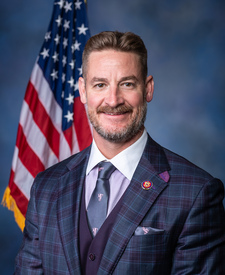
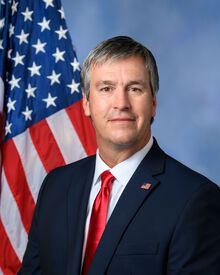
Legislative Progress
In CommitteeMr. Steube introduced the following bill; which was referred to …
Referred to the House Committee on Oversight and Government Reform.
Introduced in House
Bill Structure & Actor Mappings
Who is "The Secretary" in each section?
We use a combination of our own taxonomy and classification in addition to large language models to assess meaning and potential beneficiaries. High confidence means strong textual evidence. Always verify with the original bill text.
Learn more about our methodology