Cell-Site Simulator Warrant Act of 2025
Summary
What This Bill Does
The Cell-Site Simulator Warrant Act adds a new title 18 section 3119. It generally makes knowing cell-site simulator use unlawful in the United States and bars intelligence-community use outside the United States against a United States person, with a fine of up to $250,000 and suppression of illegally obtained evidence. Law enforcement may use a simulator only under a warrant issued under federal, state, or military warrant procedures by a court of competent jurisdiction. The application must show that other investigative procedures failed, are unlikely to succeed, or are too dangerous; specify the likely area of effect and operating time; certify the narrowest reasonable operation; and show compliance with the Communications Act and FCC rules. Warrants cannot last longer than necessary or more than 30 days, with 30-day extensions. Emergency use is limited to immediate danger of death or serious physical injury, organized-crime conspiratorial activity, or national-security threats, requires a warrant application within 48 hours, and requires destruction and inventory if denied. Applications must disclose potential disruption to 911, the 988 crisis line, poison control, relay services, and other communications; certify testing by an FCC-recognized accredited laboratory; describe minimization precautions; and state whether the device will be used at constitutionally protected gatherings. The bill also includes notice and delayed-notice rules, definitions, FISA-related rules, minimization and destruction requirements, annual federal reporting on warrants and emergency uses, disciplinary proceedings for willful violations, Secret Service protective-duty and correctional contraband-system exceptions, and a requirement that the FCC initiate necessary regulatory proceedings within 180 days.
Who Benefits and How
U.S. persons subject to cell-site surveillance benefit because warrant, emergency, notice, minimization, and suppression rules limit indiscriminate simulator use. Bystanders near simulator operations benefit from required disclosures about 911, 988, poison control, relay-service, and other communications disruptions. Federal courts benefit from explicit criteria for evaluating cell-site simulator warrant requests, extensions, and emergency after-the-fact applications. Accredited FCC testing laboratories benefit because device models must be inspected to verify disruption disclosures.
Who Bears the Burden and How
Law enforcement agencies must obtain warrants, document necessity, limit area and operating time, provide disruption disclosures, and destroy unlawfully collected data. Intelligence community elements must comply with new limits when U.S. persons are the subject of surveillance outside the United States. Department of Justice reporting offices must collect annual statistics on warrants, emergency uses, targeted devices, bystander devices, minimization failures, and federal agency inventories. Federal Communications Commission staff must initiate proceedings within 180 days to implement the Act without expanding or contracting FCC authority.
Key Provisions
- Prohibits knowing use of cell-site simulators except under statutory exceptions.
- Requires warrants with necessity, area, time, narrowness, Communications Act, and FCC compliance showings.
- Limits emergency use to serious injury, organized crime, or national-security threats and requires a warrant application within 48 hours.
- Requires disruption disclosures for 911, 988, poison control, relay services, and other communications, plus accredited lab testing.
- Creates suppression, notice, minimization, destruction, annual reporting, disciplinary, Secret Service, correctional facility, and FCC rulemaking provisions.
Evidence Chain:
This summary is generated from the full bill text using AI analysis. Expand "Detailed Analysis" below for identified beneficiaries/burden bearers with clause-level evidence links.
At a Glance
What This Bill Does
Creates a federal cell-site simulator statute that generally prohibits knowing use of cell-site simulators, imposes up to a $250,000 fine and evidence suppression for unlawful use, allows law enforcement use only with a detailed warrant or tightly limited emergency authority, requires disclosures about service disruption and FCC-recognized lab testing, adds notice, inventory, minimization, destruction, reporting, and disciplinary rules, and directs the Federal Communications Commission to update implementing regulations.
Key Policy Areas
Privacy, Law Enforcement, Telecommunications
Primary Purpose
Creates a federal cell-site simulator statute that generally prohibits knowing use of cell-site simulators, imposes up to a $250,000 fine and evidence suppression for unlawful use, allows law enforcement use only with a detailed warrant or tightly limited emergency authority, requires disclosures about service disruption and FCC-recognized lab testing, adds notice, inventory, minimization, destruction, reporting, and disciplinary rules, and directs the Federal Communications Commission to update implementing regulations.
Policy Domains
Resolution provisions
Identified Gains
- U.S. persons subject to cell-site surveillance
- Bystanders near simulator operations
- Federal courts
- Accredited FCC testing laboratories
Identified Costs
- Law enforcement agencies
- Intelligence community elements
- Department of Justice reporting offices
- Federal Communications Commission staff
Sponsors
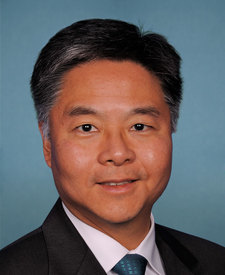
Ted Lieu
D-CA | Primary Sponsor
Legislative Progress
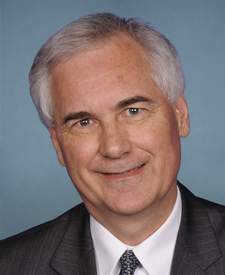
In CommitteeMr. Lieu (for himself and Mr. McClintock) introduced the following …
Referred to the Committee on the Judiciary, and in addition …
Introduced in House
Stakeholder Effects
cui bono?How this legislation distributes effects. Mention counts reflect frequency, not effect magnitude.
Accredited FCC testing laboratories, Bystanders near simulator operations
U.S. persons subject to cell-site surveillance
Bill Structure & Actor Mappings
Who is "The Secretary" in each section?
We use a combination of our own taxonomy and classification in addition to large language models to assess meaning and potential beneficiaries. High confidence means strong textual evidence. Always verify with the original bill text.
Learn more about our methodology