Making American Elections Great Again Act
Summary
What This Bill Does
The Making American Elections Great Again Act combines census-apportionment changes with federal voter-documentation rules. It amends title 13 so the Commerce Secretary must take a decennial census on enactment and every ten years afterward, with a mid-decade census five years after each decennial census date. Census questionnaires used to determine state population must include a checkbox or similar option for each household member's United States citizenship status. The bill amends the 1929 apportionment statute so noncitizens are excluded from the state population count used to apportion House seats, including for the 120th Congress after the first census required by the bill. It also adds a Help America Vote Act section 303A barring state or local election officials from providing an in-person federal-election ballot unless the voter presents proof of citizenship and government photo ID, and barring acceptance of mail ballots unless copies of those documents are submitted. Voters lacking documentation may cast provisional ballots, but those ballots count only if the official verifies citizenship under state law.
Who Benefits and How
Citizen-only apportionment advocates benefit because House seats would be apportioned using citizen population rather than total resident population. Voters favoring strict federal ID rules benefit because every federal-election voter would need citizenship proof and government photo identification. State election officials benefit from a national documentation rule, although they must administer verification and provisional-ballot procedures. Congressional redistricting officials benefit from a new census and apportionment dataset tied to citizenship status.
Who Bears the Burden and How
The Census Bureau must conduct an additional census cycle, add citizenship response options, and support mid-decade census timing. Noncitizen residents lose representation weight in House apportionment because they are excluded from the count. Voters lacking citizenship documents or photo identification face provisional-ballot treatment and possible rejection. Local election offices must verify citizenship, handle name-change evidence, process documentation copies for mail ballots, and apply state provisional-ballot rules.
Key Provisions
- Requires a decennial census on enactment and every ten years afterward, with mid-decade censuses five years later.
- Adds a citizenship checkbox or similar option to census questionnaires for each household member.
- Excludes noncitizens from the population used to apportion Representatives among the states.
- Requires proof of United States citizenship and government photo identification for federal-election ballots.
- Requires undocumented ballots to be treated as provisional unless citizenship is verified under state law.
Evidence Chain:
This summary is generated from the full bill text using AI analysis. Expand "Detailed Analysis" below for identified beneficiaries/burden bearers with clause-level evidence links.
At a Glance
What This Bill Does
Requires a new decennial census after enactment and mid-decade censuses five years later, adds a citizenship checkbox to census questionnaires, excludes noncitizens from congressional apportionment counts, requires proof of United States citizenship and government photo identification to vote in federal elections in person or by mail, and treats ballots without required documentation as provisional unless citizenship is verified.
Key Policy Areas
Elections, Census, Voting Rights
Primary Purpose
Requires a new decennial census after enactment and mid-decade censuses five years later, adds a citizenship checkbox to census questionnaires, excludes noncitizens from congressional apportionment counts, requires proof of United States citizenship and government photo identification to vote in federal elections in person or by mail, and treats ballots without required documentation as provisional unless citizenship is verified.
Policy Domains
Resolution provisions
Identified Gains
- Citizen-only apportionment advocates
- Strict voter ID supporters
- State election officials
- Congressional redistricting officials
Identified Costs
- Census Bureau
- Noncitizen residents
- Voters lacking documents
- Local election offices
Sponsors
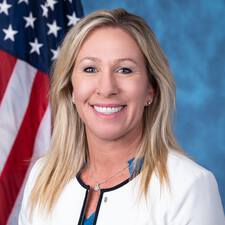
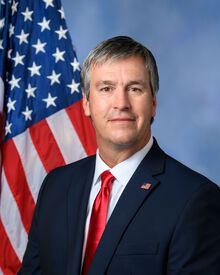
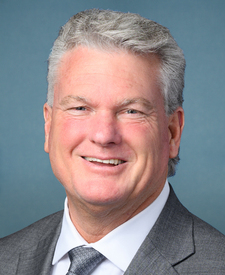

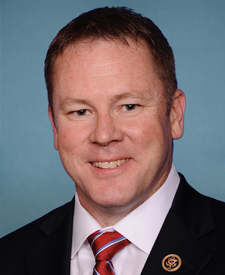
Legislative Progress
In CommitteeMs. Greene of Georgia (for herself, Mr. Davidson, and Mr. …
Referred to the Committee on House Administration, and in addition …
Introduced in House
Stakeholder Effects
cui bono?How this legislation distributes effects. Mention counts reflect frequency, not effect magnitude.
Census Bureau, Congressional redistricting officials, State election officials
Strict voter ID supporters, Voters lacking documents
Positive-direction: Strict voter ID supporters
Negative-direction: Voters lacking documents
Bill Structure & Actor Mappings
Who is "The Secretary" in each section?
We use a combination of our own taxonomy and classification in addition to large language models to assess meaning and potential beneficiaries. High confidence means strong textual evidence. Always verify with the original bill text.
Learn more about our methodology