SOS Act
Summary
What This Bill Does
The SOS Act amends section 202(e)(1) of the Congressional Budget and Impoundment Control Act. The added requirement is narrow but meaningful for Social Security transparency: CBO's report on the Old-Age and Survivors Insurance Trust Fund and the Disability Insurance Trust Fund must include a graph comparing two paths. One is the amount assumed under the Balanced Budget and Emergency Deficit Control Act baseline rule. The other is outlays from payments from those trust funds assuming payments remain consistent with amounts payable from dedicated funding sources under current law. The bill does not change benefit formulas or payroll taxes; it changes how the fiscal gap between baseline assumptions and dedicated-financing constraints is displayed to Congress and the public.
Who Benefits and How
Social Security oversight committees benefit from a visual comparison of baseline assumed payments and dedicated-source payable amounts. Fiscal watchdog organizations benefit because the graph makes trust-fund financing constraints easier to see in CBO reporting. Social Security beneficiaries benefit indirectly from clearer public information about OASI and DI financing pressure. Budget analysts benefit from a required presentation that separates baseline assumptions from dedicated-funding limits.
Who Bears the Burden and How
Congressional Budget Office analysts must add the trust-fund comparison graph to the required report. Social Security policymakers must respond to a more visible display of the difference between assumed payments and dedicated-source outlays. Congressional staff must interpret the added graph when discussing trust-fund solvency and budget baselines. Advocates who prefer less prominent solvency warnings may bear a messaging burden from the new visual comparison.
Key Provisions
- Requires CBO reporting on OASI and DI trust funds to include a graph-format comparison.
- Compares baseline assumed amounts under the Balanced Budget and Emergency Deficit Control Act with dedicated-source payable outlays.
- Improves transparency about the gap between baseline reporting and current-law trust-fund financing constraints.
- Leaves Social Security benefit formulas and payroll tax rules unchanged.
Evidence Chain:
This summary is generated from the full bill text using AI analysis. Expand "Detailed Analysis" below for identified beneficiaries/burden bearers with clause-level evidence links.
At a Glance
What This Bill Does
Requires the Congressional Budget Office's report on the Old-Age and Survivors Insurance Trust Fund and Disability Insurance Trust Fund to include a graph comparing baseline assumed payments with outlays constrained to amounts payable from dedicated funding sources under current law.
Key Policy Areas
Social Security, Budget, Fiscal Reporting
Primary Purpose
Requires the Congressional Budget Office's report on the Old-Age and Survivors Insurance Trust Fund and Disability Insurance Trust Fund to include a graph comparing baseline assumed payments with outlays constrained to amounts payable from dedicated funding sources under current law.
Policy Domains
Resolution provisions
Identified Gains
- Social Security oversight committees
- Fiscal watchdog organizations
- Social Security beneficiaries
- Budget analysts
Identified Costs
- Congressional Budget Office analysts
- Social Security policymakers
- Congressional staff
- Solvency-warning opponents
Sponsors



Legislative Progress
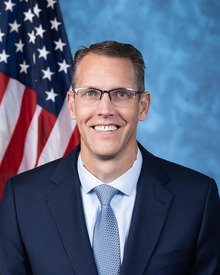
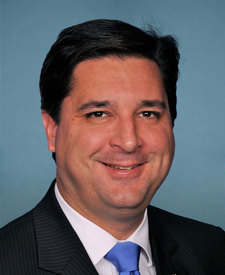
In CommitteeMr. Feenstra (for himself, Ms. Foxx, Ms. Hageman, Mr. Bacon, …
Referred to the House Committee on the Budget.
Introduced in House
Stakeholder Effects
cui bono?How this legislation distributes effects. Mention counts reflect frequency, not effect magnitude.
Congressional Budget Office analysts, Congressional staff, Social Security oversight committees
Positive-direction: Social Security oversight committees
Negative-direction: Congressional Budget Office analysts, Congressional staff
Bill Structure & Actor Mappings
Who is "The Secretary" in each section?
We use a combination of our own taxonomy and classification in addition to large language models to assess meaning and potential beneficiaries. High confidence means strong textual evidence. Always verify with the original bill text.
Learn more about our methodology