Fix Our Flooded Basements Act of 2025
Summary
What This Bill Does
The Fix Our Flooded Basements Act changes FEMA assistance for flood-damaged basements under the Stafford Act. When FEMA provides repair assistance for flood-damaged basements, it may not limit assistance to rooms required for occupancy, and may cover mold, mildew, and moisture damage caused by a major disaster without limiting assistance to damage that may cause additional loss or affects safety, sanitation, and functionality. For personal property expenses, FEMA must provide coverage at least equivalent to the Standard Flood Insurance Policy for building and personal property below the lowest floor, including basements, and cover repair or replacement of all building and personal property in a flood-damaged basement damaged by a major disaster. Within six months, FEMA must revise regulations to let applicants with previous flood-insurance-maintenance requirements qualify for the Group Flood Insurance Policy, let applicants outside special flood hazard areas qualify, expand group policy coverage to at least the maximum Standard Flood Insurance Policy coverage, and include basement real and personal property components, water-damage repairs, appliances, flooring, carpet, items needed to return the basement to pre-flood condition, basement items covered by the proposed SFIP basement endorsement, and mold, mildew, and moisture damage. The bill also excludes eligible basement hazard mitigation expenses and Group Flood Insurance Policy premiums from the Stafford Act maximum assistance cap.
Who Benefits and How
Flood survivors with damaged basements benefit from broader FEMA repair, personal-property, mold, mildew, and moisture assistance. Homeowners outside special flood hazard areas benefit from eligibility for the Group Flood Insurance Policy. Applicants with prior flood-insurance requirements benefit because the bill lets them qualify for group flood coverage. Basement repair contractors benefit if FEMA assistance covers more repair and replacement work after disasters.
Who Bears the Burden and How
FEMA Administrator must revise regulations within six months and administer broader basement and group flood insurance assistance. Group Flood Insurance Policy administrators must expand eligibility and coverage to match the new statutory requirements. Federal taxpayers bear increased disaster-assistance and group flood insurance costs. FEMA caseworkers must evaluate basement property, mold, mildew, moisture, mitigation, and premium exclusions under revised rules.
Key Provisions
- Expands FEMA repair assistance for flood-damaged basements beyond rooms required for occupancy.
- Provides mold, mildew, and moisture assistance without limiting coverage to further-loss or safety-functionality cases.
- Requires personal-property assistance at least equivalent to Standard Flood Insurance Policy basement coverage.
- Requires FEMA regulatory revisions within six months for Group Flood Insurance Policy eligibility and basement coverage.
- Excludes basement mitigation expenses and Group Flood Insurance Policy premiums from Stafford Act assistance caps.
Evidence Chain:
This summary is generated from the full bill text using AI analysis. Expand "Detailed Analysis" below for identified beneficiaries/burden bearers with clause-level evidence links.
At a Glance
What This Bill Does
Expands FEMA individual assistance for flood-damaged basements by barring limits to occupancy-required rooms, allowing mold, mildew, and moisture assistance beyond safety or further-loss situations, requiring personal-property assistance at least equivalent to Standard Flood Insurance Policy basement coverage, revising Group Flood Insurance Policy eligibility and coverage within six months, and excluding basement mitigation and group flood insurance premiums from Stafford Act assistance caps.
Key Policy Areas
Disaster Relief, Flood Insurance, Housing
Primary Purpose
Expands FEMA individual assistance for flood-damaged basements by barring limits to occupancy-required rooms, allowing mold, mildew, and moisture assistance beyond safety or further-loss situations, requiring personal-property assistance at least equivalent to Standard Flood Insurance Policy basement coverage, revising Group Flood Insurance Policy eligibility and coverage within six months, and excluding basement mitigation and group flood insurance premiums from Stafford Act assistance caps.
Policy Domains
Resolution provisions
Identified Gains
- Flood survivors
- Homeowners outside flood hazard areas
- Applicants with prior insurance requirements
- Basement repair contractors
Identified Costs
- FEMA Administrator
- Group Flood Insurance Policy administrators
- Federal taxpayers
- FEMA caseworkers
Sponsors

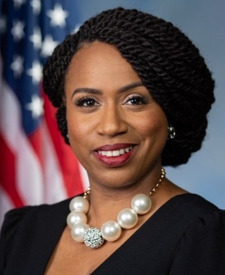



Legislative Progress
In CommitteeReferred to the Subcommittee on Economic Development, Public Buildings, and …
Ms. Tlaib (for herself, Ms. Brown, Ms. Pressley, Ms. Balint, …
Referred to the Committee on Transportation and Infrastructure, and in …
Introduced in House
Sponsor introductory remarks on measure. (CR H3625)
Stakeholder Effects
cui bono?How this legislation distributes effects. Mention counts reflect frequency, not effect magnitude.
Applicants with prior insurance requirements, Group Flood Insurance Policy administrators
Bill Structure & Actor Mappings
Who is "The Secretary" in each section?
We use a combination of our own taxonomy and classification in addition to large language models to assess meaning and potential beneficiaries. High confidence means strong textual evidence. Always verify with the original bill text.
Learn more about our methodology