Transformation to Competitive Integrated Employment Act
Summary
What This Bill Does
The Transformation to Competitive Integrated Employment Act targets the phaseout of section 14(c) special certificates that permit subminimum wages for workers with disabilities. Its purposes are to help certificate-holding employers transform business and program models to competitive integrated employment, involve people with disabilities and families in those transformations, transition workers to competitive integrated jobs and integrated supports, identify replicable transition models, and support state and local Olmstead and workforce planning. The Labor Secretary must award competitive grants to states and eligible entities to help employers move from certificate-based employment to models that pay at least the higher of the federal, state, or local minimum wage and at least the customary rate paid to similarly situated nondisabled employees for the same or similar work. Grants must also help workers find and keep competitive integrated employment, provide integrated community participation and wraparound services, and comply with the HCBS final rule. State grant applications must report the number of certificate employers, certificate employees by demographics and disability, hours, wages, Employment First and Olmstead plans, ABLE account activities, Medicaid buy-in pathways, and planned transition activities. Certificate-holder grant applications must disclose current and historical use of certificates, wage data, demographic profiles, past transitions, business models, and transformation plans. Title II raises minimum wage floors for certificate workers: 60 percent of the FLSA minimum wage after the effective date, then 70, 80, 90, and 100 percent over four years, while protecting higher pre-enactment wages. It bars new certificate holders and, four years after the effective date, expires certificate authority and renders existing certificates legally ineffective. Technical-assistance provisions direct Labor, ODEP, ETA, HHS Administration for Community Living, and Education's special education and rehabilitative services office to fund nonprofit assistance on transformation models, evidence-based practices, integrated services, benefits counseling, Medicaid buy-in, ABLE accounts, braiding funding, and employer strategies. The Act also adds Protection and Advocacy funding for monitoring, outreach, legal and advocacy services, and oversight, and creates additional funding for states that complete transformation grants, stop issuing certificates, and make all certificates ineffective.
Who Benefits and How
Workers with disabilities paid under 14(c) certificates benefit from a four-year path to at least the federal minimum wage and competitive integrated employment. State disability employment agencies benefit from grants to plan and implement transitions away from subminimum-wage certificates. Certificate-holding employers benefit from transformation grants and technical assistance for changing business and service models. Protection and Advocacy systems benefit from new funding to monitor transitions and provide legal or advocacy support. People with disabilities needing community supports benefit from integrated participation and wraparound service requirements tied to employment transition. States that successfully end 14(c) certificates benefit from additional formula-based funding after completing transformation grants.
Who Bears the Burden and How
Employers using 14(c) certificates must raise wage floors, stop relying on new certificates, and transform business models before certificate authority expires. Labor Department must administer state grants, certificate-holder grants, technical assistance, wage phaseout, and compliance oversight. States receiving grants must collect detailed wage, demographic, Olmstead, Employment First, ABLE, and Medicaid buy-in information. Federal taxpayers fund grants, technical assistance, Protection and Advocacy activities, and additional state funding. Service providers using segregated or subminimum-wage models must shift toward HCBS-compliant integrated services and competitive employment.
Key Provisions
- Authorizes state and certificate-holder grants to transform 14(c) employment into competitive integrated employment.
- Requires grant plans to include workers with disabilities, families, states, local governments, and stakeholders in transition design.
- Raises section 14(c) wage floors from 60 percent to 100 percent of the FLSA minimum wage over four years.
- Prohibits new special certificates for employers that did not already hold one before enactment.
- Repeals legal effect of all section 14(c) certificates four years after the effective date.
- Creates technical assistance, Protection and Advocacy support, and extra funding for states that successfully end certificates.
Evidence Chain:
This summary is generated from the full bill text using AI analysis. Expand "Detailed Analysis" below for identified beneficiaries/burden bearers with clause-level evidence links.
At a Glance
What This Bill Does
Creates grants and technical assistance to transition employers away from Fair Labor Standards Act section 14(c) special certificates toward competitive integrated employment for people with disabilities, raises subminimum-wage floors over four years until certificate authority expires, bars new certificate holders, adds state and certificate-holder transformation grants, funds technical-assistance dissemination and Protection and Advocacy oversight, and rewards states that successfully end 14(c) certificates.
Key Policy Areas
Disability, Labor, Workforce
Primary Purpose
Creates grants and technical assistance to transition employers away from Fair Labor Standards Act section 14(c) special certificates toward competitive integrated employment for people with disabilities, raises subminimum-wage floors over four years until certificate authority expires, bars new certificate holders, adds state and certificate-holder transformation grants, funds technical-assistance dissemination and Protection and Advocacy oversight, and rewards states that successfully end 14(c) certificates.
Policy Domains
Resolution provisions
Identified Gains
- Workers with disabilities
- State disability employment agencies
- Certificate-holding employers
- Protection and Advocacy systems
- Disability service providers
- Successful transition states
Identified Costs
- Employers using 14(c) certificates
- Labor Department
- State workforce agencies
- Federal taxpayers
- Subminimum-wage service providers
Sponsors
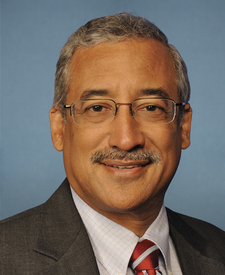




Legislative Progress
In CommitteeMr. Scott of Virginia (for himself and Mr. Sessions) introduced …
Referred to the House Committee on Education and Workforce.
Introduced in House
Stakeholder Effects
cui bono?How this legislation distributes effects. Mention counts reflect frequency, not effect magnitude.
Protection and Advocacy systems, Workers with disabilities
State disability employment agencies, Successful transition states
Certificate-holding employers, Employers using 14(c) certificates
Bill Structure & Actor Mappings
Who is "The Secretary" in each section?
We use a combination of our own taxonomy and classification in addition to large language models to assess meaning and potential beneficiaries. High confidence means strong textual evidence. Always verify with the original bill text.
Learn more about our methodology