To make revisions to the Federal securities laws with respect to shareholder proposals, proxy voting, and the registration of proxy advisory firms, and for other purposes.
Analysis under review: This bill has generated analysis that may be too generic or incomplete. Clause-level evidence remains available below.
Summary
What This Bill Does
Directs the Secretary of the Interior to commission a National Academy of Sciences study of federal reservation systems (like recreation.gov) used to manage access to federal recreation areas. The study must be initiated within 60 days of enactment and will examine whether current booking, lottery, and permit systems provide equitable access to all Americans.
Who Benefits and How
- Recreation enthusiasts and outdoor recreationists may benefit from improved reservation systems based on study recommendations
- Underserved and disadvantaged communities could benefit if the study identifies access barriers and recommends solutions to promote equal access
- Federal land management agencies (BLM, Forest Service, NPS, Fish & Wildlife) receive expert analysis to improve their reservation systems
Who Bears the Burden and How
- Interior, Agriculture, and Army departments must coordinate and fund the National Academy of Sciences study
- Federal taxpayers bear the cost of the comprehensive study
- National Academy of Sciences must conduct extensive research and consultation
Key Provisions
- Comprehensive review of federal reservation system history, including recreation.gov iterations and visitor feedback
- Study covers all major federal land categories: BLM lands, National Forests, National Parks, Wildlife Refuges, Bureau of Reclamation sites, and Army Corps of Engineers sites
- Examines booking windows, lottery systems, pricing mechanisms, and merit-based methods for equity impacts
- Investigates whether reservation systems pose barriers for certain communities
- Must assess demographic data on successful vs unsuccessful reservation applicants
Evidence Chain:
This summary is generated from the full bill text using AI analysis. Expand "Detailed Analysis" below for identified beneficiaries/burden bearers.
At a Glance
What This Bill Does
Requires the Secretary of the Interior to enter into an agreement with the National Academy of Sciences to study federal reservation systems for recreational activities on federal land, examining equity, access barriers, and system effectiveness
Key Policy Areas
Recreation, Public Lands, Government Management, Equity
Primary Purpose
Requires the Secretary of the Interior to enter into an agreement with the National Academy of Sciences to study federal reservation systems for recreational activities on federal land, examining equity, access barriers, and system effectiveness
Policy Domains
RESERVE Federal Land Act
Identified Gains
Contextual inference, no direct clause citation- Recreation enthusiasts
- Underserved communities
- Federal land management agencies
Contextual inference, no direct clause citation
Identified Costs
Contextual inference, no direct clause citation- Department of the Interior
- Federal taxpayers
- National Academy of Sciences
Contextual inference, no direct clause citation
Sponsors
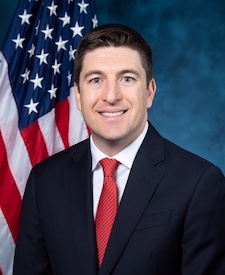
Legislative Progress
ReportedReported with an amendment, committed to the Committee of the …
Mr. Steil introduced the following bill; which was referred to …
Stakeholder Effects
cui bono?How this legislation distributes effects. Mention counts reflect frequency, not effect magnitude.
Corporate issuers, Public companies, Public companies harmed by proxy advice
ESG-focused investment products and managers, ESG-focused shareholders, Institutional investment managers (pension funds, mutual funds, asset managers)
Positive-direction: Traditional investment managers focused on financial returns
Negative-direction: ESG-focused investment products and managers, ESG-focused shareholders, Institutional investment managers (pension funds, mutual funds, asset managers), Investment advisers of passively managed funds, Investment advisers of passively managed funds (BlackRock, Vanguard, State Street)
Brokers, dealers, and investment advisers, Proxy advisory firms, Proxy advisory firms (ISS, Glass Lewis)
Securities and Exchange Commission
Shareholder activists and ESG advocacy organizations
Bill Structure & Actor Mappings
Who is "The Secretary" in each section?
- "the_secretary"
- → Secretary of the Interior
- "the_secretaries"
- → Secretary of the Interior, Secretary of Agriculture, and Secretary of the Army (Chief of Engineers)
Key Definitions
Terms defined in this bill
The time period during which a reservation or lottery entry is available to the public
Public lands under BLM, National Forest System land, National Park System units, National Wildlife Refuge System units, Bureau of Reclamation sites, and Corps of Engineers sites
Any platform or method used by managers of Federal land to manage the quantity, type, distribution, and timing of recreational activities, including reservation, permit, lottery, metering, pricing, merit-based, and other similar management methods
Includes camping, backpacking, climbing, paddling sports, fishing, hiking, driving, and other recreational opportunities
We use a combination of our own taxonomy and classification in addition to large language models to assess meaning and potential beneficiaries. High confidence means strong textual evidence. Always verify with the original bill text.
Learn more about our methodology