Securing our Border Act
Summary
What This Bill Does
The Securing our Border Act redirects unobligated balances from section 10301(1)(A)(ii) of Public Law 117-169 toward border infrastructure and staffing. Congress finds high overdose deaths, low scanning rates for passenger and commercial vehicles at the southern border, CBP drug seizures of about 241,000 pounds in fiscal year 2023 and 275,000 pounds in fiscal year 2024, 2,135,005 southern-border encounters in fiscal year 2024, 750 migrant deaths in fiscal year 2022, a 3,558,995-case immigration court backlog as of September 30, 2024, 2,371 encounters with potential terrorists since fiscal year 2019, a need for about 2,700 additional CBP officers at ports of entry, and obsolete technology in many Border Patrol sectors. One-third of the unobligated balances must be transferred to CBP through February 6, 2034 for nonintrusive inspection systems to achieve 100 percent scanning at all northern and southwest border land ports of entry by that date. Two-thirds must be transferred to DHS through the same period for southwest border wall system construction. DHS must submit quarterly reports to appropriations, finance, ways and means, and homeland security committees with an implementation plan, benchmarks to stem illegal immigration, and wall-construction cost estimates. Subject to DHS Secretary approval, the CBP Commissioner may pay newly hired CBP agents recruitment bonuses up to $15,000 after basic training and a written service agreement, annual Border Patrol retention bonuses up to 15 percent of basic pay after satisfactory service, and relocation bonuses up to 15 percent of annual basic pay for agents serving at least three years at a new duty station. Bonuses do not count as basic pay for retirement or lump-sum annual leave. The bill also changes INA section 235(b)(2)(C) from discretionary return authority to a requirement that contiguous-territory arrivals be returned to that territory or a safe third country pending section 240 proceedings, or detained for asylum consideration including credible-fear determination.
Who Benefits and How
CBP officers benefit from nonintrusive inspection funding and recruitment, retention, and relocation bonuses. Border Patrol agents benefit from annual retention bonuses and relocation bonuses tied to service commitments. Communities harmed by fentanyl benefit if expanded nonintrusive scanning catches more illicit narcotics at land ports. DHS border wall contractors benefit from transferred funds for southwest border wall construction. Congressional homeland security committees benefit from quarterly implementation and cost reports.
Who Bears the Burden and How
DHS Secretary must approve bonuses, manage wall funding, and submit quarterly reports with benchmarks and cost estimates. CBP Commissioner must administer bonus agreements and use funds to reach 100 percent nonintrusive scanning by February 6, 2034. Asylum seekers arriving from contiguous territory may be returned to that territory or a safe third country, or detained during credible-fear review. Federal taxpayers lose alternative uses of the transferred unobligated balances and bear border infrastructure costs.
Key Provisions
- Transfers one-third of specified unobligated balances to CBP for nonintrusive inspection systems through February 6, 2034.
- Transfers two-thirds of specified unobligated balances to DHS for southwest border wall construction.
- Requires quarterly DHS reports with implementation benchmarks and wall-construction cost estimates.
- Authorizes CBP recruitment bonuses up to $15,000 and retention or relocation bonuses up to 15 percent of basic pay.
- Requires return to contiguous territory or safe third country, or detention for asylum consideration, for covered arriving aliens.
Evidence Chain:
This summary is generated from the full bill text using AI analysis. Expand "Detailed Analysis" below for identified beneficiaries/burden bearers with clause-level evidence links.
At a Glance
What This Bill Does
Transfers unobligated Inflation Reduction Act funds to CBP and DHS for border security through February 6, 2034, with one-third for nonintrusive inspection systems to reach 100 percent scanning at northern and southwest land ports, two-thirds for southwest border wall construction with quarterly reports, authorizes CBP recruitment, retention, and relocation bonuses, and requires contiguous-territory arrivals to be returned to that territory or a safe third country pending proceedings or detained for asylum consideration.
Key Policy Areas
Border Security, Immigration, Customs
Primary Purpose
Transfers unobligated Inflation Reduction Act funds to CBP and DHS for border security through February 6, 2034, with one-third for nonintrusive inspection systems to reach 100 percent scanning at northern and southwest land ports, two-thirds for southwest border wall construction with quarterly reports, authorizes CBP recruitment, retention, and relocation bonuses, and requires contiguous-territory arrivals to be returned to that territory or a safe third country pending proceedings or detained for asylum consideration.
Policy Domains
Resolution provisions
Identified Gains
- CBP officers
- Border Patrol agents
- Fentanyl-affected communities
- DHS border wall contractors
- Congressional homeland security committees
Identified Costs
- DHS Secretary
- CBP Commissioner
- Asylum seekers
- Federal taxpayers
Sponsors

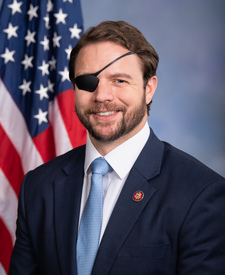
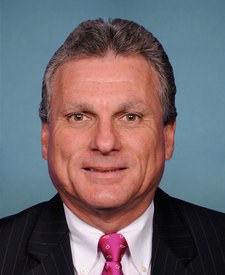
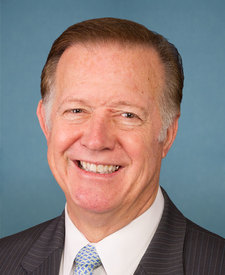
Legislative Progress
In CommitteeReferred to the Subcommittee on Border Security and Enforcement.
Mr. Moore of North Carolina (for himself, Mr. Weber of …
Referred to the Committee on Ways and Means, and in …
Introduced in House
Stakeholder Effects
cui bono?How this legislation distributes effects. Mention counts reflect frequency, not effect magnitude.
Border Patrol agents, CBP officers
Bill Structure & Actor Mappings
Who is "The Secretary" in each section?
We use a combination of our own taxonomy and classification in addition to large language models to assess meaning and potential beneficiaries. High confidence means strong textual evidence. Always verify with the original bill text.
Learn more about our methodology