Biochar Research Network Act of 2025
Summary
What This Bill Does
The Biochar Research Network Act adds a national biochar research network to the Agricultural Research, Extension, and Education Reform Act of 1998. USDA must establish up to 20 research sites or facilities to test biochar across soil types, soil health and management conditions, application methods, climatic regions, and agronomic regions. The network must assess soil carbon sequestration potential, study how biochar can contribute to climate mitigation, crop production, extreme-weather resilience, ecosystem and soil health, conservation, and farm profitability, and deliver region-specific practical information to farmers, ranchers, foresters, land reclamation managers, urban land managers, natural-resource managers, and businesses. Research must cover agriculture, horticulture, rangeland, forestry, feedstocks, production processes, and application treatments. Cross-site and mechanistic experiments must study soil properties, plant growth, greenhouse gas emissions, carbon sequestration, thermochemical conversion, biochar and bioenergy coproduction, model calibration, reactor and biorefinery design, and contaminant testing. Site-specific farm and forestry assessments must refine uses, sources, production methods, and application methods to increase productivity and profitability, reduce emissions, improve soil and ecosystem health, strengthen weather resilience, conduct life-cycle greenhouse-gas and economic analyses, and share results with producers and technical-assistance providers. Eligible sites include state agricultural or forestry experiment stations, USDA Agricultural Research Service or Forest Service facilities, and research facilities at DOE, Commerce, or Interior. ARS administers the network with Forest Service, NIFA, Energy, Commerce, Interior, and other USDA agencies. NRCS may develop or revise conservation practice standards informed by the research and must coordinate network activities with conservation standards and technical or financial support for biochar integration. The bill authorizes $50 million annually for fiscal years 2026 through 2030.
Who Benefits and How
Farmers and ranchers benefit from region-specific biochar guidance on productivity, soil health, resilience, costs, and profitability. Foresters benefit from research on forestry feedstocks, forest health, biochar production, and application methods. State agricultural experiment stations benefit from eligibility to host research-network sites. Biochar producers benefit from data on feedstocks, production processes, contaminants, reactors, and biorefineries. Climate researchers benefit from life-cycle greenhouse-gas, carbon-sequestration, and crop-response datasets.
Who Bears the Burden and How
Agricultural Research Service Administrator must run the network and coordinate with Forest Service, NIFA, DOE, Commerce, Interior, and USDA partners. Natural Resources Conservation Service must coordinate conservation standards and support for biochar production and use. Research facilities must conduct cross-site experiments, farm and forestry assessments, modeling, testing, and outreach. Federal taxpayers bear the cost of the $50 million annual authorization for fiscal years 2026 through 2030.
Key Provisions
- Creates a national biochar research network of up to 20 research sites or facilities.
- Requires research across soil types, feedstocks, production processes, applications, climates, and agronomic regions.
- Requires cross-site experiments on carbon sequestration, plant growth, greenhouse gases, bioenergy, models, and contaminants.
- Requires farm and forestry assessments to refine productive, profitable, resilient, and low-emission biochar uses.
- Authorizes $50 million annually for fiscal years 2026 through 2030.
Evidence Chain:
This summary is generated from the full bill text using AI analysis. Expand "Detailed Analysis" below for identified beneficiaries/burden bearers with clause-level evidence links.
At a Glance
What This Bill Does
Establishes a national biochar research network of up to 20 sites across USDA, forestry, energy, commerce, and interior research facilities to test biochar types, feedstocks, production processes, soil and climate conditions, carbon sequestration, crop response, economic effects, contaminants, and farm or forestry applications, coordinated by Agricultural Research Service with partner agencies and authorized at $50 million annually for fiscal years 2026 through 2030.
Key Policy Areas
Agriculture, Climate, Research
Primary Purpose
Establishes a national biochar research network of up to 20 sites across USDA, forestry, energy, commerce, and interior research facilities to test biochar types, feedstocks, production processes, soil and climate conditions, carbon sequestration, crop response, economic effects, contaminants, and farm or forestry applications, coordinated by Agricultural Research Service with partner agencies and authorized at $50 million annually for fiscal years 2026 through 2030.
Policy Domains
Resolution provisions
Identified Gains
- Farmers
- Ranchers
- Foresters
- State agricultural experiment stations
- Biochar producers
- Climate researchers
Identified Costs
- Agricultural Research Service Administrator
- Natural Resources Conservation Service
- Research facilities
- Federal taxpayers
Sponsors


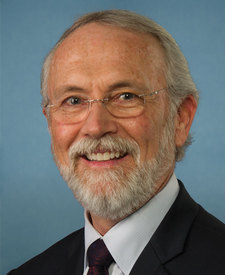


Legislative Progress
In CommitteeMrs. Miller-Meeks (for herself, Ms. Pingree, Ms. Schrier, Mr. Newhouse, …
Referred to the House Committee on Agriculture.
Introduced in House
Stakeholder Effects
cui bono?How this legislation distributes effects. Mention counts reflect frequency, not effect magnitude.
Agricultural Research Service Administrator, Natural Resources Conservation Service
Bill Structure & Actor Mappings
Who is "The Secretary" in each section?
We use a combination of our own taxonomy and classification in addition to large language models to assess meaning and potential beneficiaries. High confidence means strong textual evidence. Always verify with the original bill text.
Learn more about our methodology