PTO Act
Summary
What This Bill Does
The Protected Time Off Act creates a broad paid annual leave right for covered employees in private commerce, public agencies, GAO, Library of Congress, congressional employing offices, presidential offices, and certain federal employees. Covered employers must provide at least one hour of paid annual leave for every 25 hours worked, with no requirement to provide more than 80 hours in a 12-month period, though employers may provide more. Employees accrue leave from the start of employment, exempt employees are deemed to work 40 hours weekly where hours records are not required, and paid annual leave may be used for any reason at the regular rate. Tipped employees must receive the highest of federal, state, local, legally required, or regular-rate pay during leave. Employers may loan leave, require reimbursement of unearned loaned leave at separation, allow hourly or smaller payroll increments, maintain benefits during leave, require no more than two weeks notice for foreseeable leave, and deny scheduling only for bona fide business reasons with written notice and an alternative date within 30 days. Employers may not demand the reason for leave, require employees to find replacements, or prevent carryover of up to 40 hours. Unused leave must be paid out at separation at the higher of average regular rate over the last three years or final regular rate, and certain rehired employees get excess unused leave reinstated. Employers must provide written policy notice at hiring, in handbooks, and in physical or virtual postings, and must maintain systems showing accrued leave. Retaliation, negative employment actions, no-fault attendance penalties, and discrimination for asserting rights are unlawful. The Labor Secretary gets FLSA investigative, recordkeeping, subpoena, complaint, damages, and injunctive authority; employees can sue for lost compensation, interest, liquidated damages, equitable relief, attorney fees, expert fees, and costs. Special enforcement routes apply to GAO, Library, Congress, and federal employees. State receipt of federal financial assistance waives sovereign immunity for covered programs. Stronger state or local leave laws and collectively bargained grievance procedures are preserved.
Who Benefits and How
Private-sector workers benefit from a federal right to earn and use paid annual leave for any reason. Tipped employees benefit from a paid-leave wage floor tied to the highest applicable minimum or regular rate. Union workers benefit because grievance and arbitration procedures can still enforce collectively bargained paid-leave provisions. State and local workers in federally assisted programs benefit from a sovereign-immunity waiver for suits under the Act. Rehired employees benefit when certain unused leave above 80 hours is reinstated after return within 12 months.
Who Bears the Burden and How
Employers must accrue leave, maintain benefits, track balances, provide notices, pay unused leave at separation, and avoid retaliation. Labor Department must issue guidance, investigate complaints, enforce damages, and bring injunctive actions. Small businesses face compliance costs from new leave accrual, scheduling, notice, recordkeeping, and payout rules. Federal courts may hear private actions seeking damages, liquidated damages, fees, costs, and equitable relief.
Key Provisions
- Requires covered employers to provide at least one hour of paid annual leave for every 25 hours worked.
- Limits required accrual to 80 hours per 12-month period while preserving more generous policies.
- Provides any-reason use, regular-rate pay, benefit maintenance, limited notice, carryover, and separation payout rules.
- Prohibits retaliation, negative employment actions, no-fault attendance penalties, and replacement-worker requirements.
- Creates Labor Department enforcement, private actions, damages, liquidated damages, attorney fees, and state sovereign-immunity waiver.
Evidence Chain:
This summary is generated from the full bill text using AI analysis. Expand "Detailed Analysis" below for identified beneficiaries/burden bearers with clause-level evidence links.
At a Glance
What This Bill Does
Creates a federal paid annual leave mandate requiring covered employers to provide at least one hour of paid annual leave for every 25 hours worked, capped at 80 hours per 12-month period, allowing any-reason use, regular-rate pay, carryover up to 40 hours, payout at separation, anti-retaliation protections, employer notice and balance systems, Labor Department enforcement, private actions, damages, liquidated damages, attorney fees, state sovereign-immunity waiver for federally assisted programs, and preservation of stronger state or local leave laws.
Key Policy Areas
Labor, Paid Leave, Employment Rights
Primary Purpose
Creates a federal paid annual leave mandate requiring covered employers to provide at least one hour of paid annual leave for every 25 hours worked, capped at 80 hours per 12-month period, allowing any-reason use, regular-rate pay, carryover up to 40 hours, payout at separation, anti-retaliation protections, employer notice and balance systems, Labor Department enforcement, private actions, damages, liquidated damages, attorney fees, state sovereign-immunity waiver for federally assisted programs, and preservation of stronger state or local leave laws.
Policy Domains
Resolution provisions
Identified Gains
- Private-sector workers
- Tipped employees
- Union workers
- State employees
- Rehired employees
Identified Costs
- Employers
- Labor Department
- Small businesses
- Federal courts
Sponsors



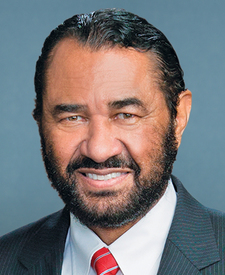
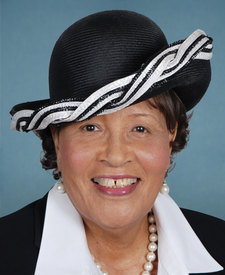
Legislative Progress
In CommitteeMr. Magaziner (for himself, Ms. Adams, Ms. Budzinski, Mr. Carson, …
Referred to the Committee on Education and Workforce, and in …
Introduced in House
Stakeholder Effects
cui bono?How this legislation distributes effects. Mention counts reflect frequency, not effect magnitude.
Private-sector workers, State employees, Tipped employees
Bill Structure & Actor Mappings
Who is "The Secretary" in each section?
We use a combination of our own taxonomy and classification in addition to large language models to assess meaning and potential beneficiaries. High confidence means strong textual evidence. Always verify with the original bill text.
Learn more about our methodology