To amend title XIX of the Social Security Act to streamline enrollment under the Medicaid program of certain providers across State lines, and for other purposes.
Analysis under review: This bill has generated analysis that may be too generic or incomplete. Clause-level evidence remains available below.
Summary
What This Bill Does
This bill, To amend title XIX of the Social Security Act to streamline enrollment under the Medicaid program of certain providers across State lines, and for other purposes., changes federal law or congressional policy affecting health care providers and patients. The main policy domain is Healthcare, Government Operations, Transportation.
Who Benefits and How
health care providers and patients may benefit from new authority, funding, eligibility, regulatory clarity, or reduced risk created by the bill.
Who Bears the Burden and How
federal implementing agencies, health care providers and patients may take on implementation duties, reporting obligations, compliance costs, or oversight responsibilities.
Key Provisions
- Section H46099322C2AD44F39B724D8D997D6C7F: 1. Short title This Act may be cited as the Accelerating Kids’ Access to Care Act.
- Section HEDE9D469544C4792804CB9249E6C7215: 2. Streamlined enrollment process for eligible out-of-State providers under medicaid and chip Section 1902(kk) of the Social Security Act (42 U.S.C. 1396a(kk))...
- Section H1AD2D677E85D48F684AEF327654D7E86: 3. Preventing the use of abusive spread pricing in medicaid Section 1927 of the Social Security Act (42 U.S.C. 1396r–8) is amended— in subsection (e), by...
- Section HC5FE14DACC674AFC94BF3A1AA355E78B: 4. Medicaid improvement fund Section 1941(b)(3)(A) of the Social Security Act (42 U.S.C. 1396w–1(b)(3)(A)) is amended by striking $0 and inserting $69,000,000.
Evidence Chain:
This summary is generated from the full bill text using AI analysis. Expand "Detailed Analysis" below for identified beneficiaries/burden bearers with clause-level evidence links.
At a Glance
What This Bill Does
This bill, To amend title XIX of the Social Security Act to streamline enrollment under the Medicaid program of certain providers across State lines, and for other purposes., changes federal law or congressional policy affecting health care providers and patients.
Key Policy Areas
Healthcare, Government Operations, Transportation
Primary Purpose
This bill, To amend title XIX of the Social Security Act to streamline enrollment under the Medicaid program of certain providers across State lines, and for other purposes., changes federal law or congressional policy affecting health care providers and patients.
Policy Domains
Whole bill
Identified Gains
- health care providers and patients
Identified Costs
- federal implementing agencies
- health care providers and patients
Sponsors


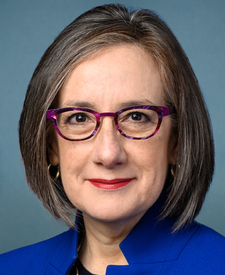


Legislative Progress
ReportedReceived; read twice and referred to the Committee on Finance
Additional sponsors: Ms. Castor of Florida, Mr. Fitzpatrick, Ms. Kuster, …
Reported with amendments, committed to the Committee of the Whole …
Mrs. Trahan (for herself and Mrs. Miller-Meeks) introduced the following …
Stakeholder Effects
cui bono?How this legislation distributes effects. Mention counts reflect frequency, not effect magnitude.
Centers for Medicare & Medicaid Services, State Medicaid agencies, State Medicaid programs
Positive-direction: Centers for Medicare & Medicaid Services, State Medicaid programs
Negative-direction: State Medicaid agencies
Children with medically complex conditions, Families seeking out-of-state pediatric specialists
Out-of-state healthcare providers specializing in pediatric care
Retail and specialty pharmacies dispensing Medicaid prescriptions
340B covered entities (hospitals, clinics serving low-income patients)
Bill Structure & Actor Mappings
Who is "The Secretary" in each section?
- "secretary_of_health_and_human_services"
- → Secretary of Health and Human Services
We use a combination of our own taxonomy and classification in addition to large language models to assess meaning and potential beneficiaries. High confidence means strong textual evidence. Always verify with the original bill text.
Learn more about our methodology