Medicaid Bump Act
Summary
What This Bill Does
The Medicaid Bump Act amends Social Security Act section 1903 to create an enhanced federal match for increased Medicaid behavioral health spending. For calendar quarters beginning on or after January 1 of the year that starts one year after enactment, states can receive a 90 percent federal match on the amount by which Medicaid spending for offering, arranging, and furnishing behavioral health services, including mental health and substance use services, exceeds spending for the corresponding quarter in the four-quarter period ending March 31, 2019. To receive the additional funds, a state must supplement rather than supplant state behavioral health spending from programs and activities in effect as of April 1, 2021. States must use the funds for activities increasing capacity, efficiency, and quality in behavioral health service delivery, including provider payment-rate increases and other measures to reduce staff turnover. HHS must issue subregulatory guidance within 180 days specifying which services count as behavioral health services. HHS must also submit annual reports to House Energy and Commerce and Senate Finance on behavioral health services under Medicaid in each state, including payment rates, the rationale for deriving those rates, and available utilization data.
Who Benefits and How
Medicaid beneficiaries needing behavioral health services benefit if states expand capacity, quality, and provider availability. Behavioral health providers benefit from potential payment-rate increases and staff-retention measures funded by the enhanced match. State Medicaid agencies benefit from a 90 percent federal match on qualifying spending increases above the 2019 baseline. Mental health and substance use patients benefit from increased service capacity and reduced provider turnover.
Who Bears the Burden and How
HHS Secretary must issue behavioral health service guidance and annual state-by-state reports. State Medicaid agencies must maintain existing spending, document qualifying increases, and use funds for required service-delivery improvements. Federal taxpayers bear increased Medicaid matching costs for qualifying behavioral health spending. States that supplant existing funds or fail use requirements risk losing additional federal match payments.
Key Provisions
- Creates a 90 percent federal Medicaid match for qualifying increases in behavioral health service spending.
- Uses the corresponding quarter in the four-quarter period ending March 31, 2019 as the spending baseline.
- Requires states to supplement rather than supplant existing behavioral health funding.
- Requires funds to increase capacity, efficiency, quality, provider payment rates, and staff retention.
- Requires annual HHS reports on Medicaid behavioral health payment rates, rate rationales, and utilization.
Evidence Chain:
This summary is generated from the full bill text using AI analysis. Expand "Detailed Analysis" below for identified beneficiaries/burden bearers with clause-level evidence links.
At a Glance
What This Bill Does
Provides a 90 percent federal Medicaid match for state spending increases on behavioral health services above the corresponding quarter in the four-quarter period ending March 31, 2019, requires states to supplement rather than supplant existing behavioral health funding and use the funds to improve provider capacity, efficiency, quality, payment rates, and staff retention, and requires annual HHS reports on state behavioral health rates, rate rationales, and utilization.
Key Policy Areas
Medicaid, Mental Health, Substance Use
Primary Purpose
Provides a 90 percent federal Medicaid match for state spending increases on behavioral health services above the corresponding quarter in the four-quarter period ending March 31, 2019, requires states to supplement rather than supplant existing behavioral health funding and use the funds to improve provider capacity, efficiency, quality, payment rates, and staff retention, and requires annual HHS reports on state behavioral health rates, rate rationales, and utilization.
Policy Domains
Resolution provisions
Identified Gains
- Medicaid beneficiaries
- Behavioral health providers
- State Medicaid agencies
- Mental health patients
- Substance use patients
Identified Costs
- HHS Secretary
- State Medicaid agencies
- Federal taxpayers
- Noncompliant states
Sponsors
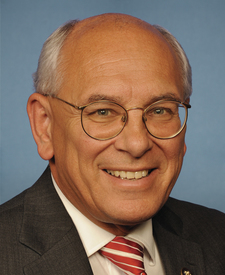

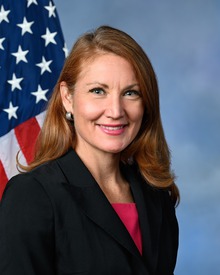
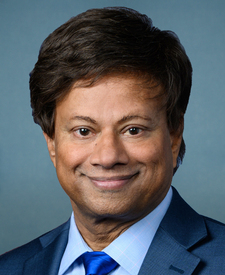
Legislative Progress
In CommitteeMr. Tonko (for himself and Mr. Fitzpatrick) introduced the following …
Referred to the House Committee on Energy and Commerce.
Introduced in House
Stakeholder Effects
cui bono?How this legislation distributes effects. Mention counts reflect frequency, not effect magnitude.
Medicaid beneficiaries, State Medicaid agencies
Behavioral health providers, Mental health patients
Bill Structure & Actor Mappings
Who is "The Secretary" in each section?
We use a combination of our own taxonomy and classification in addition to large language models to assess meaning and potential beneficiaries. High confidence means strong textual evidence. Always verify with the original bill text.
Learn more about our methodology