Parity for Tribal Law Enforcement Act
Summary
What This Bill Does
The Parity for Tribal Law Enforcement Act amends the Indian Law Enforcement Reform Act for tribes that contract or compact federal law-enforcement functions under the Indian Self-Determination and Education Assistance Act. Tribal officers may enforce federal law within the tribe's jurisdiction if they complete training comparable to Bureau of Indian Affairs Office of Justice Services employees providing the same services in Indian country, pass an equivalent adjudicated background investigation, receive OJS certification, and the tribe adopts policies and procedures meeting or exceeding OJS standards for the same program or function. While acting under the Secretary's contract or compact authority, certified tribal officers are treated as federal law-enforcement officers for 18 U.S.C. 111 and 1114 protections, federal retirement chapters 83 and 84, the Federal Tort Claims Act, and federal workers' compensation. Interior must develop credentialing procedures for tribal officers within two years, issue guidance in consultation with tribes, allow voluntary position-by-position participation, allow purchase of service credit for prior service consistent with guidance, include officers whose salaries are funded by DOJ Community Oriented Policing Services grants or other DOJ agencies, and recognize participation where tribes have qualifying contracts or compacts. Separately, the Attorney General, through the Deputy Attorney General, must coordinate and oversee DOJ public-safety activities in Indian communities, including timely reports to Congress, robust training requested by tribes or federal and state officials, improved U.S. Attorney operational plans, public-safety data evaluation, and other accountability work.
Who Benefits and How
Tribal law enforcement officers benefit from federal-law enforcement authority and parity for assault protections, retirement, tort coverage, and workers' compensation. Indian tribes with law-enforcement contracts or compacts benefit from clearer authority to run federal functions through certified tribal officers. Tribal communities benefit if more officers can enforce federal law locally and coordinate with DOJ public-safety programs. Office of Justice Services certification staff benefit from a defined credentialing framework for tribal officers.
Who Bears the Burden and How
Interior Secretary must develop credentialing procedures, issue guidance after tribal consultation, and manage officer certification standards. Tribes seeking participation must adopt policies and procedures meeting or exceeding Office of Justice Services standards. Attorney General and Deputy Attorney General must coordinate DOJ oversight, training, operational plans, reports, and data evaluation for Indian-country public safety. Federal taxpayers may bear retirement, compensation, tort, training, and implementation costs tied to parity treatment.
Key Provisions
- Authorizes certified tribal officers to enforce federal law within tribal jurisdiction under qualifying contracts or compacts.
- Requires comparable training, equivalent background investigations, OJS certification, and tribal policies meeting OJS standards.
- Provides federal-officer status for assault protections, retirement, Federal Tort Claims Act coverage, and workers' compensation.
- Directs Interior to create credentialing procedures and tribal-consultation guidance within two years.
- Requires DOJ coordination and oversight of Indian-country public-safety training, reports, operational plans, and data.
Evidence Chain:
This summary is generated from the full bill text using AI analysis. Expand "Detailed Analysis" below for identified beneficiaries/burden bearers with clause-level evidence links.
At a Glance
What This Bill Does
Gives certified tribal officers from tribes with Indian Self-Determination Act law-enforcement contracts or compacts authority to enforce federal law within tribal jurisdiction, treats those officers as federal law-enforcement officers for assault, retirement, tort-claim, and workers-compensation purposes, requires Interior credentialing and guidance within two years, and directs DOJ oversight of Indian-country public-safety programs, training, operational plans, reports, and data.
Key Policy Areas
Tribal Affairs, Law Enforcement, Public Safety
Primary Purpose
Gives certified tribal officers from tribes with Indian Self-Determination Act law-enforcement contracts or compacts authority to enforce federal law within tribal jurisdiction, treats those officers as federal law-enforcement officers for assault, retirement, tort-claim, and workers-compensation purposes, requires Interior credentialing and guidance within two years, and directs DOJ oversight of Indian-country public-safety programs, training, operational plans, reports, and data.
Policy Domains
Resolution provisions
Identified Gains
- Tribal law enforcement officers
- Indian tribes
- Tribal communities
- Office of Justice Services certification staff
Identified Costs
- Interior Secretary
- Tribal governments
- Attorney General
- Deputy Attorney General
- Federal taxpayers
Sponsors




Legislative Progress
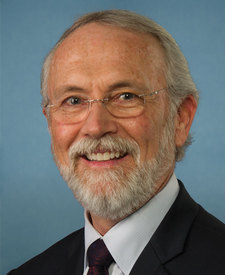
In CommitteeMr. Newhouse (for himself, Ms. Perez, Mr. Cole, Ms. Davids …
Referred to the Committee on the Judiciary, and in addition …
Introduced in House
Stakeholder Effects
cui bono?How this legislation distributes effects. Mention counts reflect frequency, not effect magnitude.
Indian tribes, Interior Secretary, Office of Justice Services certification staff
Attorney General, Tribal law enforcement officers
Bill Structure & Actor Mappings
Who is "The Secretary" in each section?
We use a combination of our own taxonomy and classification in addition to large language models to assess meaning and potential beneficiaries. High confidence means strong textual evidence. Always verify with the original bill text.
Learn more about our methodology