Newborn Screening Saves Lives Reauthorization Act of 2025
Summary
What This Bill Does
The Newborn Screening Saves Lives Reauthorization Act updates the Public Health Service Act framework for heritable-disorder screening in newborns and children. It expands education grants so parents, families, patient advocacy groups, and support groups receive literacy-appropriate materials on screening counseling, testing, pilot studies, follow-up, treatment, specialty services, and long-term care, and it adds re-engagement of patients who missed follow-up services. It directs the Advisory Committee on Heritable Disorders in Newborns and Children to adopt process improvements, publish consumer-friendly nomination materials for the uniform screening panel, explain technical assistance and conflict issues, and consider recommended use of safe and effective genetic testing for children with initially diagnosed conditions that have varied genetic causes. It extends the advisory committee through 2030. CDC laboratory quality work is updated to include development of new screening tests, test performance materials, performance evaluation services, data-analysis and interpretation infrastructure, data harmonization, and dissemination of laboratory best practices. CDC must coordinate national surveillance, standardize real-time data collection from initial positive screen through diagnosis and long-term care management, and promote data-sharing linkages between state newborn screening programs and birth-defects or developmental-disabilities surveillance programs. The Hunter Kelly research program becomes mandatory rather than discretionary, covers conditions likely to be recommended for the uniform panel, and requires funded entities, as practicable, to consult state health departments. The bill also treats federally funded research on nonidentified newborn dried blood spots as secondary research with nonidentified biospecimens under the Common Rule.
Who Benefits and How
Newborns and children with heritable disorders benefit from improved screening, follow-up, diagnostic, and long-term care systems. Parents and families benefit from educational programs that cover counseling, testing, pilot studies, treatment, specialty services, and re-engagement after missed follow-up. State newborn screening programs benefit from grants, CDC surveillance coordination, data harmonization, and linkages to birth-defects programs. Patient advocacy organizations benefit from clearer uniform-screening-panel nomination materials and education tailored to families. CDC laboratories benefit from support for new screening tests, performance materials, interpretation tools, and best-practice dissemination.
Who Bears the Burden and How
HHS Secretary must administer the reauthorized newborn screening grants, advisory committee, research program, and ethics guidance framework. CDC Director must coordinate national surveillance, laboratory quality, real-time data standards, and data linkages. Advisory Committee members must publish process materials, manage technical-assistance conflicts, and consider genetic-testing guidance. State health departments must coordinate with funded Hunter Kelly research entities and build capacity for adoption of recommended screening guidelines.
Key Provisions
- Expands newborn screening education to cover counseling, testing, pilot studies, follow-up, treatment, specialty services, and long-term care.
- Requires the Advisory Committee to publish consumer-friendly uniform-screening-panel nomination and technical-assistance materials.
- Extends the Advisory Committee on Heritable Disorders in Newborns and Children through 2030.
- Requires CDC coordination of national newborn-screening surveillance from positive screens through diagnosis and long-term care.
- Requires the Hunter Kelly research program to support reliable screening technologies and state consultation.
- Provides Common Rule secondary-research treatment for nonidentified newborn dried blood spots.
Evidence Chain:
This summary is generated from the full bill text using AI analysis. Expand "Detailed Analysis" below for identified beneficiaries/burden bearers with clause-level evidence links.
At a Glance
What This Bill Does
Reauthorizes and updates newborn screening programs through 2030 by strengthening parent and patient education, advisory-committee transparency, newborn screening follow-up, CDC surveillance and laboratory quality work, Hunter Kelly research pilots, appropriations, and ethics treatment for nonidentified dried blood spot research.
Key Policy Areas
Healthcare, Public Health, Genetic Screening
Primary Purpose
Reauthorizes and updates newborn screening programs through 2030 by strengthening parent and patient education, advisory-committee transparency, newborn screening follow-up, CDC surveillance and laboratory quality work, Hunter Kelly research pilots, appropriations, and ethics treatment for nonidentified dried blood spot research.
Policy Domains
Resolution provisions
Identified Gains
- Newborns with heritable disorders
- Parents of screened infants
- State newborn screening programs
- Patient advocacy organizations
- CDC laboratories
Identified Costs
- HHS Secretary
- CDC Director
- Advisory Committee members
- State health departments
Sponsors

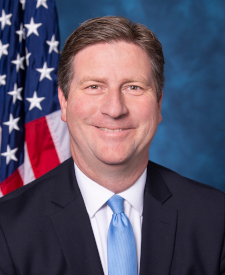

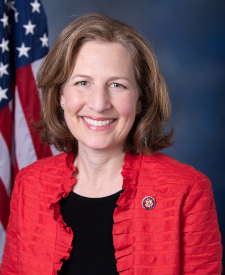

Legislative Progress
In CommitteeForwarded by Subcommittee to Full Committee by Voice Vote.
Subcommittee Consideration and Mark-up Session Held
Referred to the Subcommittee on Health.
Ms. Morrison (for herself, Mr. Simpson, Ms. Schrier, and Mr. …
Referred to the House Committee on Energy and Commerce.
Introduced in House
Stakeholder Effects
cui bono?How this legislation distributes effects. Mention counts reflect frequency, not effect magnitude.
CDC Director, CDC laboratories, HHS Secretary
Positive-direction: CDC laboratories
Negative-direction: CDC Director, HHS Secretary
State health departments, State newborn screening programs
Patient advocacy organizations
Bill Structure & Actor Mappings
Who is "The Secretary" in each section?
We use a combination of our own taxonomy and classification in addition to large language models to assess meaning and potential beneficiaries. High confidence means strong textual evidence. Always verify with the original bill text.
Learn more about our methodology