Facial Recognition Act of 2025
Summary
What This Bill Does
The Facial Recognition Act creates a detailed federal framework for law-enforcement facial recognition. State and local Byrne JAG recipients that fail substantial compliance lose 15 percent of the next year's grant award. Officers may use facial recognition with a reference photo database only under a court order, subject to emergency and exception rules. Arrest photo database custodians must remove photos every six months, beginning 180 days after enactment, for people under 18, released without charge, released after charges were dropped or dismissed, or acquitted. Civil-rights limits bar creating records of constitutional activity, demographic targeting absent trustworthy incident-specific information, immigration enforcement use or sharing, body-camera, dashboard, aircraft, or drone images, face surveillance, and using a match as the sole basis for probable cause. Agencies must log searches, and state judges, prosecutors, and agencies must submit annual facial-recognition reports. Federal agencies using facial recognition must submit annual data to GAO audits and stop using facial recognition until violations are corrected; state and local agencies must submit to independent state audits with public reports. Facial-recognition systems must undergo annual NIST benchmark testing, pre-use independent testing for new systems, annual operational testing, and sufficiently high accuracy and bias performance as determined by DOJ Civil Rights Division rule. Unlawful uses and derived evidence are inadmissible, intentional violations trigger discipline proceedings, and affected people may sue officers or agencies for equitable relief, damages, punitive damages, attorney fees, and the greater of profits or $50,000 per violation. Arrested individuals must receive notice, orders, bias reports, probe images, candidate lists, and related documentation in an appropriate language. NIST receives $5 million annually for fiscal years 2026 through 2029 for best practices, benchmark tests, operational testing protocols, and training standards. The Act preserves more stringent privacy and civil-rights laws, requires public agency policies within 90 days, and abrogates state Eleventh Amendment immunity for violations.
Who Benefits and How
People subject to facial recognition benefit from warrant, notice, suppression, damages, and civil-rights protections. People in arrest photo databases benefit from required removal of juvenile, uncharged, dismissed, dropped, and acquitted photos. Civil rights organizations benefit from enforceable limits on face surveillance, immigration enforcement use, and demographic targeting. NIST facial recognition testing staff benefit from $5 million annually for benchmark, bias, operational testing, and training work. Criminal defense attorneys benefit from notice, candidate-list, bias-report, and suppression rules when facial recognition was used. Privacy advocacy organizations benefit from public policies, public audit reports, and preserved stronger state laws.
Who Bears the Burden and How
Federal law enforcement agencies must obtain orders, log searches, submit audit data, use tested systems, and stop use until violations are corrected. State law enforcement agencies must meet the same restrictions or risk grant reductions and independent audit consequences. Federal courts must handle order requests, suppression disputes, and civil actions arising from unlawful use. State court administrators must collect annual reporting from judges and prosecutors on facial-recognition orders and uses. Facial recognition manufacturers must submit systems to NIST benchmark and independent operational testing before law-enforcement use.
Key Provisions
- Requires court orders for law-enforcement facial recognition searches of reference photo databases, subject to emergency rules.
- Requires semiannual removal of certain juvenile and nonconviction photos from arrest photo databases used for facial recognition.
- Prohibits uses involving constitutional-activity records, demographic targeting, immigration enforcement, body-camera or drone images, face surveillance, and sole probable cause.
- Requires logs, annual reports, GAO and state audits, NIST accuracy and bias testing, and public agency policies.
- Provides suppression, discipline, civil actions, damages of at least $50,000 per violation, notice to arrested individuals, and no Eleventh Amendment immunity.
Evidence Chain:
This summary is generated from the full bill text using AI analysis. Expand "Detailed Analysis" below for identified beneficiaries/burden bearers with clause-level evidence links.
At a Glance
What This Bill Does
Regulates law-enforcement facial recognition by reducing Byrne JAG funds 15 percent for noncompliant state or local recipients, requiring court orders for reference-photo database searches, purging certain juvenile and nonconviction arrest photos every six months, barring immigration enforcement, face surveillance, body-camera and drone imagery, and sole-probable-cause use, requiring logs, annual reports, audits, NIST accuracy and bias testing, public agency policies, notice to arrested individuals, evidence suppression, discipline, civil actions with damages of at least $50,000 per violation, and preserving stronger state privacy laws.
Key Policy Areas
Facial Recognition, Privacy, Law Enforcement
Primary Purpose
Regulates law-enforcement facial recognition by reducing Byrne JAG funds 15 percent for noncompliant state or local recipients, requiring court orders for reference-photo database searches, purging certain juvenile and nonconviction arrest photos every six months, barring immigration enforcement, face surveillance, body-camera and drone imagery, and sole-probable-cause use, requiring logs, annual reports, audits, NIST accuracy and bias testing, public agency policies, notice to arrested individuals, evidence suppression, discipline, civil actions with damages of at least $50,000 per violation, and preserving stronger state privacy laws.
Policy Domains
Resolution provisions
Identified Gains
- People subject to facial recognition
- People in arrest photo databases
- Civil rights organizations
- NIST facial recognition testing staff
- Criminal defense attorneys
- Privacy advocacy organizations
Identified Costs
- Federal law enforcement agencies
- State law enforcement agencies
- Federal courts
- State court administrators
- Facial recognition manufacturers
Sponsors
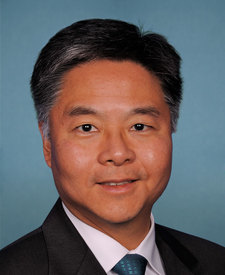
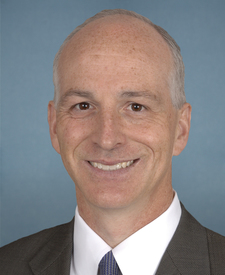
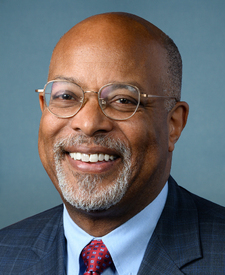
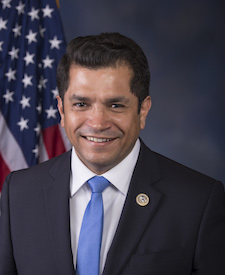
Legislative Progress
In CommitteeMr. Lieu (for himself, Ms. Clarke of New York, Mr. …
Referred to the Committee on the Judiciary, and in addition …
Introduced in House
Stakeholder Effects
cui bono?How this legislation distributes effects. Mention counts reflect frequency, not effect magnitude.
Federal law enforcement agencies, People in arrest photo databases, State law enforcement agencies
Positive-direction: People in arrest photo databases
Negative-direction: Federal law enforcement agencies, State law enforcement agencies
Civil rights organizations, People subject to facial recognition
Criminal defense attorneys, Federal courts
Bill Structure & Actor Mappings
Who is "The Secretary" in each section?
We use a combination of our own taxonomy and classification in addition to large language models to assess meaning and potential beneficiaries. High confidence means strong textual evidence. Always verify with the original bill text.
Learn more about our methodology