Partner with Korea Act
Summary
What This Bill Does
The Partner with Korea Act amends the Immigration and Nationality Act's E-visa provisions. It adds a new E visa clause for a national of the Republic of Korea coming solely to perform services in a specialty occupation in the United States, if the Labor Secretary determines and certifies to DHS and State that the intending employer filed the required section 212(t)(1) attestation. The State Secretary may not approve more than 15,000 initial applications for principal Korean specialty-occupation E visa applicants each fiscal year. The numerical limit applies only to principal aliens and not to spouses or children. The bill also updates specialty-occupation definitions and Labor attestation cross-references so the new Korean category is treated alongside existing treaty specialty occupation categories.
Who Benefits and How
South Korean specialty occupation professionals benefit from a dedicated E-visa pathway to work in the United States. U.S. employers hiring Korean professionals benefit from access to up to 15,000 principal applicants per year. Spouses and children of Korean principal applicants benefit because they do not count against the annual cap. Korean-American business networks benefit from a reciprocal mobility channel tied to specialty occupations.
Who Bears the Burden and How
Department of Labor must determine and certify employer attestations for the Korean E-visa category. Department of Homeland Security must administer the new visa classification and related eligibility rules. Department of State must track the 15,000 annual initial-application cap for principal applicants. Employers filing attestations must satisfy section 212(t)(1) requirements before workers qualify.
Key Provisions
- Creates an E-visa specialty occupation category for nationals of South Korea.
- Requires a Labor Department certification that the intending employer filed a section 212(t)(1) attestation.
- Limits initial principal applications to 15,000 per fiscal year.
- Excludes spouses and children from the numerical cap.
- Updates specialty-occupation and attestation cross-references for the new Korean category.
Evidence Chain:
This summary is generated from the full bill text using AI analysis. Expand "Detailed Analysis" below for identified beneficiaries/burden bearers.
At a Glance
What This Bill Does
Creates a reciprocal E-visa specialty occupation category for nationals of South Korea, capped at 15,000 initial principal applications per fiscal year, conditioned on a Department of Labor employer attestation certified to DHS and State, and excluding spouses and children from the numerical cap.
Key Policy Areas
Immigration, South Korea, Specialty Occupations
Primary Purpose
Creates a reciprocal E-visa specialty occupation category for nationals of South Korea, capped at 15,000 initial principal applications per fiscal year, conditioned on a Department of Labor employer attestation certified to DHS and State, and excluding spouses and children from the numerical cap.
Policy Domains
Resolution provisions
Identified Gains
Contextual inference, no direct clause citation- South Korean specialty occupation professionals
- U.S. employers hiring Korean professionals
- Spouses of Korean principal applicants
- Korean-American business networks
Contextual inference, no direct clause citation
Identified Costs
Contextual inference, no direct clause citation- Department of Labor
- Department of Homeland Security
- Department of State
- Employers filing attestations
Contextual inference, no direct clause citation
Sponsors

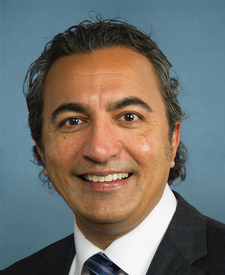



Legislative Progress
In CommitteeMrs. Kim (for herself and Ms. Kamlager-Dove) introduced the following …
Referred to the House Committee on the Judiciary.
Introduced in House
Bill Structure & Actor Mappings
Who is "The Secretary" in each section?
We use a combination of our own taxonomy and classification in addition to large language models to assess meaning and potential beneficiaries. High confidence means strong textual evidence. Always verify with the original bill text.
Learn more about our methodology