End Solitary Confinement Act
Summary
What This Bill Does
The End Solitary Confinement Act establishes federal minimum standards and grant incentives to end solitary confinement. New section 4015 generally prohibits solitary confinement in federal facilities. All incarcerated people in federal facilities, regardless of housing unit or detention status, must receive at least 14 hours per day of out-of-cell congregate interaction without physical barriers, including at least 7 hours of structured congregate programming, at least 1 hour of out-of-cell congregate recreation, and other unstructured congregate activities such as meals, library, legal calls, social visits, personal property, and commissary. Exceptions allow cell placement for count or sleep up to 8 hours in 24 hours, required facility business up to 2 hours, and emergency de-escalation only as a last resort for imminent serious physical injury, with caps of 4 hours immediately after an emergency, 4 hours in 24 hours, and 12 hours in 7 days. New section 4016 requires the Attorney General, consulting DOJ Civil Rights, DHS Civil Rights and Civil Liberties, and HHS Civil Rights, to create an independent community monitoring body within 90 days, with at least 15 members including people who survived solitary, family members, faith leaders, medical or mental health professionals, and civil or human rights advocates. New section 4017 requires state and local Byrne JAG recipients to certify substantial compliance and at least 14 hours of daily out-of-cell congregate interaction within 180 days or face at least a 10 percent JAG reduction, while exempting public defenders, community mental health, drug treatment, violence interruption, and similar non-carceral services. New definitions cover BOP, ICE, DHS, CBP, ORR, Marshals, HHS, other custodial federal agencies, and contractors. The bill amends the Prison Litigation Reform Act injury rule to allow recovery for mental or emotional injury when tied to solitary confinement or alternative-unit placement, requires federal agencies to revise procedures and monitor compliance, authorizes such sums as necessary, bars funds from constructing or renovating incarceration or restrictive spaces, includes severability, and takes effect within 60 days.
Who Benefits and How
People incarcerated in federal facilities benefit from a general ban on solitary confinement and a 14-hour daily out-of-cell congregate standard. People in ICE detention benefit because federal facility and agency definitions include immigration detention and contractors. Civil rights organizations on the community monitoring body benefit from formal oversight roles in solitary-confinement monitoring. Community mental health providers benefit because their Byrne JAG funding is exempted from noncompliance reductions.
Who Bears the Burden and How
Federal Bureau of Prisons must revise confinement procedures and provide programming, recreation, social visits, legal calls, and monitoring. Department of Homeland Security detention facilities must comply with federal solitary-confinement restrictions and oversight. State correctional agencies receiving Byrne JAG funds must certify substantial compliance or face at least a 10 percent grant reduction. Department of Justice Civil Rights Division must help establish the monitoring body and coordinate civil-rights oversight.
Key Provisions
- Prohibits solitary confinement in federal facilities except narrow count, sleep, facility-business, and emergency de-escalation circumstances.
- Requires at least 14 hours per day of out-of-cell congregate interaction, including 7 hours of structured programming and 1 hour of recreation.
- Creates an independent community monitoring body with at least 15 members and lived-experience, family, faith, medical, mental-health, and civil-rights representation.
- Requires state and local Byrne JAG recipients to certify compliance or face at least a 10 percent grant reduction, with public-defense and community-service exemptions.
- Expands prisoner civil recovery for mental or emotional injury tied to solitary confinement or alternative-unit placement.
- Requires federal agency procedure revisions, monitoring, such sums as necessary, funding-use restrictions, severability, and a 60-day effective date.
Evidence Chain:
This summary is generated from the full bill text using AI analysis. Expand "Detailed Analysis" below for identified beneficiaries/burden bearers with clause-level evidence links.
At a Glance
What This Bill Does
Bars solitary confinement in federal facilities except narrow count, sleep, facility-business, and emergency situations; requires at least 14 hours of daily out-of-cell congregate interaction and 7 hours of structured programming; creates an independent community monitoring body; conditions Byrne JAG funds on state and local compliance with solitary-confinement limits; expands recovery for mental or emotional injury after solitary or alternative-unit placement; requires agency procedures and monitoring; and bars implementation funds from building or expanding restrictive carceral spaces.
Key Policy Areas
Criminal Justice, Prisons, Civil Rights
Primary Purpose
Bars solitary confinement in federal facilities except narrow count, sleep, facility-business, and emergency situations; requires at least 14 hours of daily out-of-cell congregate interaction and 7 hours of structured programming; creates an independent community monitoring body; conditions Byrne JAG funds on state and local compliance with solitary-confinement limits; expands recovery for mental or emotional injury after solitary or alternative-unit placement; requires agency procedures and monitoring; and bars implementation funds from building or expanding restrictive carceral spaces.
Policy Domains
Resolution provisions
Identified Gains
- People incarcerated in federal facilities
- People in ICE detention
- Civil rights organizations on the community monitoring body
- Community mental health providers
Identified Costs
- Federal Bureau of Prisons
- Department of Homeland Security detention facilities
- State correctional agencies receiving Byrne JAG grants
- Department of Justice Civil Rights Division
Sponsors

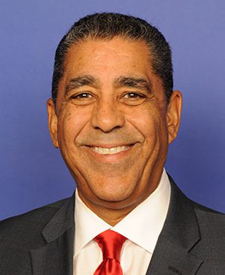

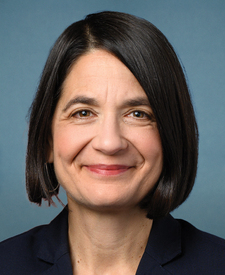

Legislative Progress
In CommitteeMs. Kamlager-Dove (for herself, Mr. Espaillat, Ms. Tlaib, Mrs. Watson …
Referred to the Committee on the Judiciary, and in addition …
Introduced in House
Stakeholder Effects
cui bono?How this legislation distributes effects. Mention counts reflect frequency, not effect magnitude.
Department of Homeland Security detention facilities, People in ICE detention
Positive-direction: People in ICE detention
Negative-direction: Department of Homeland Security detention facilities
Department of Justice Civil Rights Division, Federal Bureau of Prisons
People incarcerated in federal facilities
Civil rights organizations on the community monitoring body
State correctional agencies receiving Byrne JAG grants
Bill Structure & Actor Mappings
Who is "The Secretary" in each section?
We use a combination of our own taxonomy and classification in addition to large language models to assess meaning and potential beneficiaries. High confidence means strong textual evidence. Always verify with the original bill text.
Learn more about our methodology