RAP Act of 2025
Summary
What This Bill Does
The RAP Act adds a new Federal Rule of Evidence limiting use of a defendant's creative or artistic expression. As a default, original or derivative creative expression is not admissible against the defendant. A court may admit it only after a hearing outside the jury's hearing if the government proves by clear and convincing evidence that an original expression was intended literally rather than figuratively or fictionally, or that a derivative expression was intended as the defendant's own literal thought or statement; that in a criminal case the expression refers to the specific facts of the alleged crime, or in a civil case to the specific facts alleged in the complaint; that it is relevant to a disputed issue of fact; and that it has distinct probative value not supplied by other admissible evidence. The court must make its ruling on the record with essential factual findings. If admitted, the expression must be redacted to the portions satisfying the exception and the jury must receive limiting instructions. Creative or artistic expression includes forms, sounds, words, movements, or symbols, including music, dance, performance art, visual art, poetry, literature, film, and similar media.
Who Benefits and How
Arts advocacy organizations benefit from a federal evidence rule protecting creative expression from routine use against defendants. Criminal defendants who are artists benefit from a higher evidentiary bar before lyrics, poems, films, or other expression can be used against them. Defense attorneys benefit from a clear hearing, redaction, and limiting-instruction framework. Civil defendants with artistic works benefit from the same protection when creative expression is offered against them.
Who Bears the Burden and How
Federal prosecutors must meet a clear-and-convincing standard before using creative expression against a defendant. Civil plaintiffs using artistic expression as evidence must satisfy the same Rule 416 exception requirements. Federal courts must conduct hearings outside the jury's presence and make on-record factual findings. Jury members may receive less expressive material and more limited versions when such evidence is admitted.
Key Provisions
- Creates Federal Rule of Evidence 416 limiting admissibility of defendants' creative or artistic expression.
- Requires clear and convincing proof of literal intent or adoption of literal meaning.
- Requires the expression to refer to specific facts of the charged crime or civil complaint.
- Requires relevance to a disputed fact and distinct probative value not supplied by other evidence.
- Requires on-record findings, redaction, and limiting instructions when evidence is admitted.
Evidence Chain:
This summary is generated from the full bill text using AI analysis. Expand "Detailed Analysis" below for identified beneficiaries/burden bearers with clause-level evidence links.
At a Glance
What This Bill Does
Creates Federal Rule of Evidence 416, making a defendant's creative or artistic expression inadmissible unless the government proves by clear and convincing evidence outside the jury's hearing that the expression was intended literally, refers to specific facts of the charged crime or civil complaint, is relevant to a disputed fact, and has distinct probative value not supplied by other evidence.
Key Policy Areas
Evidence, Criminal Justice, Arts
Primary Purpose
Creates Federal Rule of Evidence 416, making a defendant's creative or artistic expression inadmissible unless the government proves by clear and convincing evidence outside the jury's hearing that the expression was intended literally, refers to specific facts of the charged crime or civil complaint, is relevant to a disputed fact, and has distinct probative value not supplied by other evidence.
Policy Domains
Resolution provisions
Identified Gains
- Arts advocacy organizations
- Criminal defendants who are artists
- Defense attorneys
- Civil defendants with artistic works
Identified Costs
- Federal prosecutors
- Civil plaintiffs using artistic expression
- Federal courts
- Jury members
Sponsors
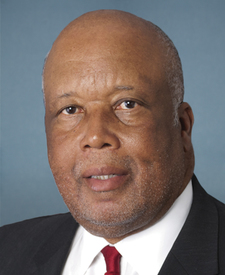
Legislative Progress
In CommitteeMr. Johnson of Georgia (for himself, Ms. Kamlager-Dove, Mr. Carson, …
Referred to the House Committee on the Judiciary.
Introduced in House
Stakeholder Effects
cui bono?How this legislation distributes effects. Mention counts reflect frequency, not effect magnitude.
Civil plaintiffs using artistic expression, Defense attorneys, Federal courts
Criminal defendants who are artists, Federal prosecutors
Bill Structure & Actor Mappings
Who is "The Secretary" in each section?
We use a combination of our own taxonomy and classification in addition to large language models to assess meaning and potential beneficiaries. High confidence means strong textual evidence. Always verify with the original bill text.
Learn more about our methodology