Save Our Bacon Act
Summary
What This Bill Does
The Save Our Bacon Act aims to protect interstate markets for livestock-derived products. Its purpose section says Congress seeks to protect the free movement of products from covered livestock, encourage a national market, prevent producers from facing a patchwork of state laws restricting national market access, and uphold international trade obligations. The bill gives covered livestock producers a federal right to raise and market their livestock in interstate commerce. It then bars states and subdivisions from directly or indirectly enacting or enforcing production conditions or standards for covered livestock except livestock physically raised in that state or subdivision. It also bars states and subdivisions from making sale or consumption of out-of-state livestock-derived products depend on production standards that are additional to or different from the standards in the state where production occurs. Covered livestock means domestic animals raised for human slaughter or for milk-derived products, including fluid milk products, but not animals raised primarily for egg production. Production means raising, including breeding, and excludes movement, harvesting, or further processing.
Who Benefits and How
Pork producers selling across state lines benefit from federal preemption of out-of-state production standards. Dairy producers benefit because milk-derived products from covered livestock receive the same interstate commerce protection. Meat processors benefit from a more uniform national market for products derived from covered livestock. Grocery retailers benefit if interstate supply chains face fewer state-by-state production conditions.
Who Bears the Burden and How
State governments enforcing livestock production standards lose authority over products from livestock raised outside the state. Local governments lose parallel authority to impose different out-of-jurisdiction livestock production conditions. Animal welfare regulators face federal limits when standards affect interstate sale of out-of-state livestock products. Consumers favoring stricter livestock production standards may lose state-level market rules for out-of-state products.
Key Provisions
- Provides a federal right for covered livestock producers to raise and market livestock in interstate commerce.
- Prohibits state or local production standards for covered livestock not physically raised in the jurisdiction.
- Prohibits sale or consumption conditions on out-of-state livestock products that differ from production-state standards.
- Defines covered livestock to include animals raised for slaughter or milk-derived products and exclude egg-production animals.
- Defines production as raising or breeding rather than movement, harvesting, or further processing.
Evidence Chain:
This summary is generated from the full bill text using AI analysis. Expand "Detailed Analysis" below for identified beneficiaries/burden bearers with clause-level evidence links.
At a Glance
What This Bill Does
Preempts state and local production standards that restrict interstate sale or consumption of products from livestock raised outside the regulating jurisdiction, gives livestock producers a federal right to raise and market covered livestock in interstate commerce, and excludes egg-production animals from the covered-livestock definition.
Key Policy Areas
Agriculture, Interstate Commerce, Federal Preemption
Primary Purpose
Preempts state and local production standards that restrict interstate sale or consumption of products from livestock raised outside the regulating jurisdiction, gives livestock producers a federal right to raise and market covered livestock in interstate commerce, and excludes egg-production animals from the covered-livestock definition.
Policy Domains
Resolution provisions
Identified Gains
- Pork producers
- Dairy producers
- Meat processors
- Grocery retailers
Identified Costs
- State governments enforcing livestock production standards
- Local governments
- Animal welfare regulators
- Consumers favoring stricter livestock standards
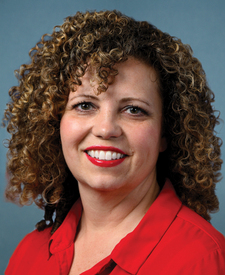
Sponsors
Legislative Progress
In CommitteeMrs. Hinson (for herself, Mr. Feenstra, Mr. Nunn of Iowa, …
Referred to the House Committee on Agriculture.
Introduced in House
Stakeholder Effects
cui bono?How this legislation distributes effects. Mention counts reflect frequency, not effect magnitude.
Local governments, State governments enforcing livestock production standards
Bill Structure & Actor Mappings
Who is "The Secretary" in each section?
We use a combination of our own taxonomy and classification in addition to large language models to assess meaning and potential beneficiaries. High confidence means strong textual evidence. Always verify with the original bill text.
Learn more about our methodology