Immigration Enforcement Staff Body Camera Accountability Act
Summary
What This Bill Does
The Immigration Enforcement Staff Body Camera Accountability Act requires broad body-camera use by immigration enforcement staff. By the time DHS finalizes the rule, the ICE Director and CBP Commissioner must ensure that all ICE agents and officers, all CBP agents and officers, and staff at immigration detention facilities who interact with detainees wear body cameras during official operations. ICE and CBP must establish policies, procedures, best practices, and training for camera use, AI and facial-recognition technology used to record or review footage, and adverse actions. Cameras must be turned on at the beginning of each shift and remain on for the full shift. Footage must be made available to each party in administrative proceedings, civil actions, or criminal prosecutions to which the footage pertains under DHS rules; if not made available, a party may notify ICE or CBP to instigate adverse action. DHS must start rulemaking within 60 days, consistent with civil-rights body-camera principles and comparing the rule to ACLU and New Hampshire body-camera models. Staff whose cameras fail to record because of a violation may face furlough, reduction in pay or grade, or suspension up to 30 days. DHS may not find a malfunction unless the staff member submits sufficient evidence. The DHS Inspector General must conduct annual privacy impact assessments of collection, maintenance, storage, and dissemination. No new funding is authorized.
Who Benefits and How
Immigration detainees benefit from body-camera footage during enforcement operations and detention interactions. Parties in immigration-related proceedings benefit from access to relevant body-camera footage. Civil rights oversight organizations benefit from policies addressing AI, facial recognition, privacy, and footage access. DHS Inspector General privacy staff benefit from a clear annual assessment mandate.
Who Bears the Burden and How
ICE agents must wear cameras, keep them on during shifts, and face adverse actions for recording violations. CBP agents must follow the same body-camera, training, and footage-access rules. Immigration detention facility staff who interact with detainees must wear cameras during official operations. DHS must conduct rulemaking, set access requirements, manage AI and facial recognition policies, and implement the mandate with existing funds.
Key Provisions
- Requires ICE and CBP immigration enforcement staff to wear body cameras during official operations after DHS rulemaking.
- Requires cameras to remain on from the beginning through the end of each shift.
- Requires relevant footage to be made available to parties in administrative, civil, or criminal proceedings.
- Directs policies for AI and facial recognition review of body-camera footage.
- Authorizes adverse actions for recording violations and requires annual DHS Inspector General privacy impact assessments.
Evidence Chain:
This summary is generated from the full bill text using AI analysis. Expand "Detailed Analysis" below for identified beneficiaries/burden bearers with clause-level evidence links.
At a Glance
What This Bill Does
Requires ICE and CBP immigration enforcement staff, including detention-facility staff who interact with detainees, to wear body cameras during official operations after DHS rulemaking, keep cameras on for full shifts, make footage available in proceedings, regulate AI and facial recognition review, impose adverse actions for recording violations, require annual DHS Inspector General privacy impact assessments, and use existing funds.
Key Policy Areas
Immigration Enforcement, Body Cameras, Civil Rights
Primary Purpose
Requires ICE and CBP immigration enforcement staff, including detention-facility staff who interact with detainees, to wear body cameras during official operations after DHS rulemaking, keep cameras on for full shifts, make footage available in proceedings, regulate AI and facial recognition review, impose adverse actions for recording violations, require annual DHS Inspector General privacy impact assessments, and use existing funds.
Policy Domains
Resolution provisions
Identified Gains
- Immigration detainees
- Parties in immigration-related proceedings
- Civil rights oversight organizations
- DHS Inspector General privacy staff
Identified Costs
- ICE agents
- CBP agents
- Immigration detention facility staff
- Department of Homeland Security
Legislative Progress
In CommitteeReferred to the Subcommittee on Border Security and Enforcement.
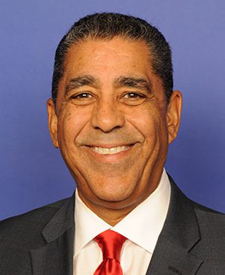
Mr. Espaillat introduced the following bill; which was referred to …
Referred to the Committee on Homeland Security, and in addition …
Introduced in House
Stakeholder Effects
cui bono?How this legislation distributes effects. Mention counts reflect frequency, not effect magnitude.
Immigration detainees, Immigration detention facility staff
Positive-direction: Immigration detainees
Negative-direction: Immigration detention facility staff
Parties in immigration-related proceedings
Bill Structure & Actor Mappings
Who is "The Secretary" in each section?
We use a combination of our own taxonomy and classification in addition to large language models to assess meaning and potential beneficiaries. High confidence means strong textual evidence. Always verify with the original bill text.
Learn more about our methodology