Smart Cities and Communities Act of 2025
Analysis under review: This bill has generated analysis that may be too generic or incomplete. Clause-level evidence remains available below.
Summary
What This Bill Does
The bill establishes the statutory purpose of the Smart Cities and Communities Act, including promoting smart technologies to improve community services, safety, and economic growth while protecting data security and privacy, defines key terms for the Act including smart city or community, Council, Secretaries, Working Group, equity, and State, establishing the legal framework for smart city technology policy, and establishes the Interagency Council on Smart Cities led by OSTP and co-chaired by the Secretary of Commerce to coordinate federal activities and funding. It relies on compliance mandates, grants, appropriations, and definition changes. The main policy areas are Technology, Finance, International Trade, and Education.
Who Benefits and How
Smart city technology vendors could gain revenue opportunities, Workers seeking technology jobs could gain revenue opportunities, and US smart city technology exporters could gain revenue opportunities.
Who Bears the Burden and How
Department of Commerce would take on compliance duties, Taxpayers could face higher costs, and Government Accountability Office would take on compliance duties.
Key Provisions
- Establishes the statutory purpose of the Smart Cities and Communities Act, including promoting smart technologies to improve community services, safety, and economic growth while protecting data security and privacy.
- Defines key terms for the Act including smart city or community, Council, Secretaries, Working Group, equity, and State, establishing the legal framework for smart city technology policy.
- Establishes the Interagency Council on Smart Cities led by OSTP and co-chaired by the Secretary of Commerce to coordinate federal activities and funding.
- Requires the Secretaries to create, publish, and maintain for at least 6 years a free electronic resource guide to help cities implement smart city programs, including best practices, funding sources, and cybersecurity...
- Establishes a smart city regional demonstration grant program with $100 million annual authorization (FY2026-2030).
Evidence Chain:
This summary is generated from the full bill text using AI analysis. Expand "Detailed Analysis" below for identified beneficiaries/burden bearers with clause-level evidence links.
At a Glance
What This Bill Does
The bill establishes the statutory purpose of the Smart Cities and Communities Act, including promoting smart technologies to improve community services, safety, and economic growth while protecting data security and privacy, defines key terms for the Act including smart city or community, Council, Secretaries, Working Group, equity, and State, establishing the legal framework for smart city technology policy, and establishes the Interagency Council on Smart Cities led by OSTP and co-chaired by the Secretary of Commerce to coordinate federal activities and funding.
Key Policy Areas
Technology, Finance, International Trade, Education
Primary Purpose
The bill establishes the statutory purpose of the Smart Cities and Communities Act, including promoting smart technologies to improve community services, safety, and economic growth while protecting data security and privacy, defines key terms for the Act including smart city or community, Council, Secretaries, Working Group, equity, and State, establishing the legal framework for smart city technology policy, and establishes the Interagency Council on Smart Cities led by OSTP and co-chaired by the Secretary of Commerce to coordinate federal activities and funding.
Policy Domains
Title I - Federal Activities
Identified Gains
- Smart city technology vendors
- Workers seeking technology jobs
- US smart city technology exporters
- US smart city technology companies
- Local governments seeking DOE technical assistance
Identified Costs
- Department of Commerce
- Taxpayers
- Government Accountability Office
- Office of Science and Technology Policy
- NIST
Sponsors
Legislative Progress
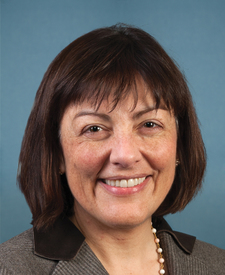
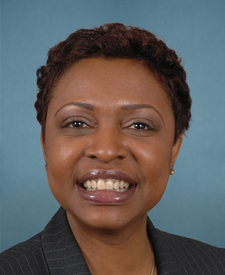
In CommitteeMs. DelBene (for herself and Ms. Clarke of New York) …
Referred to the Committee on Energy and Commerce, and in …
Introduced in House
Stakeholder Effects
cui bono?How this legislation distributes effects. Mention counts reflect frequency, not effect magnitude.
Department of Commerce, Department of Energy, Export-Import Bank
Positive-direction: Export-Import Bank, Local governments, Local governments adopting smart technologies, Local governments purchasing smart technology, Local governments seeking DOE technical assistance, Local governments seeking smart city guidance, Local governments seeking smart city technologies, Workforce development boards
Negative-direction: Department of Commerce, Department of Energy, Government Accountability Office, NIST, Office of Science and Technology Policy
Cybersecurity service providers, Foreign smart city technology companies, Smart city device and software manufacturers
Positive-direction: Cybersecurity service providers, Smart city technology companies, Smart city technology employers, Smart city technology industry, Smart city technology vendors, US smart city technology companies, US smart city technology exporters, US technology companies seeking global markets, US workers in smart city industries
Negative-direction: Foreign smart city technology companies
Taxpayers, Workers seeking technology jobs
Positive-direction: Workers seeking technology jobs
Negative-direction: Taxpayers
Disadvantaged small business concerns, Small businesses partnering with cities
Bill Structure & Actor Mappings
Who is "The Secretary" in each section?
- "the_council"
- → Interagency Council on Smart Cities
- "the_secretary"
- → Secretary of Commerce
- "the_secretaries"
- → Secretary of Commerce coordinating with Secretaries of Energy, HUD, Transportation, and Director of NSF
- "the_secretary"
- → Secretary of Commerce (sections 201-204), Secretary of Energy (section 205)
- "the_working_group"
- → Cybersecurity Working Group
- "the_secretary_of_labor"
- → Secretary of Labor (section 203)
- "the_secretary"
- → Secretary of Commerce acting through Director of NIST
- "the_secretary"
- → Secretary of Commerce
- "the_secretaries"
- → Secretary of Commerce coordinating with multiple agencies
Note: 'The Secretary' refers to Secretary of Commerce throughout most of the bill, but in Section 205 it specifically refers to Secretary of Energy
Key Definitions
Terms defined in this bill
A community in which innovative, advanced, and trustworthy information, communications, and energy technologies are applied to improve health and quality of life, increase efficiency of civic operations, promote economic growth, and create safer, more equitable, sustainable, resilient, livable communities.
The Interagency Council on Smart Cities established under section 101(a)(1)(A)(i).
The Secretary of Commerce, acting in coordination with the Secretaries of Energy, HUD, Transportation, the Director of NSF, and as appropriate, HHS, DHS, Labor, and State.
The Cybersecurity Working Group established under section 202(b)(1).
We use a combination of our own taxonomy and classification in addition to large language models to assess meaning and potential beneficiaries. High confidence means strong textual evidence. Always verify with the original bill text.
Learn more about our methodology