Access to Fertility Treatment and Care Act
Summary
What This Bill Does
The bill amends the Public Health Service Act, ERISA, and Internal Revenue Code to mandate that all group health plans and individual health insurance coverage provide fertility treatment coverage if they cover obstetrical, requires new Section 2799A-11 of the Public Health Service Act: the substantive text mandating group health plans and individual coverage to provide fertility treatment coverage, defining the term, requiring, and requires new Section 726 of ERISA: parallel mandate for employer-sponsored group health plans and issuers under ERISA to provide fertility treatment coverage with the same definitions, cost-sharing parity, prohibitions. It relies on compliance mandates, definition changes, appropriations, and exemptions. The main policy areas are Healthcare, Finance, and Defense.
Who Benefits and How
Fertility treatment providers could gain revenue opportunities, TRICARE beneficiaries could see lower costs, and Participants in IRC-regulated plans could see lower costs.
Who Bears the Burden and How
IRC-regulated group health plans would take on compliance duties, Health insurance companies would take on compliance duties, and Group health plans and issuers (PHSA-regulated) would take on compliance duties.
Key Provisions
- Amends the Public Health Service Act, ERISA, and Internal Revenue Code to mandate that all group health plans and individual health insurance coverage provide fertility treatment coverage if they cover obstetrical...
- Requires new Section 2799A-11 of the Public Health Service Act: the substantive text mandating group health plans and individual coverage to provide fertility treatment coverage, defining the term, requiring...
- Requires new Section 726 of ERISA: parallel mandate for employer-sponsored group health plans and issuers under ERISA to provide fertility treatment coverage with the same definitions, cost-sharing parity, prohibitions...
- Requires new Section 9826 of the Internal Revenue Code: parallel mandate for IRC-regulated group health plans to provide fertility treatment coverage with the same definitions, cost-sharing parity, prohibitions...
- Amends Section 8902 of title 5 to require Federal Employees Health Benefits Program contracts to provide fertility treatment coverage consistent with the new PHSA Section 2799A-11 if the contract covers obstetrical...
Evidence Chain:
This summary is generated from the full bill text using AI analysis. Expand "Detailed Analysis" below for identified beneficiaries/burden bearers with clause-level evidence links.
At a Glance
What This Bill Does
The bill amends the Public Health Service Act, ERISA, and Internal Revenue Code to mandate that all group health plans and individual health insurance coverage provide fertility treatment coverage if they cover obstetrical, requires new Section 2799A-11 of the Public Health Service Act: the substantive text mandating group health plans and individual coverage to provide fertility treatment coverage, defining the term, requiring, and requires new Section 726 of ERISA: parallel mandate for employer-sponsored group health plans and issuers under ERISA to provide fertility treatment coverage with the same definitions, cost-sharing parity, prohibitions.
Key Policy Areas
Healthcare, Finance, Defense
Primary Purpose
The bill amends the Public Health Service Act, ERISA, and Internal Revenue Code to mandate that all group health plans and individual health insurance coverage provide fertility treatment coverage if they cover obstetrical, requires new Section 2799A-11 of the Public Health Service Act: the substantive text mandating group health plans and individual coverage to provide fertility treatment coverage, defining the term, requiring, and requires new Section 726 of ERISA: parallel mandate for employer-sponsored group health plans and issuers under ERISA to provide fertility treatment coverage with the same definitions, cost-sharing parity, prohibitions.
Policy Domains
Private Insurance Coverage Mandate (Sec. 2)
Identified Gains
- Fertility treatment providers
- TRICARE beneficiaries
- Participants in IRC-regulated plans
- Medicare beneficiaries seeking fertility treatment
- Low-income individuals seeking fertility treatment
Identified Costs
- IRC-regulated group health plans
- Health insurance companies
- Group health plans and issuers (PHSA-regulated)
- ERISA-regulated group health plans
- State Medicaid programs
Sponsors

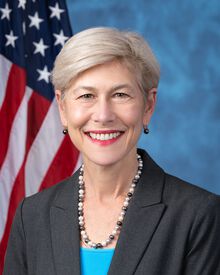

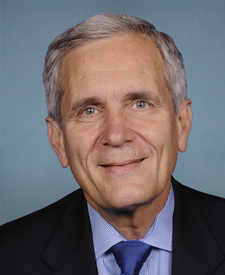

Legislative Progress
In CommitteeReferred to the Subcommittee on Health.
Ms. DeLauro (for herself, Mr. Doggett, Ms. Schakowsky, and Mrs. …
Referred to the Committee on Energy and Commerce, and in …
Introduced in House
Stakeholder Effects
cui bono?How this legislation distributes effects. Mention counts reflect frequency, not effect magnitude.
Fertility clinics and IVF providers, Fertility treatment providers, Fertility treatment providers accepting Medicare
Employees in ERISA plans, Federal taxpayers (90% match rate), Federal taxpayers (FEHBP employer contribution)
Positive-direction: Employees in ERISA plans, Individuals in PHSA-regulated plans, Individuals seeking fertility treatment, Low-income individuals seeking fertility treatment, Medicare beneficiaries seeking fertility treatment, Participants in IRC-regulated plans
Negative-direction: Federal taxpayers (90% match rate), Federal taxpayers (FEHBP employer contribution), Federal taxpayers (Medicare trust fund), Health plan enrollees (premiums)
ERISA-regulated group health plans, Employer plan sponsors, FEHBP participating insurers
CMS (implementation and claims processing), Department of Defense, Department of Defense (budget)
Positive-direction: Federal employees and dependents, States (net fiscal benefit from 90% match)
Negative-direction: CMS (implementation and claims processing), Department of Defense, Department of Defense (budget), State Medicaid programs, State governments (budgets)
Active duty service members and dependents, Military retirees and dependents, TRICARE beneficiaries
Bill Structure & Actor Mappings
Who is "The Secretary" in each section?
- "the_secretary"
- → Secretary of Health and Human Services
- "the_secretary"
- → Secretary of Health and Human Services
- "the_secretary"
- → Secretary of Defense
- "the_secretary"
- → Secretary of Veterans Affairs
- "the_secretary"
- → Secretary of Health and Human Services
- "the_secretary"
- → Secretary of Health and Human Services
Note: {'term': 'The Secretary', 'resolution': 'Refers to the Secretary of HHS in Sections 2, 6, and 7; the Secretary of Defense in Section 4; the Secretary of Veterans Affairs in Section 5. Section 3 (FEHBP) references the PHSA definition without naming a specific Secretary.'}
Key Definitions
Terms defined in this bill
We use a combination of our own taxonomy and classification in addition to large language models to assess meaning and potential beneficiaries. High confidence means strong textual evidence. Always verify with the original bill text.
Learn more about our methodology