Business Uninterrupted Monetary Program Act of 2025
Summary
What This Bill Does
The Business Uninterrupted Monetary Program Act creates BUMP funds to compensate private businesses and nonprofits directly and negatively affected by transportation project interruptions. For fixed guideway capital investment grants under 49 U.S.C. 5309, eligible project sponsors must establish BUMP funds for projects costing at least $100 million. Contributions may count toward the nonfederal share, cannot exceed 10 percent of the total nonfederal share, must reflect estimated interruption damages, and may be waived or altered by the Transportation Secretary for equivalent programs, no possible interruption, low federal share, or other appropriate reasons. For federal-aid highway covered projects costing at least $50 million, title 23 recipients must establish similar BUMP funds, with contributions not exceeding 25 percent of the nonfederal share and special rules for fully federally funded projects. Eligible covered-entity expenses include utilities, insurance, rent or mortgage payments, payroll, loss of income, and other consistent expenses. Sponsors must describe eligibility, distribution, verification, funding per entity, and outreach. Funds remain available for one year after project completion unless no longer needed and unused amounts may support operating expenses, project enhancements, cost overruns, environmental mitigation, other eligible projects, return to the recipient, or other Secretary-approved purposes. The bill also directs a single-round competitive grant program within 270 days for fixed-guideway projects that meet section 5309(s), began construction on or after October 1, 2018, and remained under construction on June 1, 2023, with grants capped at $10 million.
Who Benefits and How
Small business employers near transit construction benefit from BUMP fund relief for utilities, rent, payroll, lost income, and other interruption costs. Nonprofit organizations near highway projects benefit from access to BUMP fund assistance when covered projects disrupt operations. Fixed guideway grant recipients with qualifying ongoing projects benefit from one-time grants of up to $10 million for interruption relief. Local business communities benefit if construction-related financial harm is planned for before major transportation projects proceed.
Who Bears the Burden and How
Transit grant recipients must create and manage BUMP funds for qualifying fixed guideway projects. Federal-aid highway agencies must create and manage BUMP funds for covered highway projects. Department of Transportation must review BUMP plans, waiver requests, eligible expenses, and one-time grant applications. Project sponsor administrators must conduct outreach, verify claimed impacts, distribute funds, and account for unused balances.
Key Provisions
- Creates BUMP funds for businesses and nonprofits harmed by fixed-guideway capital investment projects.
- Limits fixed-guideway BUMP contributions to no more than 10 percent of the nonfederal share for projects costing at least $100 million.
- Creates BUMP funds for federal-aid highway covered projects costing at least $50 million.
- Limits highway BUMP contributions to no more than 25 percent of the nonfederal share.
- Authorizes eligible expenses including utilities, insurance, rent, mortgage, payroll, and lost income.
- Creates one-time grants up to $10 million for certain ongoing fixed-guideway projects and requires implementation within 270 days.
Evidence Chain:
This summary is generated from the full bill text using AI analysis. Expand "Detailed Analysis" below for identified beneficiaries/burden bearers with clause-level evidence links.
At a Glance
What This Bill Does
Requires transit and highway project sponsors to create Business Uninterrupted Monetary Program funds for businesses and nonprofits harmed by construction interruptions, caps fixed-guideway BUMP funds at 10 percent of the nonfederal share for projects of at least $100 million, caps highway BUMP funds at 25 percent of the nonfederal share for covered projects of at least $50 million, creates one-time grants up to $10 million for certain ongoing fixed-guideway projects, and requires implementation within 270 days.
Key Policy Areas
Transportation, Small Business, Infrastructure
Primary Purpose
Requires transit and highway project sponsors to create Business Uninterrupted Monetary Program funds for businesses and nonprofits harmed by construction interruptions, caps fixed-guideway BUMP funds at 10 percent of the nonfederal share for projects of at least $100 million, caps highway BUMP funds at 25 percent of the nonfederal share for covered projects of at least $50 million, creates one-time grants up to $10 million for certain ongoing fixed-guideway projects, and requires implementation within 270 days.
Policy Domains
Resolution provisions
Identified Gains
- Small business employers near transit construction
- Nonprofit organizations near highway projects
- Fixed guideway grant recipients
- Local business communities
Identified Costs
- Transit grant recipients
- Federal-aid highway agencies
- Department of Transportation
- Project sponsor administrators
Sponsors
Legislative Progress
In CommitteeReferred to the Subcommittee on Highways and Transit.
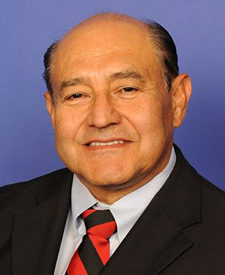
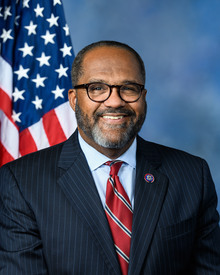
Mr. Correa (for himself and Mr. Carter of Louisiana) introduced …
Referred to the House Committee on Transportation and Infrastructure.
Introduced in House
Stakeholder Effects
cui bono?How this legislation distributes effects. Mention counts reflect frequency, not effect magnitude.
Fixed guideway grant recipients, Transit grant recipients
Positive-direction: Fixed guideway grant recipients
Negative-direction: Transit grant recipients
Small business employers near transit construction
Bill Structure & Actor Mappings
Who is "The Secretary" in each section?
We use a combination of our own taxonomy and classification in addition to large language models to assess meaning and potential beneficiaries. High confidence means strong textual evidence. Always verify with the original bill text.
Learn more about our methodology