Skills Investment Act of 2025
Summary
What This Bill Does
The Skills Investment Act turns Coverdell education savings accounts into broader Coverdell lifelong learning accounts. It makes conforming changes across the Internal Revenue Code and deems pre-2024 Coverdell education savings accounts to be lifelong learning accounts. It adds qualified educational or skill development expenses for beneficiaries after age 16, including WIOA training services from eligible providers, career and technical education through eligible institutions, specified WIOA career services, youth workforce activities, adult education and literacy activities, transportation needed for those activities, testing needed for enrollment or certification, and computer software, equipment, fiber optic cable, internet access, and related services used primarily by the beneficiary. New section 45BB gives employers a general business credit equal to 25 percent of nonelective employer contributions to Coverdell lifelong learning accounts for employees, excluding self-employed workers, certain S corporation shareholders, five-percent owners, and related individuals, while including leased employees. New section 224 allows an adult beneficiary age 18 or older to deduct contributions to the beneficiary's Coverdell lifelong learning account, but not rollover contributions.
Who Benefits and How
Adult workers using Coverdell lifelong learning accounts benefit from tax-favored savings for job training, career services, testing, transportation, and technology. Employers making nonelective skills contributions benefit from a 25 percent section 45BB business credit. WIOA eligible training providers benefit if account funds can be used for their workforce training services. Career and technical education institutions benefit because their programs become qualified skill development expenses.
Who Bears the Burden and How
Internal Revenue Service administrators must update forms, guidance, and Code cross-references from education savings accounts to lifelong learning accounts. Employers claiming the credit must verify employee eligibility and nonelective contribution rules. Account administrators must track expanded qualified expenses and adult beneficiary deductions. Federal taxpayers bear revenue losses from the employer credit and individual deduction.
Key Provisions
- Renames Coverdell education savings accounts as Coverdell lifelong learning accounts throughout the Internal Revenue Code.
- Expands qualified expenses after age 16 to WIOA training, career services, youth activities, adult education, transportation, testing, and technology.
- Creates a 25 percent employer credit for nonelective contributions to employee Coverdell lifelong learning accounts.
- Creates an individual deduction for adult beneficiary account contributions while excluding rollovers.
- Provides that pre-2024 Coverdell education savings accounts are treated as lifelong learning accounts.
Evidence Chain:
This summary is generated from the full bill text using AI analysis. Expand "Detailed Analysis" below for identified beneficiaries/burden bearers with clause-level evidence links.
At a Glance
What This Bill Does
Renames Coverdell education savings accounts as Coverdell lifelong learning accounts, expands qualified expenses after age 16 to workforce training, career services, adult education, testing, transportation, and technology, creates a 25 percent employer credit for nonelective contributions to employees' accounts, and creates an individual deduction for adult beneficiary contributions.
Key Policy Areas
Tax, Workforce Development, Education Savings
Primary Purpose
Renames Coverdell education savings accounts as Coverdell lifelong learning accounts, expands qualified expenses after age 16 to workforce training, career services, adult education, testing, transportation, and technology, creates a 25 percent employer credit for nonelective contributions to employees' accounts, and creates an individual deduction for adult beneficiary contributions.
Policy Domains
Resolution provisions
Identified Gains
- Adult workers using Coverdell lifelong learning accounts
- Employers making nonelective skills contributions
- WIOA eligible training providers
- Career and technical education institutions
Identified Costs
- Internal Revenue Service administrators
- Employers claiming the credit
- Account administrators
- Federal taxpayers
Sponsors
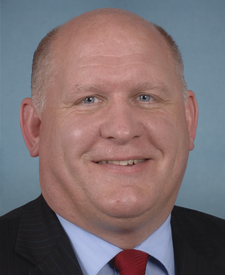
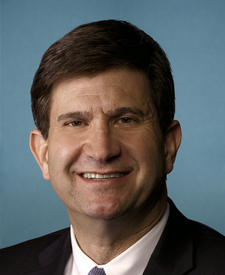



Legislative Progress
In CommitteeMr. Thompson of Pennsylvania (for himself, Ms. Bonamici, Mr. Fitzpatrick, …
Referred to the House Committee on Ways and Means.
Introduced in House
Sponsor introductory remarks on measure. (CR H159)
Stakeholder Effects
cui bono?How this legislation distributes effects. Mention counts reflect frequency, not effect magnitude.
Career and technical education institutions, WIOA eligible training providers
Adult workers using Coverdell lifelong learning accounts
Employers making nonelective skills contributions
Bill Structure & Actor Mappings
Who is "The Secretary" in each section?
We use a combination of our own taxonomy and classification in addition to large language models to assess meaning and potential beneficiaries. High confidence means strong textual evidence. Always verify with the original bill text.
Learn more about our methodology