Restoring Biological Truth to the Workplace Act
Summary
What This Bill Does
The Restoring Biological Truth to the Workplace Act adds a new title VII employment-practice rule. Employers could not take actions described in section 703(a) because an employee engages in covered expression that describes, asserts, or reinforces the binary or biological nature of sex. Covered expression includes speech, writing, depictions, owning or using items containing speech, writing, or depictions, and pronoun use, inside or outside the workplace. Employers also could not take section 703(a) action because an employee requests or uses a single-sex area such as a bathroom, changing area, or other place where physical privacy is desirable. The bill states that job-relatedness or business necessity is not a defense to the prohibited practices. It also amends title VII's retaliation section so retaliation protection covers the new section 703(o) unlawful employment practices.
Who Benefits and How
Employees engaging in covered sex-binary expression benefit from title VII protection against adverse employment actions. Employees requesting single-sex privacy areas benefit from protection when asking to use bathrooms or changing areas. Employees using single-sex privacy areas benefit from protection against workplace discipline tied to that use. Workplace-speech plaintiffs benefit from retaliation protections covering the new section 703(o) claims.
Who Bears the Burden and How
Employers must avoid adverse actions based on covered expression or single-sex-area requests and cannot use business necessity as a defense. Human resources departments must revise policies, training, investigations, and accommodation processes. Equal Employment Opportunity Commission must enforce the new title VII categories. Employees who object to the protected expression or facility use may face workplace-policy changes limiting employer responses.
Key Provisions
- Creates a title VII unlawful employment practice for action against covered expression about the binary or biological nature of sex.
- Protects covered expression through speech, writing, depictions, items, and pronoun use inside or outside work.
- Creates a title VII unlawful employment practice for action against requests for or use of single-sex private areas.
- Bars job-relatedness or business necessity as a defense to the new prohibited practices.
- Extends title VII retaliation protection to the new section 703(o) claims.
Evidence Chain:
This summary is generated from the full bill text using AI analysis. Expand "Detailed Analysis" below for identified beneficiaries/burden bearers.
At a Glance
What This Bill Does
Amends title VII to make it an unlawful employment practice to act against employees for covered expression asserting the binary or biological nature of sex or for requesting or using single-sex private areas, and extends retaliation protections to those claims.
Key Policy Areas
Employment Law, Civil Rights, Workplace Speech
Primary Purpose
Amends title VII to make it an unlawful employment practice to act against employees for covered expression asserting the binary or biological nature of sex or for requesting or using single-sex private areas, and extends retaliation protections to those claims.
Policy Domains
Resolution provisions
Identified Gains
Contextual inference, no direct clause citation- Employees engaging in covered sex-binary expression
- Employees requesting single-sex privacy areas
- Employees using single-sex privacy areas
- Workplace-speech plaintiffs
Contextual inference, no direct clause citation
Identified Costs
Contextual inference, no direct clause citation- Employers
- Human resources departments
- Equal Employment Opportunity Commission
- Employees who object to protected expression
Contextual inference, no direct clause citation
Sponsors



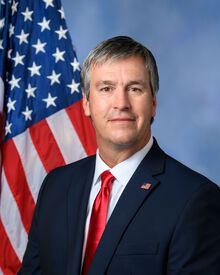

Legislative Progress
In CommitteeMr. Steube (for himself, Ms. Mace, Mr. Moore of Alabama, …
Referred to the House Committee on Education and Workforce.
Introduced in House
Bill Structure & Actor Mappings
Who is "The Secretary" in each section?
We use a combination of our own taxonomy and classification in addition to large language models to assess meaning and potential beneficiaries. High confidence means strong textual evidence. Always verify with the original bill text.
Learn more about our methodology