American Cooperation with Our Neighbors Act
Summary
What This Bill Does
The American Cooperation with Our Neighbors Act has two regional cooperation tracks. First, within 270 days, the Secretary of State, coordinating with USAID, must send House and Senate foreign affairs committees a U.S.-Mexico subnational cooperation strategy. The strategy must strengthen law-enforcement cooperation and local, state, and federal security-force coordination to curb fentanyl trafficking and other synthetic opioids through technical assistance, coordination, exchange programs, professional development, and data sharing where appropriate. It must also build subnational dialogue and capacity among federal and local governments, civil society, faith-based organizations, and business community leaders, and provide resources for border towns and local organizations meeting community needs. The President must provide an implementation update two years after strategy submission, and certain border-town resource activities may not proceed until the strategy is submitted. Second, the Secretary of State, consulting Treasury, must review steps to expand financial access for Caribbean Community member states, including international-law and compliance standards, narcotics-trafficking and illicit-finance reporting, possible embassy or consulate expansion, and access-to-capital programming, then report findings to House and Senate foreign affairs, financial services, and banking committees.
Who Benefits and How
U.S.-Mexico border towns benefit from a strategy that includes resources for local organizations meeting community needs. Mexican local security partners benefit from technical assistance, exchange programs, professional development, and data sharing against fentanyl trafficking. CARICOM member states benefit from a State-Treasury review of access to finance and capital programming barriers. Congressional foreign affairs committees benefit from the 270-day strategy and two-year implementation update.
Who Bears the Burden and How
The Secretary of State must produce the U.S.-Mexico strategy and CARICOM finance review. USAID must coordinate on subnational cooperation strategy development. The Treasury Secretary must consult on access-to-finance issues for CARICOM member states. The President must submit a two-year assessment of implementation, effectiveness, lessons learned, and planned changes.
Key Provisions
- Requires a U.S.-Mexico subnational cooperation strategy within 270 days.
- Directs cooperation on fentanyl trafficking, synthetic opioids, technical assistance, exchange programs, professional development, and data sharing.
- Requires dialogue and capacity building among governments, civil society, faith-based organizations, and business leaders.
- Requires a two-year presidential implementation update.
- Requires a State-Treasury review and report on expanding financial access in CARICOM member states.
Evidence Chain:
This summary is generated from the full bill text using AI analysis. Expand "Detailed Analysis" below for identified beneficiaries/burden bearers with clause-level evidence links.
At a Glance
What This Bill Does
Requires a 270-day State Department-USAID strategy for U.S.-Mexico subnational cooperation on fentanyl, synthetic opioids, local security coordination, dialogue, capacity building, border-town resources, and a separate State-Treasury review of CARICOM access to finance.
Key Policy Areas
Foreign Affairs, Mexico, Caribbean
Primary Purpose
Requires a 270-day State Department-USAID strategy for U.S.-Mexico subnational cooperation on fentanyl, synthetic opioids, local security coordination, dialogue, capacity building, border-town resources, and a separate State-Treasury review of CARICOM access to finance.
Policy Domains
Resolution provisions
Identified Gains
- U.S.-Mexico border towns
- Mexican local security partners
- CARICOM member states
- Congressional foreign affairs committees
Identified Costs
- Secretary of State
- U.S. Agency for International Development
- Treasury Secretary
- President of the United States
Sponsors

Legislative Progress
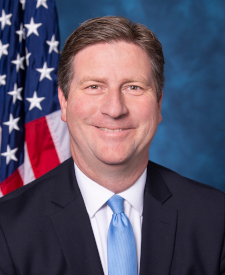
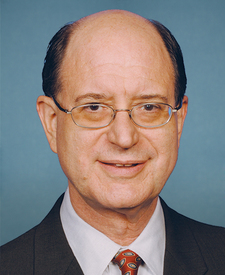
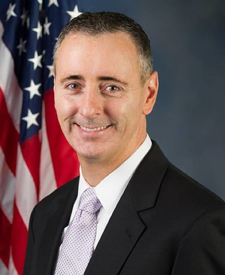
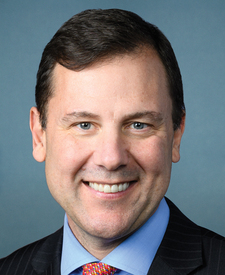
In CommitteeMr. Stanton (for himself and Mr. Kean) introduced the following …
Referred to the House Committee on Foreign Affairs.
Introduced in House
Stakeholder Effects
cui bono?How this legislation distributes effects. Mention counts reflect frequency, not effect magnitude.
CARICOM member states, Mexican local security partners, Secretary of State
Bill Structure & Actor Mappings
Who is "The Secretary" in each section?
We use a combination of our own taxonomy and classification in addition to large language models to assess meaning and potential beneficiaries. High confidence means strong textual evidence. Always verify with the original bill text.
Learn more about our methodology