To reauthorize certain programs that provide for opioid use disorder prevention, recovery, and treatment, and for other purposes.
Analysis under review: This bill has generated analysis that may be too generic or incomplete. Clause-level evidence remains available below.
Summary
What This Bill Does
This bill, To reauthorize certain programs that provide for opioid use disorder prevention, recovery, and treatment, and for other purposes., changes federal law or congressional policy affecting health care providers and patients. The main policy domain is Healthcare, Government Operations, Labor.
Who Benefits and How
health care providers and patients may benefit from new authority, funding, eligibility, regulatory clarity, or reduced risk created by the bill.
Who Bears the Burden and How
federal implementing agencies, health care providers and patients may take on implementation duties, reporting obligations, compliance costs, or oversight responsibilities.
Key Provisions
- Section H325E80D22DEE476C9816EC67E02356BC: 1. Short title This Act may be cited as the Support for Patients and Communities Reauthorization Act.
- Section H19D3C66CAFED48289B2BFEE7FC5EDC2A: 2. Table of contents The table of contents for this Act is as follows:
- Section HDA658A065F6A4704AF19578B48BFD020: 101. Prenatal and postnatal health Section 317L(d) of the Public Health Service Act (42 U.S.C. 247b–13(d)) is amended by striking such sums as may be necessary...
- Section HA8F3B579FFAB4E10829B143EAC5299B7: 102. Monitoring and education regarding infections associated with illicit drug use and other risk factors Section 317N of the Public Health Service Act (42...
- Section HAFF43939A7E44C889777410BCD017888: 103. Preventing overdoses of controlled substances Section 392A(a)(2)(D) of the Public Health Service Act (42 U.S.C. 280b–1(a)(2)(D)) is amended by inserting...
Evidence Chain:
This summary is generated from the full bill text using AI analysis. Expand "Detailed Analysis" below for identified beneficiaries/burden bearers.
At a Glance
What This Bill Does
This bill, To reauthorize certain programs that provide for opioid use disorder prevention, recovery, and treatment, and for other purposes., changes federal law or congressional policy affecting health care providers and patients.
Key Policy Areas
Healthcare, Government Operations, Labor
Primary Purpose
This bill, To reauthorize certain programs that provide for opioid use disorder prevention, recovery, and treatment, and for other purposes., changes federal law or congressional policy affecting health care providers and patients.
Policy Domains
Whole bill
Identified Gains
Contextual inference, no direct clause citation- health care providers and patients
Contextual inference, no direct clause citation
Identified Costs
Contextual inference, no direct clause citation- federal implementing agencies
- health care providers and patients
Contextual inference, no direct clause citation
Sponsors
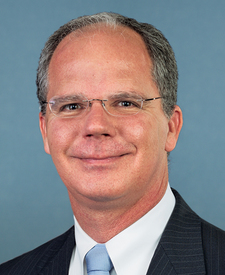
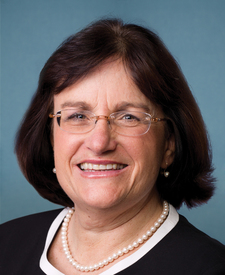
Legislative Progress
IntroducedMr. Guthrie (for himself and Ms. Kuster) introduced the following …
Stakeholder Effects
cui bono?How this legislation distributes effects. Mention counts reflect frequency, not effect magnitude.
Adults and elderly in nursing facilities and institutional care, Foster youth under 21 in qualified residential treatment programs, Healthcare providers serving incarcerated populations
County jails, State Medicaid programs, States receiving grants
Positive-direction: County jails, States with high overdose death rates
Negative-direction: State Medicaid programs, States receiving grants
CMS and federal health data analysts, DEA and law enforcement agencies, Federal agencies participating in trauma task force
Comprehensive opioid recovery centers, Medication-assisted treatment providers, Substance abuse treatment providers treating multiple disorders
Drug testing supply manufacturers, Manufacturers of buprenorphine/naloxone products (Suboxone, etc.), Manufacturers of non-naloxone overdose reversal drugs (e.g., nalmefene)
Children, youth, and adults affected by trauma, Communities affected by fentanyl overdoses, Individuals experiencing violence-related stress
Grant recipients providing overdose reversal drugs, Harm reduction organizations, Organizations implementing trauma-informed practices
Family physicians who prescribe controlled substances, Podiatrists who prescribe controlled substances, Prescribers of antipsychotic medications
Positive-direction: Family physicians who prescribe controlled substances, Podiatrists who prescribe controlled substances
Negative-direction: Prescribers of antipsychotic medications
Bill Structure & Actor Mappings
Who is "The Secretary" in each section?
- "the_commission"
- → The commission identified in the operative section
- "the_administrator"
- → The Administrator identified in the operative section
- "secretary_of_health_and_human_services"
- → Secretary of Health and Human Services
Key Definitions
Terms defined in this bill
a non-governmental organization or other public or private entity— the primary purpose of which is the delivery of mental health or substance use disorder treatment services
We use a combination of our own taxonomy and classification in addition to large language models to assess meaning and potential beneficiaries. High confidence means strong textual evidence. Always verify with the original bill text.
Learn more about our methodology