Price Gouging Prevention Act of 2025
Summary
What This Bill Does
The Price Gouging Prevention Act gives the Federal Trade Commission a broad price-gouging authority. It makes it unlawful to sell or offer goods or services at a grossly excessive price, regardless of supply-chain position. A seller whose ultimate parent entity earned less than $100 million in U.S. gross revenue in the prior 12 months can avoid the prohibition if it proves the price increase is directly attributable to additional costs outside its control. During an exceptional market shock, including natural disasters, energy shortages, labor disruptions, war, emergencies, abrupt trade-policy shifts, public health emergencies, or Stafford Act disasters, a seller is presumed to violate the Act if it has unfair leverage or uses the shock as a pretext and sells at an excessive price compared with its own 120-day pre-shock average or competing market prices. The presumption can be rebutted by clear and convincing evidence that the increase is attributable to additional costs. Public companies with a covered quarter must add tabular and narrative information to the next Form 10-K or 10-Q, including changes in volume, average sales price, gross margins by material product category, revenue increases attributable to costs or volume, cost changes, cost and revenue dollar changes, and pricing strategy explanations. The bill appropriates $1 billion to the FTC for fiscal year 2025, available through September 30, 2033.
Who Benefits and How
Stafford Act disaster consumers benefit from presumptions against grossly excessive prices during exceptional market shocks. Form 10-K investors benefit from issuer disclosures explaining price, volume, margin, cost, and pricing-strategy changes. Form 10-Q investors benefit from the same tabular and narrative disclosures after covered quarters. The Federal Trade Commission benefits from $1 billion in dedicated funding through September 30, 2033.
Who Bears the Burden and How
Ultimate parent entities over $100 million must defend price increases during exceptional market shocks and may face FTC enforcement. Covered Form 10-K issuers must prepare new pricing, margin, revenue, cost, and narrative disclosures after shock quarters. Covered Form 10-Q issuers must prepare the same pricing and cost disclosures after covered quarters. The Federal Trade Commission must issue guidance, adjust the $100 million threshold for CPI, enforce violations, and spend the appropriation. Small sellers claiming the revenue exception must prove cost-driven price increases by a preponderance of evidence.
Key Provisions
- Prohibits selling or offering goods or services at a grossly excessive price.
- Provides an exception for sellers under $100 million in U.S. revenue that prove uncontrollable cost increases.
- Creates exceptional-market-shock presumptions tied to unfair leverage, pretext, 120-day pre-shock prices, and competitor prices.
- Requires covered issuers to disclose volume, average price, gross margin, revenue-source, cost, and pricing-strategy data in Form 10-K or 10-Q filings.
- Appropriates $1 billion to the FTC for fiscal year 2025, available through September 30, 2033.
Evidence Chain:
This summary is generated from the full bill text using AI analysis. Expand "Detailed Analysis" below for identified beneficiaries/burden bearers with clause-level evidence links.
At a Glance
What This Bill Does
Makes grossly excessive prices for goods or services unlawful, creates presumptions during exceptional market shocks, requires covered SEC issuers to disclose pricing and margin data after shock quarters, and appropriates $1 billion to the FTC through fiscal year 2033.
Key Policy Areas
Consumer Protection, FTC, Securities Disclosure
Primary Purpose
Makes grossly excessive prices for goods or services unlawful, creates presumptions during exceptional market shocks, requires covered SEC issuers to disclose pricing and margin data after shock quarters, and appropriates $1 billion to the FTC through fiscal year 2033.
Policy Domains
Resolution provisions
Identified Gains
- Stafford Act disaster consumers
- Form 10-K investors
- Form 10-Q investors
- Federal Trade Commission
Identified Costs
- Ultimate parent entities over $100 million
- Covered Form 10-K issuers
- Covered Form 10-Q issuers
- Federal Trade Commission
- Bureau of Labor Statistics
Sponsors

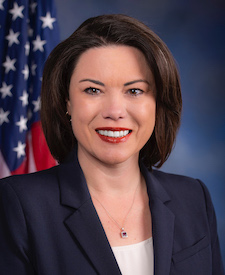



Legislative Progress
In CommitteeMs. Schakowsky (for herself, Mr. Deluzio, Ms. Norton, Mr. Nadler, …
Referred to the Committee on Energy and Commerce, and in …
Introduced in House
Stakeholder Effects
cui bono?How this legislation distributes effects. Mention counts reflect frequency, not effect magnitude.
Bill Structure & Actor Mappings
Who is "The Secretary" in each section?
We use a combination of our own taxonomy and classification in addition to large language models to assess meaning and potential beneficiaries. High confidence means strong textual evidence. Always verify with the original bill text.
Learn more about our methodology