Saving Lives and Taxpayer Dollars Act
Summary
What This Bill Does
The Saving Lives and Taxpayer Dollars Act prohibits avoidable destruction of foreign assistance commodities. The findings identify food, medicine, family planning products, and vaccines as critical support for people recovering from disasters, fleeing conflict, living in refugee camps, or living in communities with limited health care; they also note global health returns, 600,000 U.S. jobs, $104 billion in economic activity from 2007 through 2022, roughly 40 percent U.S. farmer supply for international food assistance, $2 billion in annual food assistance value, and possible prevention of up to 30 percent of 295,000 annual maternal deaths and 1.4 million deaths of children under 5 through family planning access. The operative amendment to the Foreign Assistance Act requires perishable and nonperishable foreign assistance commodities and products, including medicine, vaccines, medical devices, food, and food commodities, held by the U.S. Government or implementing partners in warehouses, ships, shipping containers, or other storage facilities, to be made available to intended beneficiaries before spoilage or expiration. If an implementing partner holds the commodity, State, Agriculture, or USAID must expedite funds needed for delivery or donation. No commodity may be destroyed unless every effort has been made to sell, donate, or otherwise make it available to beneficiaries before it spoils or expires. State, with USAID and Agriculture as appropriate, must report within 90 days and annually on commodities that expired, spoiled, or were destroyed before delivery.
Who Benefits and How
Intended foreign assistance beneficiaries benefit because food, medicine, vaccines, medical devices, and other commodities must be delivered or donated before expiration. Refugees and disaster survivors benefit from stronger rules against destroying aid commodities before they reach recipients. U.S. farmers supplying international food assistance benefit if food commodities are delivered rather than discarded. USAID implementing partners benefit from expedited release of funds needed to deliver or donate commodities before spoilage.
Who Bears the Burden and How
The Secretary of State must coordinate annual reporting and release funds on an expedited basis when appropriate. The Secretary of Agriculture must help release delivery funds and report on covered commodities when agriculture aid is involved. USAID must support delivery or donation and report on expired, spoiled, or destroyed commodities. Foreign assistance implementing partners must make commodities available before spoilage or expiration and document any failures.
Key Provisions
- Requires foreign assistance commodities to be made available to intended beneficiaries before spoilage or expiration.
- Requires expedited release of funds for delivery or donation when implementing partners possess covered commodities.
- Prohibits destruction unless every effort has been made to sell, donate, or otherwise make commodities available before spoilage or expiration.
- Requires a 90-day report and annual reports on commodities that expired, spoiled, or were destroyed before beneficiary delivery.
- Covers medicine, vaccines, medical devices, food, food commodities, and other perishable or nonperishable foreign assistance products.
Evidence Chain:
This summary is generated from the full bill text using AI analysis. Expand "Detailed Analysis" below for identified beneficiaries/burden bearers with clause-level evidence links.
At a Glance
What This Bill Does
Requires foreign assistance food, medicine, vaccines, medical devices, and other commodities held by the U.S. Government or implementing partners to be delivered, donated, sold, or otherwise made available to intended beneficiaries before spoilage or expiration, with expedited funding and annual reporting.
Key Policy Areas
Foreign Assistance, Global Health, Food Aid
Primary Purpose
Requires foreign assistance food, medicine, vaccines, medical devices, and other commodities held by the U.S. Government or implementing partners to be delivered, donated, sold, or otherwise made available to intended beneficiaries before spoilage or expiration, with expedited funding and annual reporting.
Policy Domains
Resolution provisions
Identified Gains
- Intended foreign assistance beneficiaries
- Refugees
- U.S. farmers supplying international food assistance
- USAID implementing partners
Identified Costs
- Secretary of State
- Secretary of Agriculture
- U.S. Agency for International Development
- Foreign assistance implementing partners
Sponsors

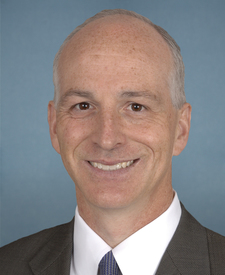



Legislative Progress
In CommitteeMr. Meeks (for himself, Ms. Lois Frankel of Florida, Ms. …
Referred to the House Committee on Foreign Affairs.
Introduced in House
Stakeholder Effects
cui bono?How this legislation distributes effects. Mention counts reflect frequency, not effect magnitude.
Secretary of Agriculture, Secretary of State, U.S. Agency for International Development
U.S. farmers supplying international food assistance
Bill Structure & Actor Mappings
Who is "The Secretary" in each section?
We use a combination of our own taxonomy and classification in addition to large language models to assess meaning and potential beneficiaries. High confidence means strong textual evidence. Always verify with the original bill text.
Learn more about our methodology