Climate Change Health Protection and Promotion Act of 2025
Summary
What This Bill Does
The Climate Change Health Protection and Promotion Act creates an HHS climate-health infrastructure. It defines environmental justice communities, medically underserved communities, the Office of Climate Change and Health Equity, and the national strategic action plan, while preserving other federal agency authorities. The Office's purpose is to coordinate a federal response to climate impacts on the health of people in the United States and the health care system. Its duties include assessing climate health effects, identifying populations disproportionately affected, serving as a credible source of information, tracking environmental conditions, disease risks, and disease occurrence, expanding modeling and forecasting, building the science base, communicating health risks and costs, aligning federal human services and direct services for environmental justice and medically underserved communities, distributing resilience tools, and developing preparedness and response plans. HHS must also publish a national strategic action plan. The Secretary must establish a permanent science advisory board of 10 to 20 members recommended by the National Academy of Sciences or National Academy of Medicine with expertise and lived experience; it must advise HHS and report annually to Congress. HHS must fund National Academies periodic reports, first due within one year after the first national strategic action plan and then every four years. The bill authorizes $10 million annually for fiscal years 2026 through 2031 for the Office, $2 million for fiscal year 2026 for the action plan, and $500,000 for fiscal year 2026 for the advisory board.
Who Benefits and How
Environmental justice communities benefit because the Office must identify and support populations disproportionately affected by climate-related health threats. Medically underserved communities benefit from HHS tools, resources, and direct-service alignment for climate resilience. Health care providers benefit from federal information on climate-related physical, mental, and behavioral health effects. Public health agencies benefit from modeling, forecasting, data tracking, preparedness plans, and National Academies reports.
Who Bears the Burden and How
HHS must establish and operate the Office, publish the national strategic action plan, support the science advisory board, and fund National Academies reports. The Office Director must coordinate climate-health assessments, modeling, forecasting, communications, tools, and preparedness work. Science advisory board members must provide technical advice and annual congressional reports. Federal taxpayers fund $10 million annually for the Office, $2 million for the action plan, and $500,000 for the advisory board.
Key Provisions
- Establishes the HHS Office of Climate Change and Health Equity and a Director reporting to the Secretary.
- Requires climate-health duties covering assessments, disproportionate impacts, data tracking, modeling, forecasting, science, communications, federal service alignment, resilience tools, and preparedness plans.
- Creates a permanent 10-to-20-member science advisory board with National Academy recommendations, expertise requirements, lived-experience representation, and annual reports.
- Requires National Academies climate-health reports within one year after the first strategic action plan and every four years thereafter.
- Authorizes $10 million annually for fiscal years 2026 through 2031, $2 million for fiscal year 2026 for the action plan, and $500,000 for fiscal year 2026 for the advisory board.
Evidence Chain:
This summary is generated from the full bill text using AI analysis. Expand "Detailed Analysis" below for identified beneficiaries/burden bearers with clause-level evidence links.
At a Glance
What This Bill Does
Establishes an HHS Office of Climate Change and Health Equity, national strategic action plan, permanent science advisory board, National Academies reporting process, and appropriations for climate-health coordination through fiscal year 2031.
Key Policy Areas
Public Health, Climate Change, Health Equity
Primary Purpose
Establishes an HHS Office of Climate Change and Health Equity, national strategic action plan, permanent science advisory board, National Academies reporting process, and appropriations for climate-health coordination through fiscal year 2031.
Policy Domains
Resolution provisions
Identified Gains
- Environmental justice communities
- Medically underserved communities
- Health care providers
- Public health agencies
Identified Costs
- Department of Health and Human Services
- Office Director
- Science advisory board members
- Federal taxpayers
Sponsors

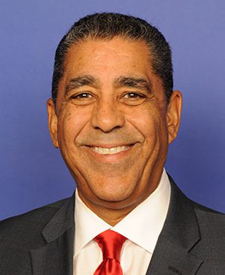

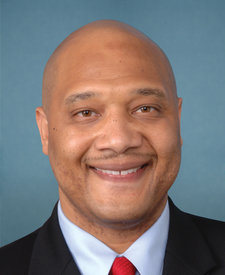

Legislative Progress
In CommitteeMs. Matsui (for herself, Mr. Schneider, Mr. Carbajal, Ms. Barragán, …
Referred to the House Committee on Energy and Commerce.
Introduced in House
Stakeholder Effects
cui bono?How this legislation distributes effects. Mention counts reflect frequency, not effect magnitude.
Environmental justice communities, Medically underserved communities
Department of Health and Human Services, Office Director
Bill Structure & Actor Mappings
Who is "The Secretary" in each section?
We use a combination of our own taxonomy and classification in addition to large language models to assess meaning and potential beneficiaries. High confidence means strong textual evidence. Always verify with the original bill text.
Learn more about our methodology