TRUST Act of 2025
Summary
What This Bill Does
The TRUST Act of 2025 proposes changing two thresholds in 12 U.S.C. 1820(d) from $3 billion to $6 billion. The first is the asset ceiling for qualifying insured depository institutions to receive a full-scope on-site examination on an 18-month rather than 12-month cycle. The second is the ceiling on regulators' discretion to extend eligibility for institutions rated good rather than outstanding. The general asset test is strictly less than $6 billion, not $6 billion or less.
These exact substitutions were enacted by section 903 of Public Law 119-101 on July 11, 2026. Current statutory text already contains both $6 billion figures. H.R. 4478 is therefore an earlier proposal for relief now enacted elsewhere, not a second increase or a further six-month extension. Its instructions still target $3 billion language that is no longer present.
Who Benefits and How
Historically, qualifying banks and other insured depository institutions with assets from $3 billion to below $6 billion were the direct intended beneficiaries: fewer routine examinations can reduce preparation work and disruption. Federal banking regulators could allocate routine examination resources differently. Those are benefits of the threshold policy already enacted, not additional benefits created by the pending duplicate. The bill does not guarantee lower loan prices, additional credit, reduced examination fees or a payment to bank shareholders.
Who Bears the Burden and How
Eligibility retains the requirements for a well-capitalized, well-managed institution, the applicable composite condition rating, no current formal enforcement proceeding or order, and no acquisition of control during the relevant 12-month period. The statute's good-rated category starts at $200 million; regulators may increase that separate amount by regulation up to $6 billion upon a safety-and-soundness finding. This is not automatic eligibility for every good-rated bank below $6 billion. Regulators retain supervisory and separate-examination authority. Longer routine intervals can reduce opportunities for in-person review, but the text establishes neither increased failures nor depositor losses. Because the changes are already law, this bill establishes no new incremental compliance burden or current reduction in depositor protection. Deposit-insurance coverage and capital standards are unchanged.
Key Provisions
- Amends the stated asset ceiling for the 18-month examination category from less than $3 billion to less than $6 billion, a change already enacted in July 2026.
- Expands the stated ceiling for regulatory extension of the good-rated institution category to $6 billion, also already enacted.
- Requires continued satisfaction of capitalization, management, rating, enforcement-status and control-change conditions.
- Provides no further examination-cycle extension, capital-standard relaxation or deposit-insurance change beyond current law.
Evidence Chain:
This summary is generated from the full bill text using AI analysis. Expand "Detailed Analysis" below for identified beneficiaries/burden bearers with clause-level evidence links.
At a Glance
What This Bill Does
Propose raising two bank-examination asset thresholds from $3 billion to $6 billion, while recognizing that Public Law 119-101 already enacted these exact changes on July 11, 2026.
Key Policy Areas
Banking, Financial Regulation
Primary Purpose
Propose raising two bank-examination asset thresholds from $3 billion to $6 billion, while recognizing that Public Law 119-101 already enacted these exact changes on July 11, 2026.
Policy Domains
TRUST Act of 2025
Identified Gains
- Qualifying insured depository institutions
- Federal Deposit Insurance Corporation
- Office of the Comptroller of the Currency
- Federal Reserve Board
Identified Costs
- Federal Deposit Insurance Corporation
- Office of the Comptroller of the Currency
- Federal Reserve Board
- Depositors at qualifying institutions
Sponsors

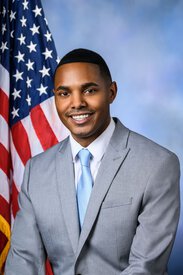
Tim Moore
R-NC | Primary Sponsor
Legislative Progress
ReportedReceived in the Senate and Read twice and referred to …
Received; read twice and referred to the Committee on Banking, …
Motion to reconsider laid on the table Agreed to without …
On motion to suspend the rules and pass the bill …
Passed/agreed to in House: On motion to suspend the rules …
DEBATE - The House proceeded with forty minutes of debate …
Considered under suspension of the rules. (consideration: CR H3357-3359)
Mr. Hill (AR) moved to suspend the rules and pass …
Committed to the Committee of the Whole House on the …
Placed on the Union Calendar, Calendar No. 209.
Stakeholder Effects
cui bono?How this legislation distributes effects. Mention counts reflect frequency, not effect magnitude.
Federal Deposit Insurance Corporation, Federal Reserve, Office of the Comptroller of the Currency
Qualifying insured depository institutions
Depositors at qualifying insured depository institutions
Bill Structure & Actor Mappings
Who is "The Secretary" in each section?
- "covered_institutions"
- → Insured depository institutions meeting all statutory and applicable regulatory conditions
- "appropriate_federal_banking_agency"
- → The federal banking supervisor with statutory jurisdiction over the institution, including the FDIC, Office of the Comptroller of the Currency or Federal Reserve as applicable
Note: Historical policy effects must not be counted again as new effects of H.R. 4478: Public Law 119-101 section 903 already made both substitutions.
Key Definitions
Terms defined in this bill
Public Law 119-101 section 903 made both $3 billion to $6 billion substitutions on July 11, 2026. The pending bill supplies no additional increase.
A conditional alternative to the ordinary 12-month full-scope on-site examination cycle; not immunity from oversight or automatic inclusion based only on asset size.
We use a combination of our own taxonomy and classification in addition to large language models to assess meaning and potential beneficiaries. High confidence means strong textual evidence. Always verify with the original bill text.
Learn more about our methodology